India’s export sector is growing rapidly, and global buyers are placing a stronger focus on ethical sourcing, labour practices, workplace safety, and responsible supply chains. According to the Ministry of Commerce and Industry, India’s total exports reached USD 860.05 billion in FY 2025–26, showing continued growth across manufacturing, textiles, pharmaceuticals, engineering, and consumer goods sectors.
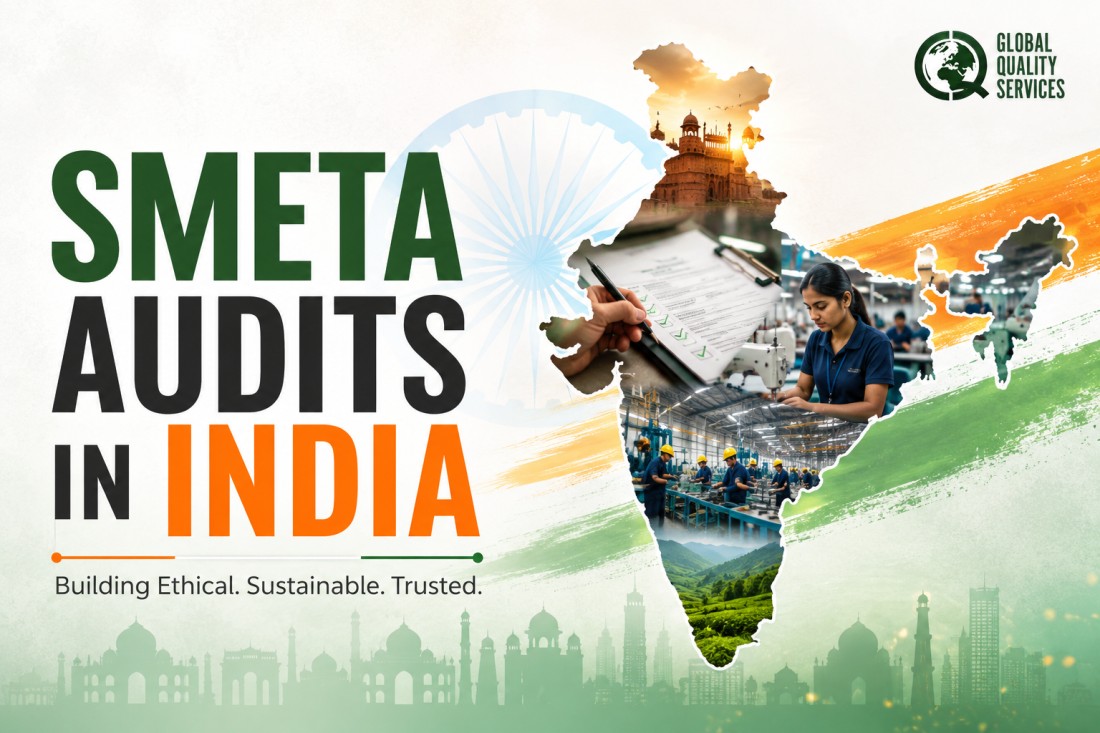
At the same time, international retailers and importers are tightening supplier compliance requirements. Businesses that want to work with global brands are now expected to demonstrate ethical trade practices through recognized social compliance audits like SMETA.
SMETA audits help Indian businesses improve transparency, strengthen buyer confidence, and meet international supply chain expectations in a structured and practical manner.
What is an SMETA Audit?
SMETA stands for Sedex Members Ethical Trade Audit. It is one of the most widely accepted social compliance audit methodologies used by global brands, retailers, importers, and supply chain partners.
The audit is designed to assess working conditions, labour standards, health and safety practices, environmental performance, and business ethics within an organization.
SMETA is developed by Sedex, which is a global platform focused on ethical sourcing and responsible supply chain management.
It is important to understand that SMETA is not a certification. It is an audit process used to evaluate and improve ethical business practices.
A SMETA audit generally reviews areas such as:
- Labour standards
- Working hours and wages
- Health and safety practices
- Environmental management
- Business ethics
- Employee welfare systems
- Legal compliance
- Management controls
Why SMETA Audits Matter for Businesses in India
Indian manufacturers and exporters are increasingly supplying products to international markets where ethical sourcing requirements are becoming stricter every year.
Global retailers want visibility into how suppliers manage workers, workplace safety, legal compliance, and operational ethics. A SMETA audit helps businesses demonstrate that their operations meet accepted international expectations.
For Indian businesses, SMETA audits are important because they help:
- Improve supplier credibility with global buyers
- Support export business opportunities
- Reduce compliance-related risks
- Improve workplace management systems
- Strengthen buyer trust during vendor evaluations
- Reduce repeated customer audits
- Improve operational transparency
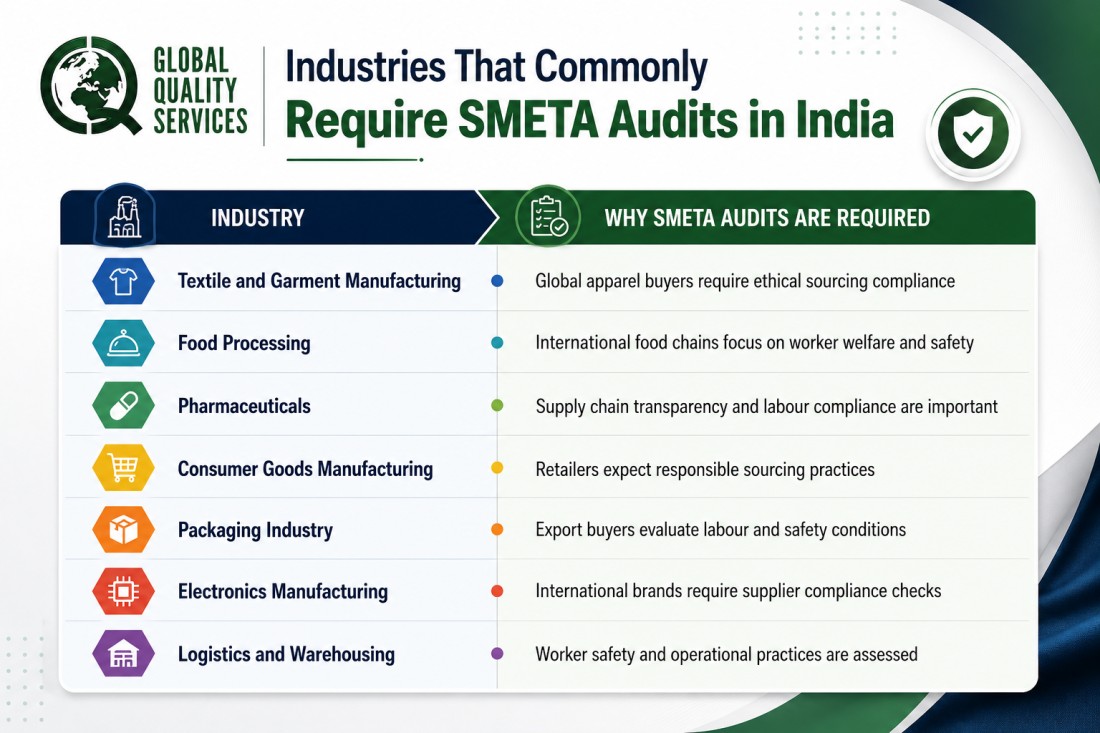
Industries That Commonly Require SMETA Audits in India
SMETA audits are commonly requested across industries that supply products to international retailers, importers, and global brands. These industries include:
SMETA 2-Pillar vs 4-Pillar Audit
When planning for your evaluation, you can select between two main framework options based on your buyer’s requests.
SMETA 2-Pillar Audit
This foundational assessment is designed to cover the core aspects of supply chain responsibility. It centers on:
- Labor Standards: Verifying the right to voluntary employment, freedom of association, elimination of child labor, statutory minimum wage compliance, and a cap on overtime hours.
- Health and Safety: Ensuring clean drinking water, adequate firefighting equipment, unobstructed emergency exits, clear safety signage, and regular mock drills.
SMETA 4-Pillar Audit
This extended evaluation includes the core 2-Pillar fields while adding two comprehensive modules to address holistic corporate citizenship:
- Environmental Assessment: Reviewing comprehensive waste disposal practices, air and water emission permits, energy usage records, and environmental impact reduction plans.
- Business Ethics: Investigating internal policies against corruption, bribery prevention systems, transparent bookkeeping, and fair trading mechanisms.
SMETA Audit Process in India
The SMETA audit process involves several structured stages. Proper preparation is important because buyers often review audit findings carefully before approving suppliers.
Step 1: Application and Self-Assessment
Your business submits a request to an approved third-party auditing agency. Before the actual site inspection, you fill out the Sedex Self-Assessment Questionnaire to highlight current workplace configurations and standard operational protocols.
Step 2: On-Site Physical Inspection
Lead auditors arrive at your factory premises to conduct a walkthrough of the entire facility. They check assembly lines, storage warehouses, chemical containment zones, dining spaces, and first-aid rooms to note any immediate physical hazards.
Step 3: Comprehensive Document Review
The verification team evaluates your operational logs for the past twelve months. This deep dive includes analyzing wage registers, time sheet entries, employee attendance records, structural safety certificates, fire safety licenses, and pollution board approvals.
Step 4: Private Worker Interviews
Auditors choose factory employees at random for confidential discussions. These interviews happen away from management presence to gather candid feedback regarding actual working hours, treatment by supervisors, safety training, and payout timelines.
Step 5: Closing Meeting and Corrective Action Plan
At the end of the site visit, the auditor details all observed variances or non-compliances during a closing meeting. If gaps are identified, you receive a Corrective Action Plan Report detailing the exact timelines allowed to fix each issue. Once evidence of rectification is verified, the final report gets uploaded onto the Sedex platform for your global buyers to review.
Benefits of SMETA Audits for Indian Businesses
Investing in a proper social audit yields clear long-term operational advantages for growing Indian firms.
- Global Vendor Acceptance: A single report lets you satisfy the compliance mandates of dozens of international buyers, saving administrative time.
- Mitigation of Legal Risks: The audit methodology keeps your operations strictly aligned with regional labor acts, minimum wage rules, and industrial safety codes.
- Operational Transparency: Uncovering systemic gaps in overtime tracking or safety equipment logs allows you to fix small internal inefficiencies before they become major liabilities.
- Strengthened Corporate Reputation: Demonstrating an active commitment to social compliance makes your company a preferred supplier for premium high-ticket global contracts.
Why Choose Global Quality Services for SMETA Audits in India
SMETA audits require proper planning, documentation management, operational understanding, and practical compliance support.
Global Quality Services supports businesses across India with structured SMETA audit preparation and compliance guidance tailored to industry requirements.
Our approach focuses on helping businesses understand real compliance expectations rather than simply completing paperwork.
SMETA Audit Cost in India
The financial budget required for an SMETA audit is not fixed because it depends directly on the specific configuration of your business setup. Key factors that influence the overall cost structure include:
- Total Employee Strength: Larger workforces require more auditor days to complete the mandatory number of private employee interviews.
- Number of Facilities: Companies running production across separate factory blocks or distinct geographical locations require individual site visits.
- Pillar Selection: Choosing a 4-Pillar audit takes more evaluation time and specialized testing compared to a standard 2-Pillar assessment.
- Location and Travel Logistics: The physical distance of your factory from major commercial centers impacts the transport and logistics costs for the verification team.
Get Ready to Prepare for Your SMETA Audit
Securing premium global supply contracts requires a proactive approach toward corporate transparency and worker safety. You can easily streamline your entire ethical compliance path by relying on the professional advisory and verification services provided by Global Quality Services to ensure your production processes stand up to rigorous global scrutiny.
Frequently Asked Questions
1. How long does an SMETA audit usually take?
The duration depends on the size of the facility, workforce strength, and operational complexity. Most audits are completed within one to several days.
2. Is Sedex membership mandatory for an SMETA audit?
In many cases, buyers prefer suppliers to register on Sedex because audit reports and compliance information are managed through the platform.
3. Can small businesses in India undergo SMETA audits?
Yes. Small and medium businesses supplying to international buyers can also undergo SMETA audits if required by customers or sourcing partners.
4. How can businesses improve readiness before an SMETA audit?
Businesses should review labour records, workplace safety measures, employee documentation, wage systems, and internal compliance practices before the audit.
5. Does Global Quality Services help businesses with corrective action planning?
Yes. Support for corrective action planning and compliance improvement is often an important part of helping businesses strengthen audit readiness and address identified gaps effectively.