India is positioning itself as a reliable global manufacturing destination, with overall exports rising to 720.76 billion dollars in the April-January 25-26. At the same time, the Periodic Labour Force Survey 2025 reported a Labour Force Participation Rate of 59.3 percent, highlighting the scale of India’s workforce and the increasing need for responsible labour management systems.
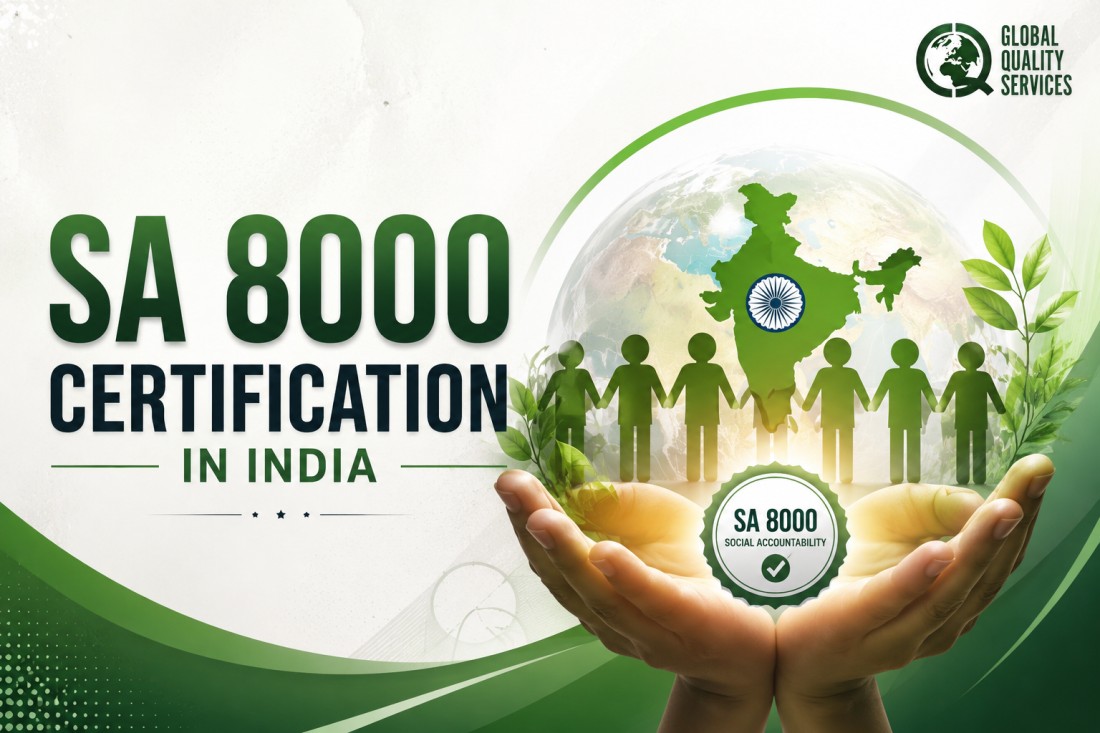
As global brands strengthen supplier compliance requirements, SA8000 has become one of the most recognized social accountability standards for organizations that want to demonstrate ethical business practices, worker welfare, and responsible operations across their supply chains.
What is SA8000 Social Accountability?
SA8000 is an internationally recognized social accountability standard developed by Social Accountability International (SAI). The standard helps organizations establish and maintain ethical workplace practices while protecting employee rights and improving working conditions.
Unlike many compliance frameworks that focus only on quality or operational systems, SA8000 focuses directly on workers, workplace conditions, and labour practices. The standard is based on international human rights principles, International Labour Organization conventions, and other globally accepted labour standards.
SA8000 helps organizations build structured systems for:
- Fair treatment of employees
- Safe and healthy workplaces
- Ethical employment practices
- Responsible management systems
- Transparent labour compliance processes
Why SA8000 Matters for Modern Businesses
Modern supply chains are under greater scrutiny than ever before. Global buyers are expected to verify that their suppliers follow ethical labour practices and provide safe working environments. As a result, businesses are increasingly being evaluated not only on product quality but also on how they manage their workforce.
Supports Global Supply Chain Requirements
Many international brands, retailers, and sourcing companies prefer working with suppliers that can demonstrate strong labour compliance systems. SA8000 provides a recognized framework that helps organizations meet these expectations.
Strengthens Business Reputation
Customers, investors, and stakeholders increasingly pay attention to environmental, social, and governance performance. SA8000 certification demonstrates that a company takes worker welfare and ethical business practices seriously.
Reduces Compliance Risks
Labour disputes, workplace incidents, and compliance violations can create operational disruptions and reputational damage. SA8000 helps organizations identify risks early and implement structured controls.
Improves Workforce Stability
Employees are more likely to remain with organizations that provide fair treatment, safe working conditions, and transparent workplace policies. This can help reduce employee turnover and improve productivity.
Creates Buyer Confidence
For exporters and manufacturers, SA8000 certification can strengthen supplier qualification efforts and support long-term business relationships with global customers.
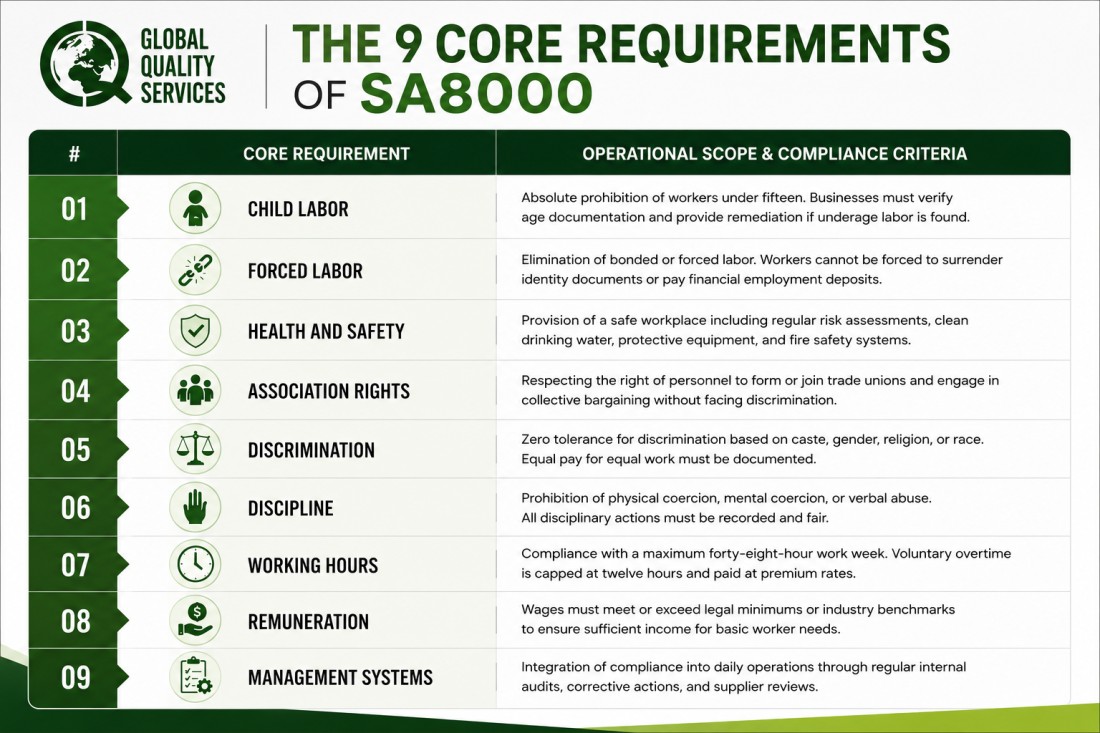
The 9 Core Requirements of SA8000
The standard is built upon nine distinct pillars designed to secure ethical workplace environments. Every certified facility must consistently fulfill each element.
Industries That Commonly Require SA8000 Certification
SA8000 certification is commonly requested in industries where global buyers place strong emphasis on ethical sourcing and labour compliance.
Some of the most common sectors include:
- Textile and garment manufacturing
- Apparel export units
- Leather and footwear manufacturing
- Consumer goods production
- Electronics manufacturing
- Engineering and industrial manufacturing
- Packaging and printing industries
- Pharmaceutical manufacturing
- Furniture production
- Toys and children’s product manufacturing
Benefits of SA8000 Certification for Indian Businesses
Here are the key benefitS:
- Expanded Global Market Access: Certification instantly qualifies your business for high-value tenders with international brands that require independent social compliance verification.
- Reduced Employee Turnover: Fair compensation, reasonable working hours, and respectful treatment improve worker morale, directly reducing recruitment and retraining expenses.
- Minimized Operational Risk: Establishing robust health and safety management protocols helps businesses avoid costly industrial accidents, workplace injuries, and legal penalties.
- Enhanced Operational Efficiency: Streamlined management systems ensure that performance gaps are identified and corrected systematically before they affect production quality.
SA8000 Certification Process
Achieving compliance involves a structured journey that transforms workplace policy into verifiable, daily practice. Here is a complete process:
Step 1 Gap Assessment and Readiness Review
The process begins with a detailed assessment of your existing workplace practices, labour policies, and management systems. This helps identify areas that already meet SA8000 requirements and highlights any gaps that need to be addressed before certification.
Step 2 Documentation and Policy Development
Based on the findings, the required policies, procedures, and compliance records are created or updated. These documents typically cover areas such as employee rights, health and safety, working hours, wages, grievance handling, and workplace responsibilities.
Step 3 Implementation Across the Organization
Once the framework is established, the policies are implemented throughout the organization. Employees and management teams are trained on the requirements, and workplace processes are aligned with the standard to ensure consistent implementation.
Step 4 Internal Compliance Review
Before the certification audit, the organization conducts an internal review to verify that all requirements have been properly implemented. Any identified issues are corrected to improve audit readiness and reduce the risk of nonconformities.
Step 5 Certification Audit
An accredited certification body performs an independent audit to evaluate compliance with SA8000 requirements. The assessment includes document reviews, workplace inspections, employee interviews, and verification of management practices.
Step 6 Certification and Ongoing Compliance
After completing the audit, the organization receives SA8000 certification. Regular surveillance audits are conducted thereafter to ensure continued compliance and support ongoing improvement in social accountability practices.
SA8000 Certification Cost Factors in India
The primary cost driver is total employee headcount across all shifts, as this dictates the number of auditor days required to conduct comprehensive worker interviews. Multiple facility locations or highly complex production processes will also increase the audit time.
Beyond direct auditing fees paid to the certification body, businesses must budget for internal system upgrades. These internal costs can include purchasing safety gear, updating fire suppression systems, adjusting worker remuneration structures to comply with regulations, and organizing staff training programs.
Partner for Ethical Excellence
Building a globally compliant workforce demands a systematic approach that balances legal necessity with long-term business strategy. Global Quality Services provides end-to-end guidance to simplify your social accountability journey, helping your business establish robust management systems, close compliance gaps, and clear third-party audits seamlessly.
Connect with our certification experts today to schedule your comprehensive SA8000 readiness assessment and secure your position in the global supply chain.
Frequently Asked Questions
1. Is SA8000 certification mandatory for exporters in India?
No. SA8000 certification is voluntary. However, many international buyers and sourcing companies may prefer suppliers that can demonstrate compliance with recognized social accountability standards.
2. How long does SA8000 certification usually take?
The timeline depends on the organization’s size, workforce, existing systems, and readiness level. Many businesses complete implementation and certification within a few months.
3. Can small and medium businesses apply for SA8000 certification?
Yes. SA8000 can be implemented by organizations of different sizes. The scope and implementation effort depend on workforce structure and operational complexity.
4. What are the most common issues identified during SA8000 audits?
Common findings include excessive overtime, incomplete employee documentation, weak grievance procedures, insufficient worker training, and gaps in workplace safety controls.
5. Can SA8000 be integrated with other management system standards?
Yes. Many organizations integrate SA8000 with standards such as ISO 9001, ISO 14001, and ISO 45001 to create a more structured compliance and management framework.