The global standard for quality management is changing. With the International Organization for Standardization currently working on its latest updates, getting ready for the upcoming ISO 9001:2026 Certification in Mumbai is a smart move for businesses that want to stay ahead of the competition.
Mumbai remains the country’s main economic powerhouse. According to the state economic survey, the Maharashtra economy is growing at a solid 7.9%, with the services sector up 9% and the industrial sector up 5.7%. At the same time, recent data from the Directorate of Industries shows that the Mumbai Metropolitan Region continues to lead the state in industrial registrations, proving that local businesses are scaling up fast.
In this highly competitive market, old quality frameworks are no longer enough. The upcoming 2026 update moves away from simple paperwork and introduces direct rules around climate change risks, operational ethics, and top-level leadership. For companies across Mumbai, understanding these changes early means cleaner operations, easier access to global supply chains, and better performance in government tenders.
Why Mumbai Businesses Should Upgrade to ISO 9001:2026
Preparing for the latest 9001:2026 certification helps corporate and industrial businesses in Mumbai meet the strict operational requirements of modern international buyers.
Handling Climate Risks Directly
The draft updates for the 2026 revision show a clear requirement for companies to check if climate change affects their daily operations or supply chains. For businesses based in heavy industrial zones like Mahape, Taloja, or Navi Mumbai, mapping out these risks early prevents costly operational disruptions later.
Building a Strong Quality Culture
Compliance is no longer just the responsibility of a small quality control team. The new standard requires company owners and executive managers to actively build an ethical work culture across all departments. This helps large corporate offices in Bandra-Kurla Complex (BKC) or Nariman Point maintain the same service standards across all their regional branches.
Clear Separation of Risks and Opportunities
According to the latest development drafts, the 2026 update splits the rules for handling business risks from the rules for chasing new market opportunities. This clear division makes it much easier for logistics, manufacturing, and IT firms to adapt to changing market conditions without messing up their current daily work.
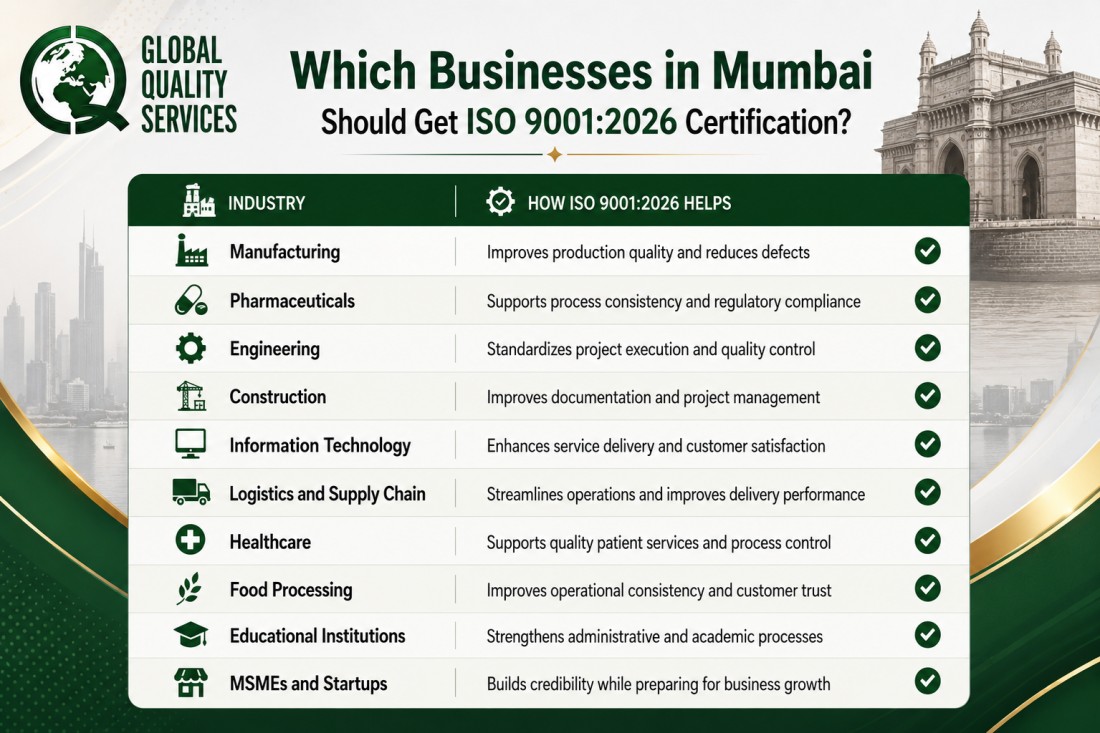
Which Businesses in Mumbai Should Get ISO 9001:2026 Certification?
The updated framework fits businesses of all sizes, offering a clear path to better operations once the standard is officially published.
Step-by-Step ISO 9001:2026 Certification Process in Mumbai
Setting up a clean, fully compliant quality system requires a step-by-step approach that fits naturally into your existing workflows.
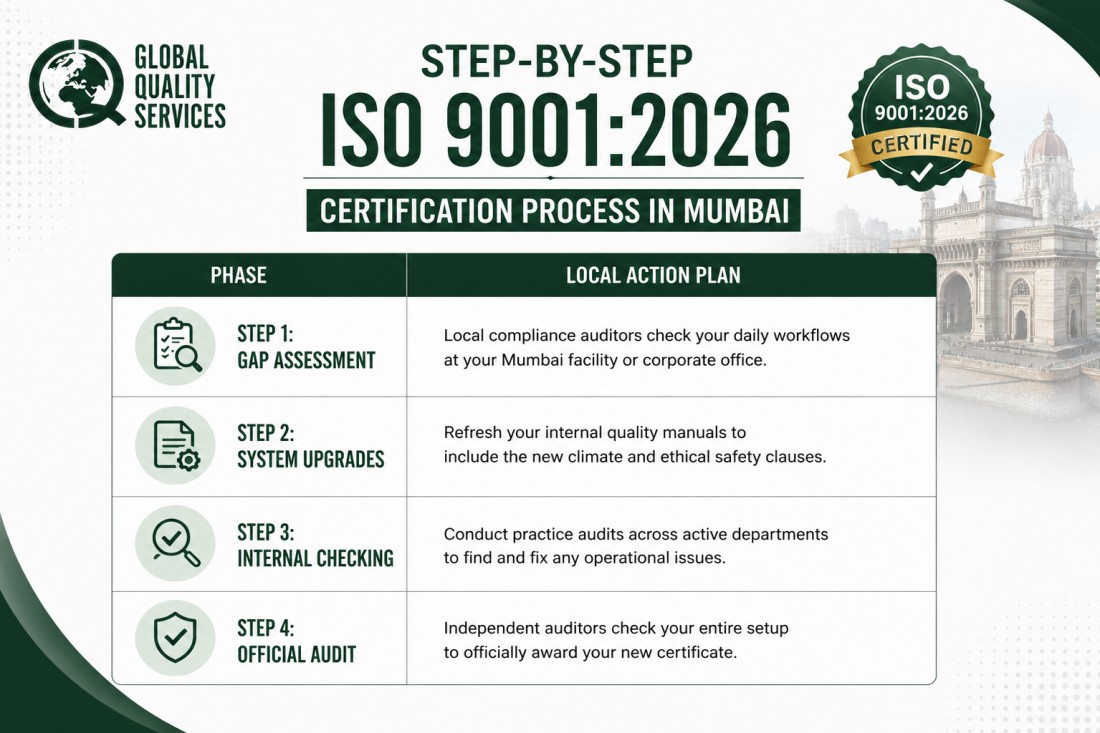
ISO 9001:2026 Implementation Roadmap for Mumbai Businesses
A successful transition depends on a simple timeline that protects your daily business output while updating your quality processes.
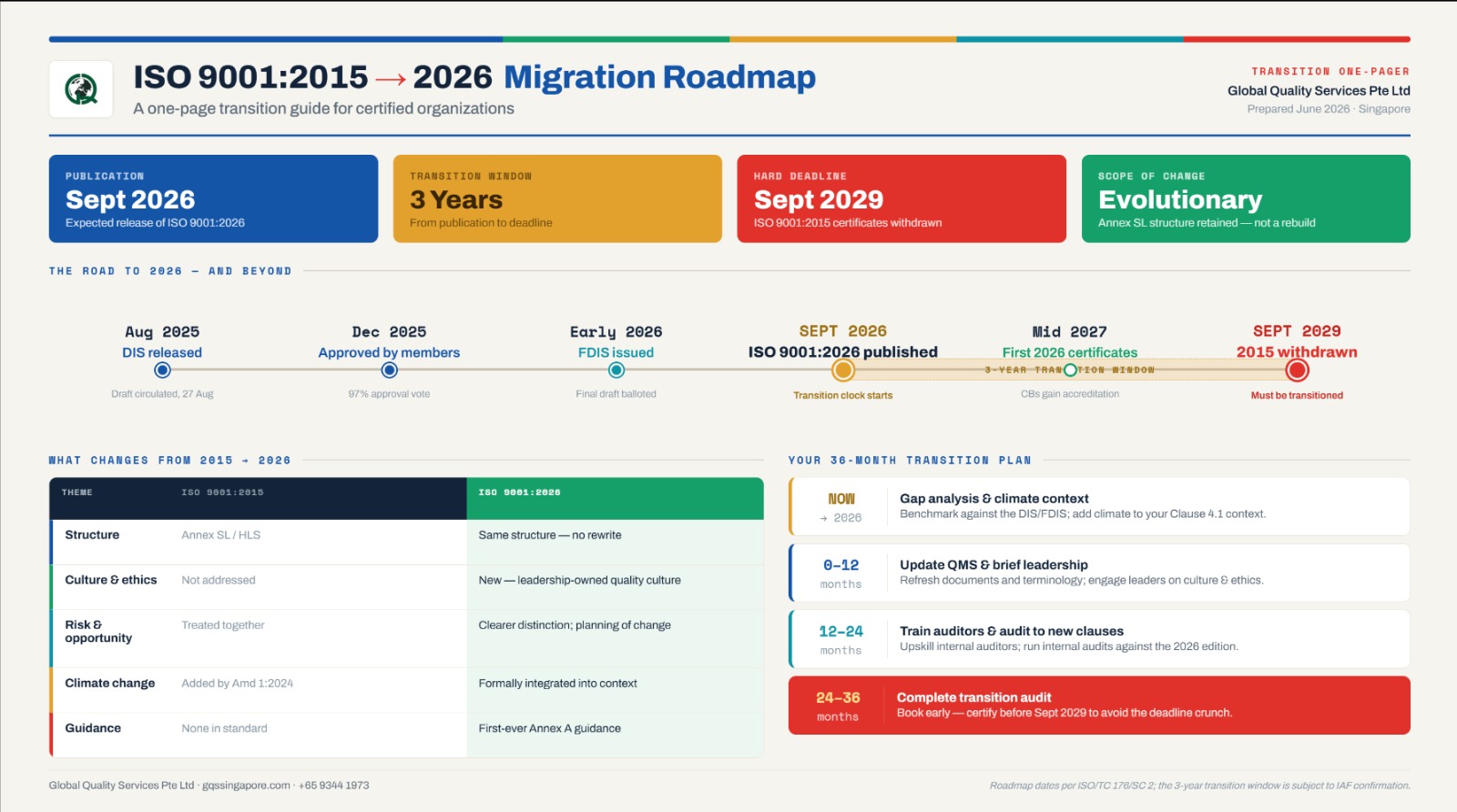
- Review Your Current Setup: Look closely at your existing operational manuals to see what needs to change based on the projected 2026 updates.
- Train Department Heads: Hold simple training sessions for your team leaders in Mumbai to help them understand the new focus on workplace quality culture.
- Run the New Processes: Use the updated workflows alongside your current system for 60 to 90 days to collect the operational records required for the audit.
- Schedule Your Final Audit: Work with accredited certification bodies to book your official stage-one and stage-two audits as soon as the standard officially launches.
Common Challenges During ISO 9001:2026 Implementation
Updating your company’s quality systems can reveal specific operational bottlenecks if you do not plan.
- Siloed Paperwork: Many companies leave all the quality work to a single consultant, which leads to final manuals that do not match how the business actually runs every day.
- Misunderstanding Draft Clauses: Misinterpreting the new rules around climate risks or workplace ethics can cause unexpected gaps during your final external audit.
- Creating Overly Complex Manuals: Writing long, complicated rulebooks adds unnecessary paperwork, making it hard for your employees to stay fast and agile in a busy market like Mumbai.
How Does Global Quality Services Support ISO 9001:2026 Certification Across Mumbai?
Global Quality Services works closely with organizations across Mumbai to simplify every stage of the certification journey while reducing implementation time and unnecessary complexity.
Our support includes:
- Gap analysis to identify areas that need improvement before implementation.
- Development and review of quality manuals, policies, procedures, and operational documents.
- Practical implementation support tailored to your business processes.
- Employee awareness and internal auditor training.
- Internal audit assistance to identify and resolve nonconformities.
- Certification audit preparation and coordination.
- Continued guidance to help maintain compliance after certification.
Whether you are a startup, an MSME, or a large enterprise, the implementation approach is customized to match your organization’s size, industry, and operational requirements.
Upgrade Your Business with Simple, Powerful Quality Systems
Sticking with an old quality framework can hold your business back from landing high-value corporate deals and elite global supply contracts. Preparing early for the new standard protects your industry reputation, cuts out daily process waste, and keeps your teams on the same page.
- Get a clear gap analysis built specifically for your Mumbai office or factory based on the latest draft updates.
- Build a clean, simple documentation setup that helps your business run fast without messy paperwork.
- Work with local, experienced compliance experts to save time and eliminate extra travel fees.
Don’t let complex paperwork slow your company down. Partner with Global Quality Services to get a simple, smooth readiness roadmap for the upcoming international benchmarks. Talk to our regional team today to get a clear, transparent pricing quote for your business.
Frequently Asked Questions
1. What is the purpose of an ISO 9001 quality management system?
The main goal of this system is to help a business consistently deliver products or services that satisfy customer demands and follow regulatory rules. It provides a structured layout for fixing operational errors, improving efficiency, and making sure everyone in the company follows the same proven processes.
2. How long does it usually take to get ISO 9001 certified?
For most small to medium enterprises, the entire process takes anywhere between three to six months. The total time depends on the size of your company, the complexity of your daily operations, and how close your current management systems already are to meeting the standard requirements.
3. What is the difference between an internal audit and an external certification audit?
An internal audit is a practice check done by your own trained staff or an outsourced consultant to find gaps and fix process errors. An external audit is the final official review conducted by an independent registrar who verifies full compliance and actually awards the official certificate.
4. Does our company need to get recertified every single year?
No, the official ISO certificate is valid for three years. However, your certification body will conduct smaller annual reviews called surveillance audits to ensure your teams are still following the quality management guidelines and keeping paperwork updated.
5. Can an entry-level employee lead the quality management system implementation?
While anyone can help manage the daily documentation, the framework requires top management and executive owners to lead the strategy. Without direct leadership oversight, a quality management system usually fails to stick because it requires authority to change company policies and operational habits.