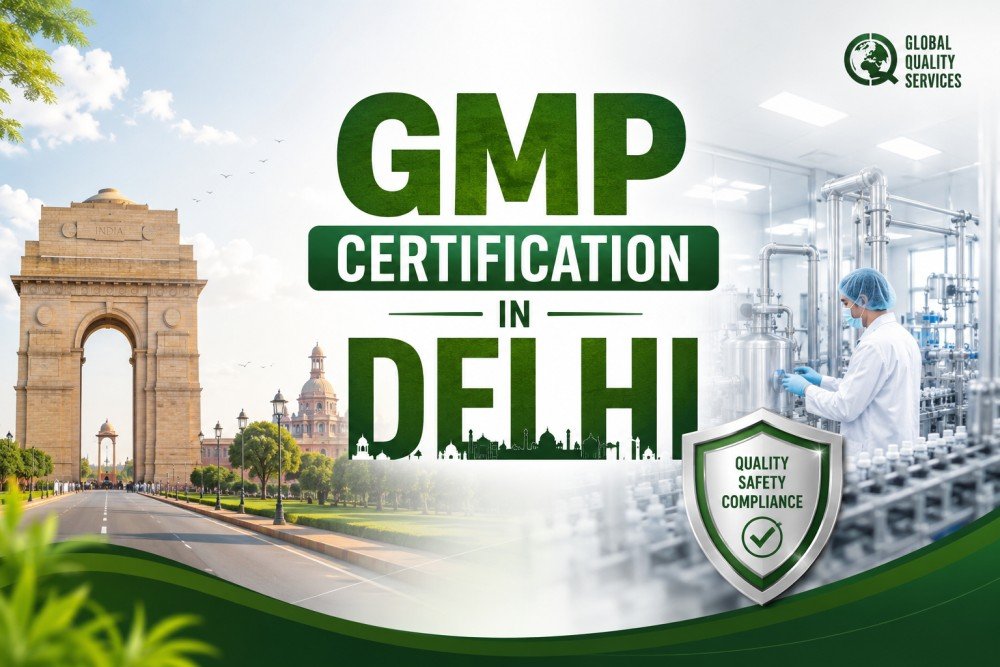
Good Manufacturing Practice (GMP) certification helps manufacturing units across Delhi NCR maintain product safety, high quality, and operational control. Whether your plant operates in Okhla, Bawana, Narela, or Mayapuri, meeting strict quality guidelines is a necessity. Facilities in nearby industrial hubs like Noida and Gurugram also face strict checks. If you produce medicines, food items, cosmetics, or medical tools, staying compliant protects public health and helps your business grow without legal breaks.
As reported by Outlook Business, Delhi’s industrial output recorded a growth rate of 9.19%, which was more than double the national average of 4%. This rapid growth shows how competitive the local market has become. It also highlights the need for reliable quality systems. Getting certified proves that your facility controls cleanroom air quality, follows hygiene steps, calibrates machinery, and maintains batch records on every production run.
Why GMP Compliance Matters for Manufacturers in Delhi
Setting up a compliant factory in Delhi involves more than filling out paperwork. The Central Drugs Standard Control Organization (CDSCO) and the Delhi State Licensing Authority regularly check plants for strict adherence to standards. Upgrading your shop floor brings real benefits:
- Keep Your Operating License: Avoid costly production pauses, product recalls, or license suspensions during state inspection visits.
- Sell to Foreign Buyers: Following WHO-GMP rules lets pharmaceutical and medical device companies apply for a Certificate of Pharmaceutical Product (COPP), opening up simple export paths.
- Cut Down Material Waste: Using tested water plants, clean air controls, and calibrated machines reduces batch failures and raw material loss.
- Build Stronger Business Trust: Showing clear proof of product safety helps you win big supply contracts and white-label manufacturing deals.
- Meet Revised Schedule M Rules: Helps small and medium pharmaceutical factories across Delhi update cleanroom setups, data logs, and contamination checks before state deadlines pass.
Which GMP Requirements Apply to Your Business in Delhi
The exact rules your Delhi plant must follow depend on what you make:
- Pharmaceuticals: CDSCO Revised Schedule M, WHO-GMP guidelines, and digital batch production records.
- Food and Supplements: FSSAI Schedule 4 rules and ISO 22000 hygiene practices.
- Cosmetics and Personal Care: CDSCO Cosmetic Rules, ISO 22716 standards, and cleanroom sanitization routines.
- Medical Devices: Medical Device Rules (MDR), ISO 13485 standards, and controlled particle counts in cleanrooms.
GMP Certification Process in Delhi
Getting your plant fully certified takes a simple five-step approach. Here is how we guide your facility from the first check to final approval:
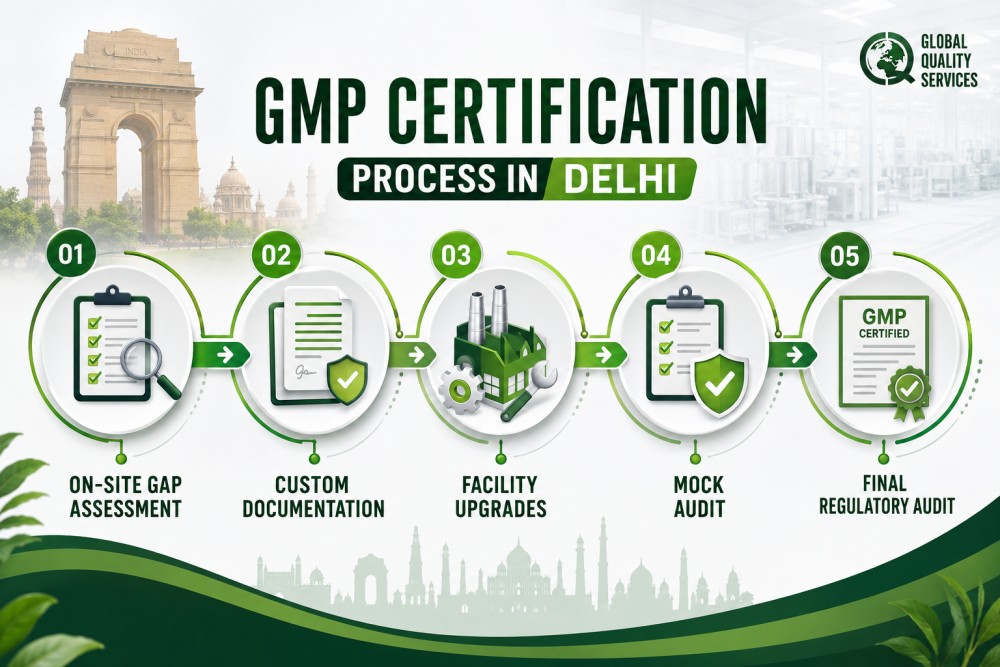
Step 1: On-Site Gap Assessment
We visit your factory in Delhi to review daily operations. Our team checks your floor layout, worker movement, air handling systems, water lines, and cleaning habits to spot any gaps in compliance.
Step 2: Custom Documentation
We write documentation designed for your actual workflow. Instead of using blank templates, we create your Site Master File (SMF), Standard Operating Procedures (SOPs), and Validation Master Plans from scratch.
Step 3: Facility Upgrades
We work with your engineering team to complete needed physical fixes. This step covers cleanroom air pressure, HEPA filter testing, clean water loops, and layout changes to prevent cross-contamination.
Step 4: Mock Audit
We run a full trial audit before government inspectors visit your plant. This test checks how fast your team finds documents, tests data accuracy, and highlights any last-minute fixes.
Step 5: Final Regulatory Audit
We stand alongside your team during the final physical check by state authorities or certification teams. We help clear technical questions and guide you through corrective action reports until your certificate arrives.
GMP Compliance vs GMP Certification: What Is the Difference?
GMP compliance and GMP certification are related, but they are not the same thing. GMP compliance means that a business has established and follows the manufacturing controls required by the applicable regulatory or industry framework. GMP certification refers to a formal certification or assessment route where an authorized or applicable body evaluates the organization against defined requirements.
The difference matters because not every business follows the same certification route. Some GMP requirements arise directly from regulation, while other GMP certifications may be voluntary, customer-driven, or connected to a particular industry or market.
In practical terms:
- GMP compliance focuses on meeting the applicable manufacturing requirements.
- GMP implementation involves putting the required controls, procedures and practices into operation.
- GMP assessment or audit checks whether those controls are actually working.
- GMP certification is the formal recognition available under the applicable certification scheme or framework.
Why Choose Global Quality Services for GMP Certification Support in Delhi
Upgrading a plant takes practical technical work, not just theoretical advice. Global Quality Services helps you make physical improvements and set up proper documentation directly on your factory floor. Our team brings deep experience with local Delhi NCR manufacturing rules, cleanroom setups, and state drug department checks.
- Full Project Management: We handle everything from reviewing your building blueprints to writing custom SOPs and managing audit day.
- Factory-Specific Files: We build your Site Master File and batch records around your actual machinery and layout, skipping useless generic templates.
- Technical Engineering Help: Our experts guide you on cleanroom air systems, water loop testing, and air quality validation.
- Direct Audit Support: We attend official government inspections with your quality team to help answer technical queries clearly.
Build a GMP Ready Manufacturing System in Delhi
Setting up a compliant plant is the easiest way to earn customer trust, secure large orders, and protect your business from costly government shutdown orders.
Buying paper certificates or using generic online forms leaves your company open to heavy fines during surprise state inspections. Partner with Global Quality Services to upgrade your facility layouts, build solid quality systems, and secure your WHO-GMP or Schedule M approval smoothly.
- Talk directly with senior technical consultants who know Delhi NCR industrial regulations.
- Get a clear gap report that outlines practical, step-by-step upgrades for your factory floor.
- Pass your official state audit on the first attempt with expert document and on-site support.
Frequently Asked Questions
1. What does it cost to get a GMP certificate in Delhi?
The cost depends on your plant size, product line, cleanroom setup, and testing needs. Overall expenses cover consulting help, physical fixes (like air handling or water plants), lab testing, and official government fees.
2. How long does the GMP certification process take?
If your factory needs simple paperwork and minor fixes, it takes about 8 to 12 weeks. If you need major cleanroom builds, new HVAC setups, or complex water testing systems, it can take 16 to 24 weeks.
3. Can a private consultant issue an official WHO-GMP certificate for export?
No. Official WHO-GMP certificates needed for international drug exports are issued only by government bodies, such as the Delhi State Licensing Authority working alongside CDSCO officers, after a physical site check.
4. What is a Site Master File and why do I need one?
A Site Master File (SMF) is a master document that describes your plant layout, machinery, staff structure, and quality steps. State drug inspectors read this file before visiting your site to understand how your factory runs.
5. How often must Delhi manufacturers renew their GMP certificate?
Official government GMP certificates stay valid for 3 years. However, your plant must follow all quality routines every day, as state drug inspectors can visit your factory for unannounced spot checks at any time.