Ahmedabad is going through a massive industrial growth spurt. As factories and units spread across hubs like Vatva, Naroda, and Odhav, balancing production with environmental care has become a strict business reality.
Gujarat remains India’s manufacturing leader, contributing approximately 18% of the country’s total industrial output and 28% of India’s exports, according to the Government of Gujarat. The state is also home to more than 33,000 factories employing over 1.7 million workers, making it one of India’s largest industrial economies.
Why Ahmedabad Businesses Are Moving to ISO 14001:2026
Local companies are changing how they approach environmental management. Instead of waiting for a regulatory warning letter, business owners are proactively updating their systems for a few clear reasons.
- Fewer Regulatory Headaches: The GPCB has increased the frequency of surprise site visits and audits. Having a certified, working Environmental Management System (EMS) makes getting your Consent to Establish (CTE) and Consent to Operate (CTO) renewals much faster.
- Securing Big Contracts: Large Indian corporations and multinational brands sourcing parts from Ahmedabad now require their suppliers to have valid ISO certifications. If you do not have it, you miss out on the bidding process.
- Real Cost Savings: This framework targets operational waste. Local factories usually see a noticeable drop in power bills, water usage, and raw material scrap within the first year of setting up the system.
- Easier Exporting: If your company exports goods to Europe or North America, this certification proves to overseas buyers that your production methods meet international green standards.
Which Ahmedabad Industries Benefit Most from ISO 14001:2026
Any business can use this standard, but a few specific sectors in Ahmedabad see an immediate return on investment.
Pharmaceutical Manufacturing
Ahmedabad is home to many pharmaceutical manufacturers serving domestic and international markets. Environmental controls, waste management practices, and documented processes are becoming increasingly important for customer confidence and regulatory compliance.
Chemical Manufacturing
Chemical businesses deal with environmental aspects that require careful monitoring and control. ISO 14001 helps companies identify environmental risks and establish procedures to manage them consistently.
Textile and Garment Manufacturing
The textile sector uses significant amounts of water, energy, and chemicals. A structured environmental management system can help improve resource efficiency while supporting sustainability goals.
Engineering and Fabrication
Engineering companies often work with customers who evaluate suppliers based on quality, safety, and environmental performance. Certification can strengthen supplier credibility and improve business opportunities.
Food Processing
Food manufacturers can use ISO 14001 to improve waste management practices, reduce resource consumption, and support broader operational improvement efforts.
Export-Oriented Businesses
Many international buyers prefer working with suppliers that follow recognized management standards. Certification can help businesses demonstrate their commitment to responsible environmental practices.
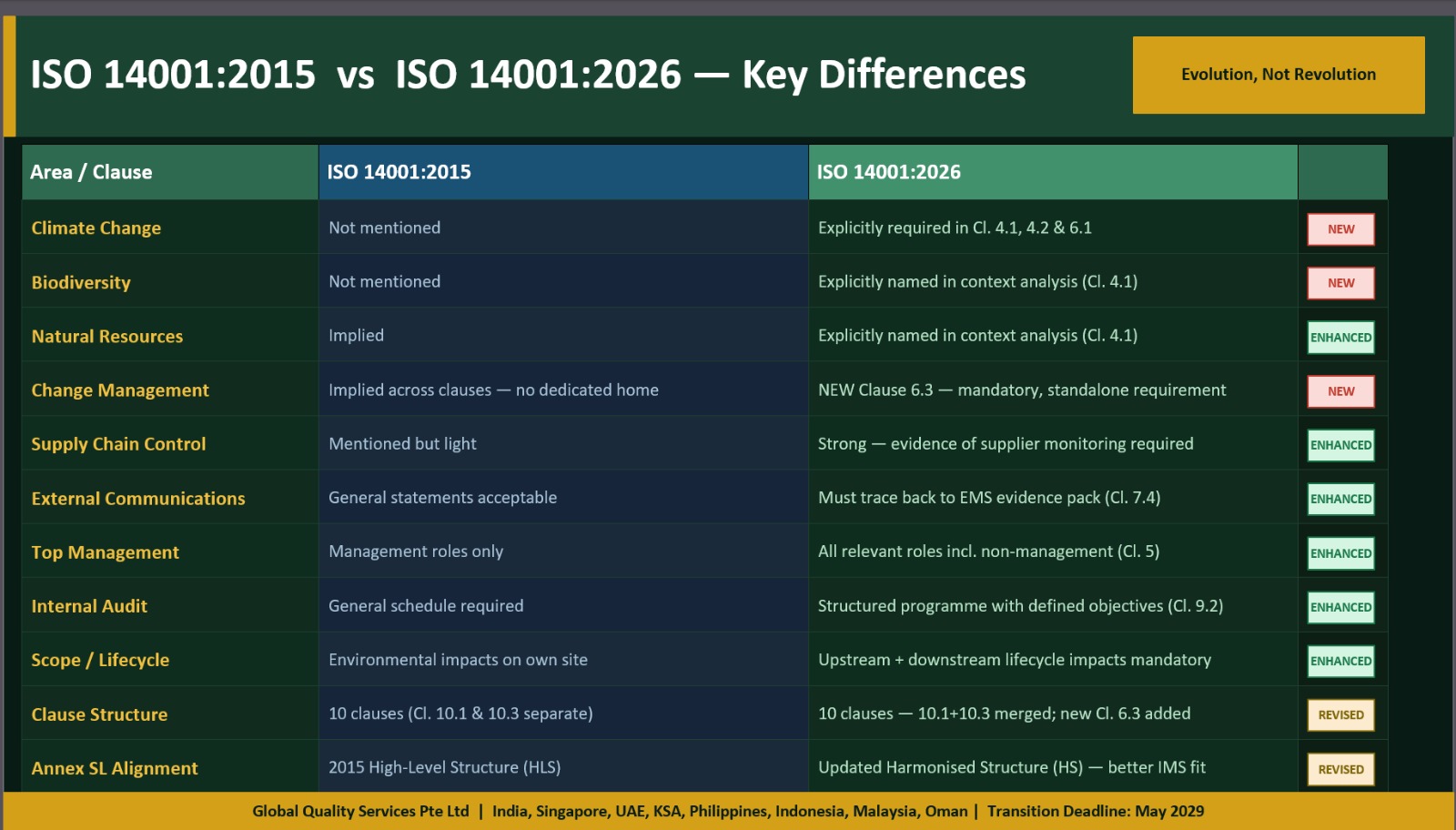
Major Changes in ISO 14001:2026 Compared to ISO 14001:2015
Organizations already certified to ISO 14001:2015 should understand that the new version includes several important updates. Here are the key changes:
ISO 14001:2026 Certification Process in Ahmedabad
Getting your business certified follows a practical, step-by-step path that combines the standard’s rules with local Gujarat laws.
Step 1: Find the Gaps
Look at your current waste management and energy setups. Compare them to the new 2026 rules to see what is missing, while factoring in local GPCB guidelines and Ahmedabad weather risks.
Step 2: Design Your New Workflows
Write down simple, clear operating procedures for your team. This includes creating straightforward plans for handling chemical spills, managing scrap metal, and tracking supplier habits.
Step 3: Train the Floor Staff
Put the new plans into action. Sit down with your supervisors, line workers, and stockroom teams to explain new waste separation habits, energy-saving steps, and spill response procedures.
Step 4: Run a Practice Audit
Perform an internal test run to make sure the new habits are actually sticking. Company leadership should review the findings and fix any lingering issues before the official inspectors arrive.
Step 5: Pass the External Audit
An independent, accredited certification reviewer visits your facility. They check your paperwork first, then walk your factory floor to see your system in action. Once they verify everything works, they issue your official certificate.
Why Choose Our ISO 14001 Consultants in Ahmedabad?
Upgrading your company’s environmental systems takes a solid understanding of both international rules and local factory conditions. Our consulting team offers hands-on support built for the local industrial landscape.
- Deep Local Knowledge: We know GPCB requirements inside and out, and we regularly work with factories across Vatva, Naroda, and Sanand.
- No Unnecessary Paperwork: We do not believe in creating bloated, complicated systems. We design practical workflows that fit right into your existing daily routines.
- Clear Employee Training: We focus on teaching your team how to run the system smoothly so you can easily maintain your certification long after our job is done.
- Complete Audit Support: Our team stays with you through every single step, from that first gap analysis to sitting next to you during the final official audit.
ISO 14001:2026 Migration Services for Existing Certificate Holders
If your organization is currently certified to ISO 14001:2015, now is the right time to begin planning for the transition.
Starting early allows your team to review the new requirements, update documentation, train employees, and prepare for future audits without unnecessary pressure.
Our Migration Support Includes
- Gap assessment against ISO 14001:2026 requirements
- Documentation review and updates
- Transition planning
- Internal audit support
- Employee awareness sessions
- Certification readiness assessments
If your organization is preparing for the next version of the standard, Contact Global Quality Services for migration to the 2026 version and receive guidance from an experienced ISO 14001:2026 consultant. We provide ISO 14001:2026 Migration consulting and support for ISO 14001:2026 transfer certification projects across Ahmedabad and Gujarat.
Frequently Asked Questions
1. How long does ISO 14001:2026 certification take?
Most organizations complete certification within two to six months, depending on company size, operational complexity, and the readiness of existing systems.
2. Is ISO 14001:2026 suitable for small businesses?
Yes. The standard can be implemented by organizations of any size, including small and medium-sized businesses.
3. Do companies certified to ISO 14001:2015 need to migrate?
Yes. Organizations currently certified to ISO 14001:2015 will need to transition to the updated version within the timeline established by certification bodies.
4. What factors affect ISO 14001 certification costs?
Costs typically depend on employee count, number of locations, business activities, existing management systems, and certification body requirements.
5. How do experienced consultants help during implementation?
Experienced consultants can identify gaps early, simplify documentation requirements, provide training, and help businesses prepare for certification audits more effectively.