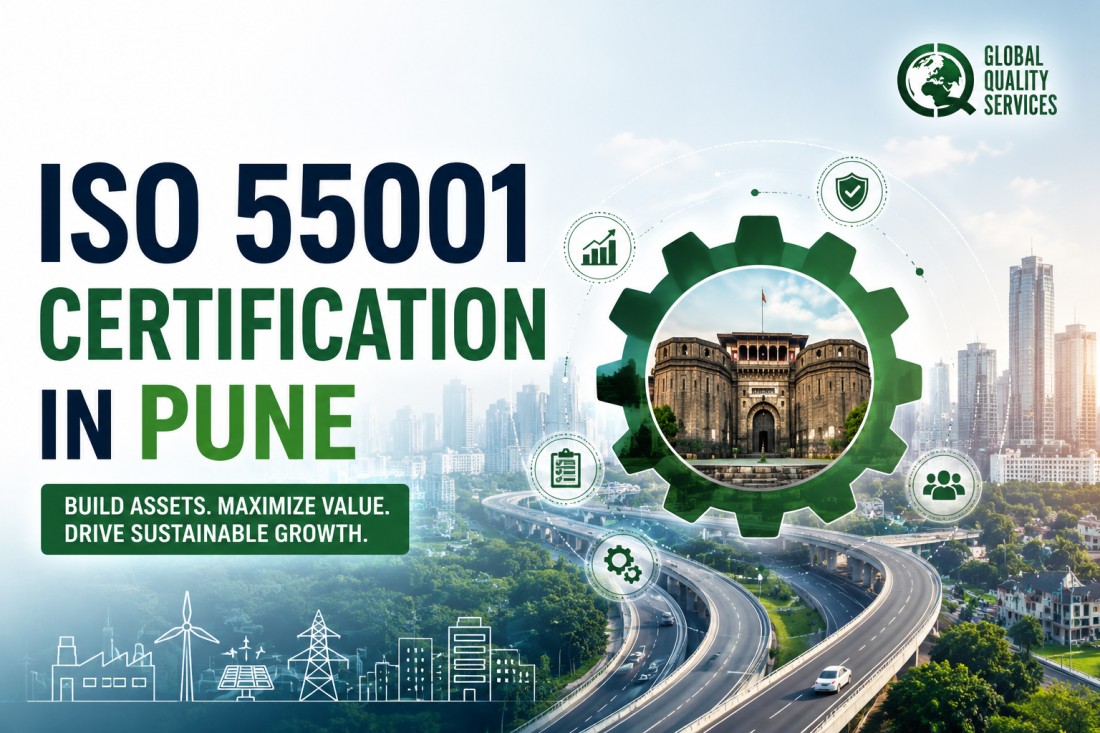
Pune has emerged as a premier economic force in the country, experiencing unprecedented industrial and manufacturing expansion. Commercial property data from the Cushman & Wakefield Pune Real Estate MarketBeat Report shows that the city secured a massive 5.9 million square feet of industrial leasing in the full calendar year. The engineering and manufacturing sectors dominated this demand by commanding 73 percent of the entire market share, with activity focused heavily around key zones like Chakan, Talegaon, and Pirangut. This intense pace of growth means that local businesses are handling a greater volume of capital machinery, production lines, and high-tech corporate infrastructure than ever before.
Managing these physical assets efficiently has become a critical bottom-line priority rather than a minor operational choice. ISO 55001 serves as the universal framework for establishing an effective Asset Management System. It gives leadership teams a practical blueprint to track, evaluate, and optimize their assets throughout their entire operational lifespan. Implementing this standard allows businesses in Pune to protect their financial investments, keep their machines running at peak performance, and eliminate costly operational disruptions.
Why ISO 55001 Certification Matters for Businesses in Pune
An optimized asset management system gives organizations clear financial and operational advantages in a highly competitive corporate market.
- Minimizes Costly Production Downtime: When a major assembly line stops unexpectedly, companies lose significant revenue every hour. This standard moves your maintenance approach from a reactive fix-it model to a predictive system that catches infrastructure failures before they happen.
- Lengthens the Lifespan of Heavy Equipment: Proper tracking and systematic maintenance intervals help protect expensive hardware. Extending the working life of your existing machinery lets you delay heavy capital investments for new equipment.
- Unlocks Global B2B Contract Opportunities: International corporations and enterprise clients want to work with verified, low-risk suppliers. Holding an official compliance certificate proves your operational reliability and gives you an immediate edge during complex commercial bidding processes.
- Reduces Wasteful Resource Silos: The framework creates an open line of communication between finance departments, procurement teams, and plant engineers. This cross-functional alignment ensures that your corporate capital goes exactly where it will deliver the highest returns.
- Supports Energy Efficiency and Green Compliance: Modern asset management practices naturally lower resource consumption. Keeping your systems properly tuned reduces carbon outputs, helping your business comply with local environmental laws and global sustainability targets.
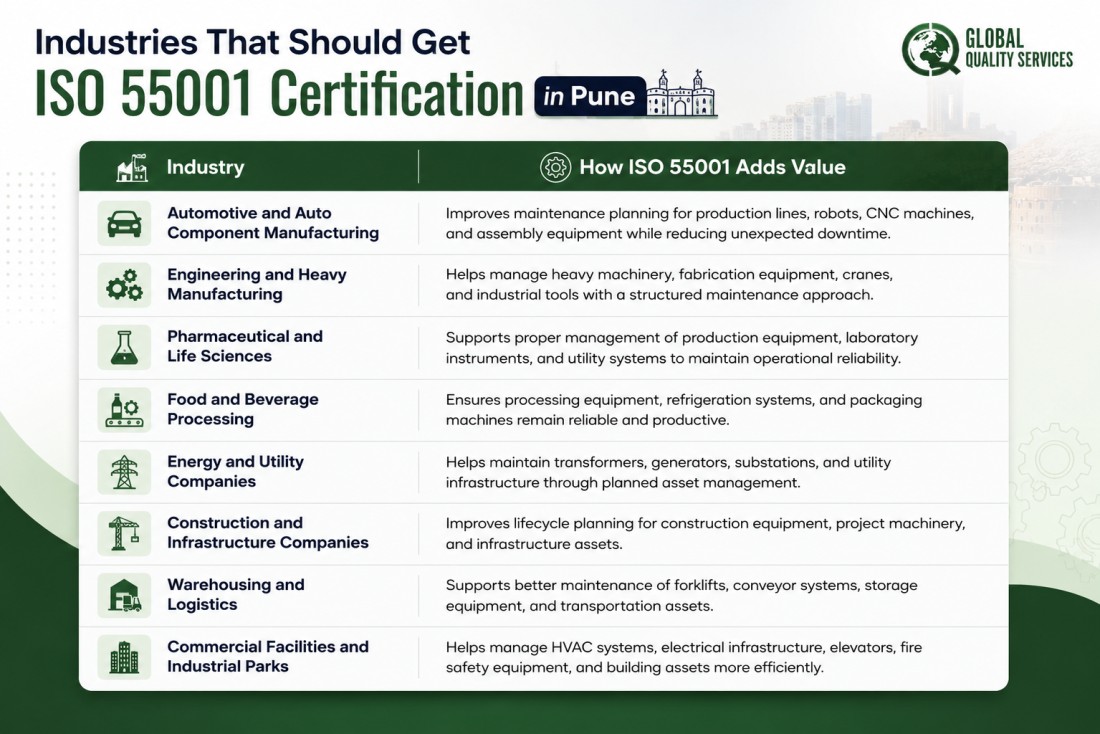
Industries That Should Get ISO 55001 Certification in Pune
ISO 55001 Certification Process
Transitioning your corporate facilities to a globally recognized standard requires a clear, step-by-step implementation plan.
Step 1: Gap Analysis and Asset Assessment
The process begins with a detailed assessment of your existing asset management practices. Your current policies, maintenance procedures, asset records, and operational risks are reviewed to identify gaps against ISO 55001 requirements. This assessment helps create a practical implementation plan.
Step 2: Documentation and System Development
Based on the assessment findings, the required asset management documents are prepared. This includes the asset management policy, objectives, asset register, maintenance plans, risk assessment records, and other supporting procedures needed to build an effective management system.
Step 3: Implementation and Employee Training
Once the documentation is ready, the asset management system is implemented across the organization. Employees receive training on their responsibilities, maintenance procedures are standardized, and asset performance is monitored using consistent processes.
Step 4: Internal Audit and Management Review
An internal audit is conducted to verify that the system is being followed correctly and complies with ISO 55001 requirements. Any nonconformities are addressed through corrective actions, and the management team reviews the overall effectiveness of the system before the certification audit.
Step 5: Certification Audit
An accredited certification body performs the final audit to evaluate your organization’s compliance with ISO 55001 requirements. Once all requirements are successfully met, your organization is awarded ISO 55001 Certification, demonstrating that your asset management system follows internationally recognized best practices.
Essential Checklist of Mandatory Documents for the Asset Audit
External auditors will need to verify an organized set of corporate records to confirm your compliance status. Your team should prepare the following list of core items before the formal audit begins:
- The Corporate Asset Management Policy: A formal statement signed by top management that clearly establishes the organization’s commitment to protecting its operational assets.
- The Strategic Asset Management Plan: A master document detailing how your company converts broad commercial goals into actionable maintenance and lifecycle steps.
- Measurable Asset Objectives: Documented, realistic targets regarding system uptime, risk reduction, and maintenance expenditure across your business units.
- Operational Control Ledgers: Up-to-date maintenance logs, machinery repair histories, and equipment calibration sheets proving that the system operates daily.
- Central Asset Risk Assessment: A detailed matrix identifying potential equipment failure points, their estimated financial consequences, and formal mitigation workflows.
- Employee Competency Records: Training certificates and job descriptions showing that the workers handling your high-value assets have the right technical skills.
- System Performance Reviews: Formal notes from internal audits, key performance metric evaluations, and executive management update meetings.
How Does Global Quality Services Support ISO 55001 Certification Across Pune?
Building a reliable asset management system requires a balance of technical compliance knowledge and practical field experience. Global Quality Services simplifies this journey by offering complete consulting support tailored specifically to your company’s operational needs. Our consulting team works directly beside your managers on the ground, creating a functional system that improves your business without adding unnecessary administrative work.
- Tailored Asset Framework Design: We never use generic templates because every industrial facility operates differently. We build a personalized asset management plan centered on your specific factory layout, machinery setup, and budget goals.
- On-site Factory Inspections and Guidance: Our team visits your production sites or tech parks in Pune in person. We review your daily physical routines to make sure they match your written guidelines perfectly before the official audit.
- Clear Documentation Support: We guide your staff through the process of writing your asset policy documents, maintenance checklists, and risk matrices, ensuring that every record passes strict compliance standards.
- Practical Internal Auditor Coaching: We train your internal engineers and quality team members so they know how to spot system flaws and apply fast solutions before the external registrar arrives.
- End-to-End Audit Coordination: We stay with your team through the final evaluation process, helping you pick a highly respected certification registrar and helping you answer any compliance questions smoothly.
Achieve ISO 55001 Certification with Confidence
Protecting your high-value infrastructure and maximizing equipment efficiency is essential for keeping your business profitable over the long term. Registering your asset management framework removes hidden operating risks, protects your capital budgets, and establishes immense trust with major international clients. Partnering with Global Quality Services provides your business with the local insight, field experience, and step-by-step consulting support needed to build an audit-ready system that delivers real financial value.
- Receive a clear price estimate built entirely around your specific asset scale and facility locations.
- Get a realistic project timeline showing exactly how your team can achieve full audit readiness without production delays.
- Uncover immediate cost-saving opportunities by scheduling a preliminary asset management gap review with our local team.
Frequently Asked Questions
1. Who is legally authorized to issue an official ISO 55001 certificate?
The certificate must be issued by an independent, accredited third-party certification body, often called a registrar. Consulting firms help you design, build, and prepare your system for the audit, but they cannot legally issue the formal certificate themselves.
2. Does the asset management framework apply to leased or rented equipment?
Yes, if those leased assets are critical to your core business operations or service delivery. You can include rented machinery or infrastructure within the scope of your system as long as you have operational control over their maintenance and safety risks.
3. Can an active asset management system help reduce corporate insurance premiums?
Many business insurance providers look favorably on organizations with verified risk-management frameworks. Proving that you follow a certified protocol to prevent equipment failures and property damage can give your finance team leverage to negotiate better premium rates.
4. What happens if our company does not pass the final certification audit?
If the external auditor finds gaps, they will issue a list of non-conformances. Your business will be given a specific grace period, typically a few weeks or months, to fix these individual issues and submit proof of corrective action without needing to restart the entire process.
5. Is top corporate management required to participate directly in the audit?
Yes, leadership involvement is a key requirement of the standard. External auditors will interview senior executives to verify that your asset management goals align directly with your high-level corporate business strategy and long-term financial plans.