Bengaluru stands out clearly as a major food technology and innovation hub in South India, driving modern consumer brands and advanced supply chain networks. Recent industry data from a joint FICCI and Deloitte report highlights that India’s processed food sector is expanding fast toward a massive valuation of USD 600 billion by 2030.
This rapid market growth puts real pressure on local makers to upgrade their quality checks and meet international standards. According to the Ministry of Food Processing Industries, Karnataka anchors a fast-growing agro-industrial network, where meeting stringent compliance requirements helps local brands sell their products globally. Securing a recognized food safety certificate is no longer optional for local plants that want to grow their footprint.
Why Bengaluru’s Food Industry is Adopting FSSC 22000 Faster Than Ever
FSSC 22000 Certification helps businesses meet these expectations with confidence. Some of the biggest reasons businesses are adopting FSSC 22000 include:
- Global Market Expansion: International buyers and large retail stores demand proper food safety proof before they work with any local supplier or packaging partner.
- Strict Rules to Follow: Local food processing units face close checks from safety authorities. Having a solid management system helps you avoid fines or unexpected factory shutdowns.
- Stronger Supply Chains: Automated warehouses and quick delivery centers across Bengaluru need clean hygiene rules to stop contamination and product recalls.
- Better Buyer Trust: Shoppers today care about safety credentials. Having the right stamp of approval helps your brand stand out on crowded store shelves.
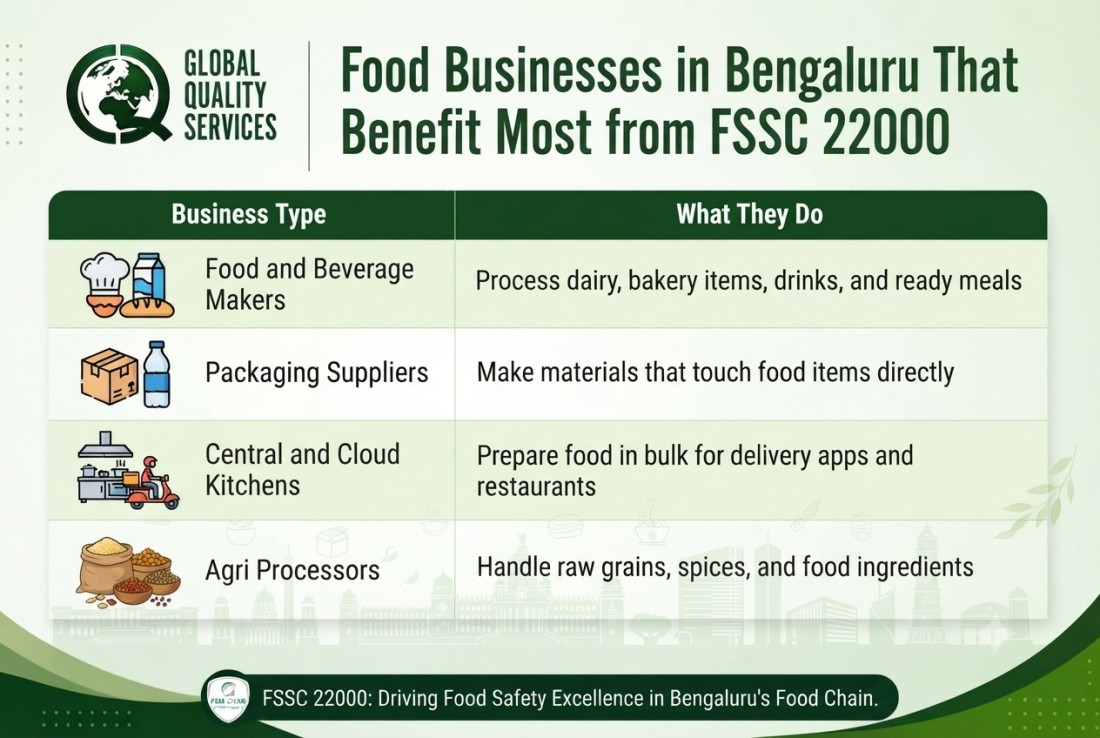
Food Businesses in Bengaluru That Benefit Most from FSSC 22000
FSSC 22000 Certification can be adapted to businesses of different sizes and food categories. Here are major business types in Bengaluru that can benefit from FSSC 22000 certification:
Core Elements of Our FSSC 22000 Implementation Services
Our FSSC 22000 implementation services include:
- Simple Gap Check: Our experts look at your current factory setup and daily work steps to find weak spots.
- Custom Paperwork: We write clear safety manuals and daily task lists that fit your exact workspace.
- Staff Training: We teach your team how to run internal checks so you stay ready for audits all year round.
- Audit Guidance: We stand by your side during the official stage one and stage two checks done by registered certification bodies.
Common Food Safety Challenges Faced by Bengaluru Manufacturers
Here are some of the most common challenges we see among food manufacturers in Bengaluru:
- Tracking Ingredients: Tracing where raw materials come from across many different vendors without digital records is difficult.
- Managing Allergens: Failing to keep allergy-causing ingredients separate can lead to accidental mixing during packaging.
- Old Cleaning Habits: Using basic cleaning methods that do not meet modern international audit rules.
- Low Staff Involvement: Treating safety guidelines as just paperwork instead of a daily habit on the factory floor.
How Does Global Quality Services Support FSSC 22000 Certification Across Bengaluru
Getting certified takes real-world experience and clear steps. We take the stress out of the process by matching technical knowledge with practical factory help. Our team works hand in hand with your plant managers to build clean habits that satisfy global buyers without slowing down your daily output.
- Factory Visits: We walk through your workspace in industrial hubs like Peenya or Bommasandra to check real material flow and worker hygiene.
- Clear Documents: We write short and simple standard procedures that your workers can follow easily every day.
- Practice Audits: We run mock checks to find and fix small mistakes before the official auditor arrives.
In addition to FSSC 22000 Certification, we also provide consultancy/guidance for PCQI (Preventive Controls Qualified Individual) in Training and Certification to help food manufacturers comply with the U.S. FDA FSMA requirements.
Migration or FSSC 22000 from Version 6 to Version 7
Staying ahead of food safety standards can feel straightforward with the right roadmap. Version 7 of FSSC 22000 introduces key updates designed to keep your facility compliant, agile, and respected across international markets. Mandatory upgrade audits start May 1, 2027. Preparing your team and updating processes now guarantees a smooth transition during audit day.
Key Updates in Version 7
- Modernized PRP Guidelines: Adopts the updated ISO 22002:2025 standards to strengthen hygiene protocols throughout your facility.
- Heightened Defense and Anti-Fraud Measures: Raises accountability for leadership while tightening controls around threat mitigation and supply chain vulnerability.
- Actionable Sustainability Standards: Introduces structured guidelines aimed at curtailing food waste and optimizing resource usage.
- Verified Team Competency: Mandates documented, role-specific training for staff members managing food safety, risk assessments, and internal audits.
Get Expert FSSC 22000 Certification Support in Bengaluru
- Proven Industry Expertise: Our experienced consultants bring years of hands-on compliance knowledge to every factory floor we visit across Karnataka.
- Zero Production Disruption: We build practical safety systems that integrate seamlessly into your existing work shifts without slowing daily output.
- Guaranteed Audit Success: We stay with you through every single step from the initial gap check until you receive your final certificate.
Ready to protect your brand, unlock global export channels, and simplify your path to compliance? Partner with Global Quality Services today to secure expert guidance and take your food safety standards to the next level.
Frequently Asked Questions
1. What is the main difference between ISO 22000 and FSSC 22000?
ISO 22000 gives you a basic layout for food safety management. FSSC 22000 goes further and is fully accepted by the Global Food Safety Initiative. Major retail brands around the world prefer it because it includes stricter prerequisite programs.
2. How long does the entire certification process take for a plant in Bengaluru?
The whole process usually takes between three and five months. The exact time depends on your factory size, how complex your products are, and how fast your team adopts the new paperwork.
3. Are surveillance audits required after getting the certificate?
Yes. The main certificate lasts for three years, but the issuing body visits your plant once every year to make sure you still follow all the rules.
4. Do we need to stop our production lines during the implementation phase?
No. Our consultants fit their visits around your work shifts to keep downtime low. We mix safety upgrades into your normal routine, so your output stays steady.
5. Can small food processing units or cloud kitchens apply for this standard?
Yes. FSSC 22000 works for businesses of all sizes, from small local makers to large processing plants across the food supply chain.