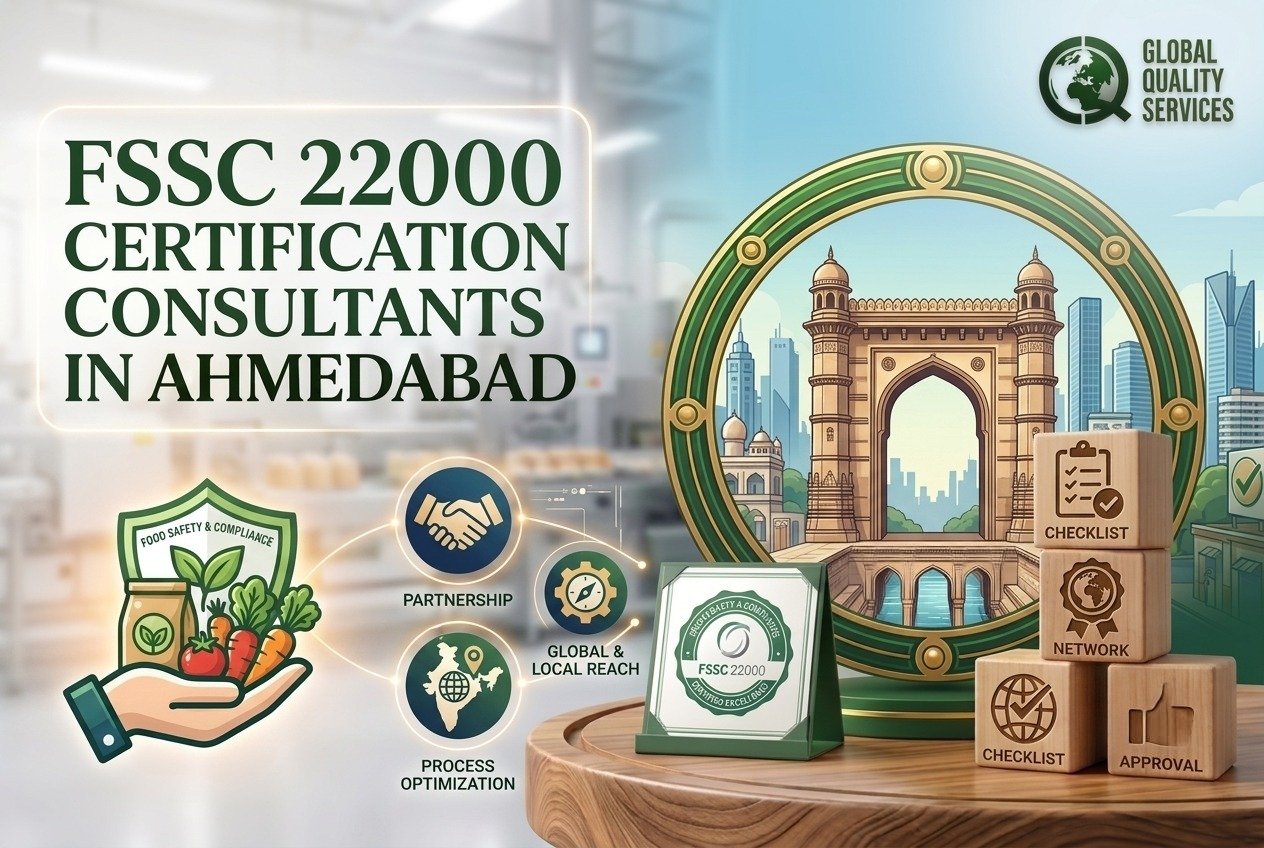
Ahmedabad is a primary hub for food production and industrial processing in Western India. The Ministry of Food Processing Industries chose Ahmedabad to host the official SAPLING policy dialogue on food systems transformation. According to the government report released at the summit, overall food processing levels across major agricultural commodities in India expanded from 10% to nearly 17%, reflecting the rapid industrial modernization happening in regional food plants.
To win contracts with major retail brands and international buyers, local food plants must meet recognized global standards. FSSC 22000 certification gives your facility global credibility under the Global Food Safety Initiative (GFSI) framework. Working with qualified FSSC 22000 Certification Consultants in Ahmedabad helps your team navigate Version 6.0 standards, set up effective HACCP protocols, and clear external audits cleanly.
Why Ahmedabad Has Become One of Gujarat’s Leading Food Manufacturing Hubs
Ahmedabad offers clear advantages for food processing operations. The city brings together specialized industrial infrastructure, strong logistics networks, and direct access to raw agricultural materials.
- Dedicated Industrial Zones: GIDC estates in Sanand, Changodar, Naroda, and Vatva provide reliable power, industrial water access, and large floor plates built for manufacturing.
- Port and Freight Access: Direct highway links to major ports like Mundra and Kandla make exporting processed goods simple and efficient.
- Raw Material Availability: Proximity to Gujarat’s farm belts ensures a continuous supply of spices, dairy, grains, and fresh produce.
- State Regulatory Support: Clear single-window clearances and government food processing incentives speed up plant setups and expansion projects.
Food Businesses in Ahmedabad That Should Consider FSSC 22000 Certification
FSSC 22000 certification applies to companies operating across the food manufacturing and packaging supply chain. If your business processes, handles, or packages food, this certification applies directly to your operations.
- Dairy and Beverage Plants: Facilities processing liquid milk, cheese, packaged juices, soft drinks, and purified drinking water.
- Spices, Grains, and Milling Units: Flour mills, spice grinding plants, and dehydrated crop processing facilities.
- Ready-to-Eat and Prepared Food Facilities: Commercial kitchens, frozen snack units, ambient food production, and catering suppliers.
- Food Packaging Manufacturers: Production lines making plastic films, paper cartons, containers, or cans that touch food directly.
- Cold Storage and Warehousing Companies: Temperature-controlled facilities and logistics hubs handling wrapped food products.
Our FSSC 22000 Certification Approach for Ahmedabad Businesses
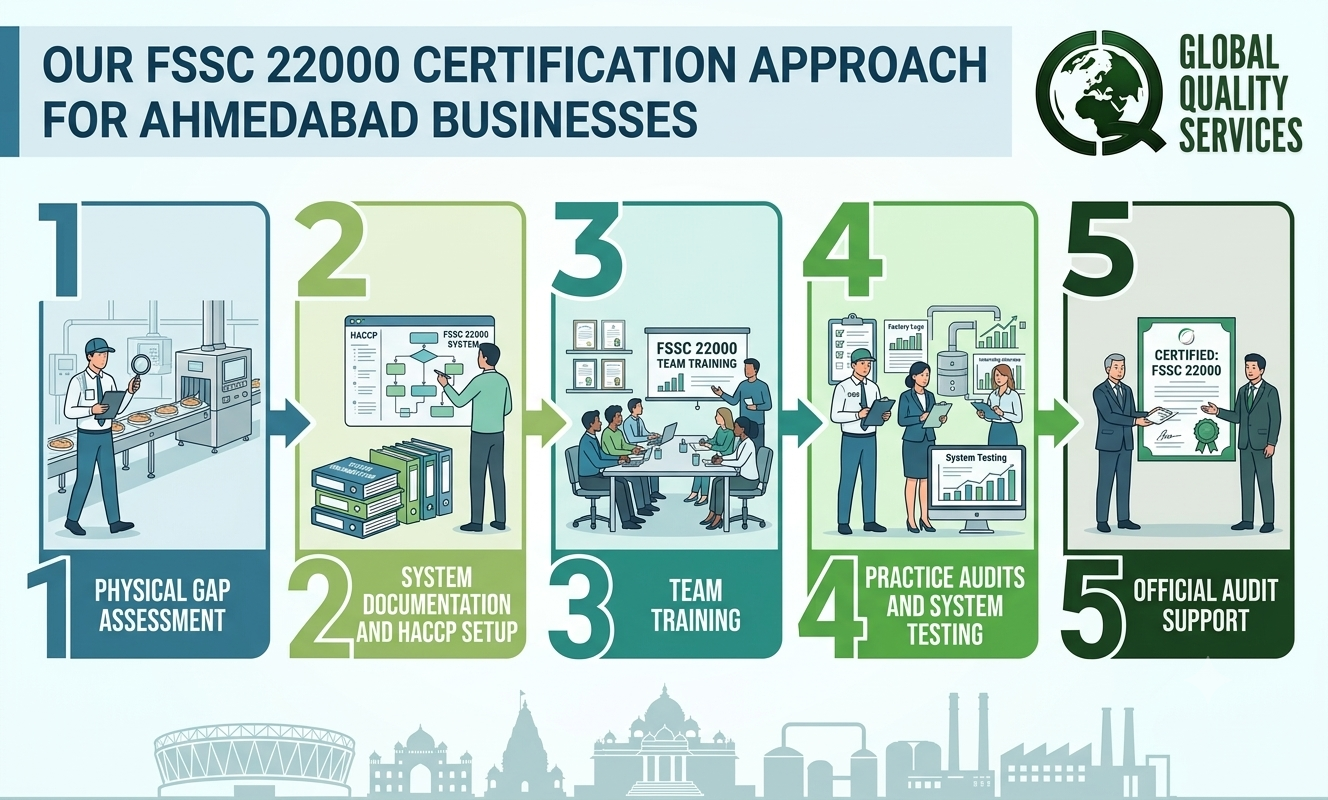
Implementing FSSC 22000 Version 6.0 requires a clear, linear framework. We use a structured 5-step process to get your plant audit-ready quickly without interrupting daily operations.
Step 1: Plant Gap Assessment
We inspect your shop floor, layouts, machinery, and hygiene stations against Version 6.0 standards. You receive a clear checklist of every physical and procedural gap to fix.
Step 2: System Documentation
We draft practical Prerequisite Programs (PRPs) and Hazard Analysis Critical Control Point (HACCP) plans tailored to your specific product lines and daily routines.
Step 3: Team Training
We train supervisors and floor workers on daily sanitation, allergen handling, and food safety practices. We also certify your internal audit team.
Step 4: Practice Audit
We run a realistic mock audit to test your records, trace systems, and staff readiness. We fix all open issues before the external audit team arrives.
Step 5: Final Audit Support
Our consultants stay on-site during your Stage 1 and Stage 2 external audits to assist your team, answer technical queries, and ensure swift certificate release.
Common Food Safety Challenges Faced by Ahmedabad Manufacturers
Food Processing Plants face several operational challenges when preparing for certification.
- Meeting Requirements of Version 6.0: Changing plant practices to comply with new standards of food safety culture, hygienic equipment design, and food waste management.
- Allergen Separation: Maintaining cleanliness in common lines for preventing cross-contamination in spice mills, bakery lines, or snack packaging plants.
- Issues in Plant Layout: Redesigning old plants in the GIDC area so that the zone of receipt of raw materials is separate from the production zones.
- Tracking of Suppliers: Maintaining relevant test certificates for the raw materials purchased from local open markets.
- Overload with Paperwork: Over-complicated paper records that confuse plant floor employees.
How Does Global Quality Services Support FSSC 22000 Certification Across Ahmedabad
Implementing International Safety Standards needs on-the-ground assistance rather than a long report. Global Quality Services helps with setting up a system that is audit-ready by working directly with plant managers, quality assurance managers, and line operators from Gujarat.
We understand local GIDC zones, FSSAI guidelines, and the requirements of third-party audits. We do all the hard work regarding documentation, risk assessments, corrective actions, and process designs. Be it a spice processing unit in Naroda or a packaging unit in Sanand, we help you get your certificate without halting operations.
In addition to FSSC 22000 Certification, we also provide consultancy/guidance for PCQI (Preventive Controls Qualified Individual) in Training and Certification to help food manufacturers comply with the U.S. FDA FSMA requirements.
Migration or FSSC 22000 from Version 6 to Version 7
Navigating the shift to FSSC 22000 Version 7 offers a clear opportunity to strengthen your operational integrity and secure your standing in global supply chains. Certification bodies begin official upgrade audits on May 1, 2027. Updating your internal policies and training your workforce early will ensure a smooth, confident transition.
Key Focus Areas in Version 7
- Formal Qualification Metrics: Facilities must maintain clear, verified documentation proving that employees in charge of quality assurance, fraud prevention, and internal audits possess specialized training.
- Updated Environmental Controls: The new framework embeds practical sustainability metrics, tasking facilities with tracking resource conservation and actively reducing food loss throughout production.
- Strengthened Security Protocols: Executive teams must demonstrate direct involvement in developing fraud mitigation plans and building stronger defenses against supply chain threats.
- Aligned Prerequisite Benchmarks: The standard integrates the updated ISO 22002:2025 series to refine baseline sanitation measures and harmonize facility-wide hygiene practices.
Start Your FSSC 22000 Certification Journey in Ahmedabad
Are you prepared to meet world standards for food safety and gain the trust of big retailers? Global Quality Services provides your plant with real assistance, detailed documentation, and on-site help throughout the process.
- End-to-End Assistance: From the first-floor inspection to closing of the final audits.
- Tailored Procedures: Safety manuals tailored specifically for your equipment and floor design.
- Timely Process: Project plans that ensure your plant is ready for audit in an efficient manner.
Contact our engineers and quality assurance staff today for a facility evaluation at your plant.
Frequently Asked Questions
1. What is the main distinction between ISO 22000 and FSSC 22000?
ISO 22000 is a generic food safety system. FSSC 22000 is a combination of ISO 22000 along with sector-specific pre-requisite programs and additional GFSI requirements, and it is mandatory for most international retail chains and corporate buyers.
2. How much time does it usually take for a plant in Ahmedabad to be certified under FSSC 22000?
Typically, the plant project lasts from three to six months, depending on the size of the plant, its current layout, preparedness of the labor force, and speed of floor alterations.
3. How long is the validity period of the FSSC 22000 certificate?
The validity period of the FSSC 22000 certificate is three years. You will need to have successful surveillance audits in years one and two, and then the third year will be the re-certification year.
4. Is FSSC 22000 required for food packaging material manufacturers?
While the Indian laws do not mandate FSSC 22000, most large-scale food corporations will insist that their packaging providers are certified in FSSC 22000 (Category I) to make sure that no contamination of their product lines happens due to contaminated packaging material.
5. In what way is FSSC 22000 consistent with FSSAI Central License requirements?
The FSSC 22000 covers all the FSSAI Schedule 4 hygiene and safety requirements. Passing FSSC 22000 standards means passing your facility inspection by the FSSAI at the state level.