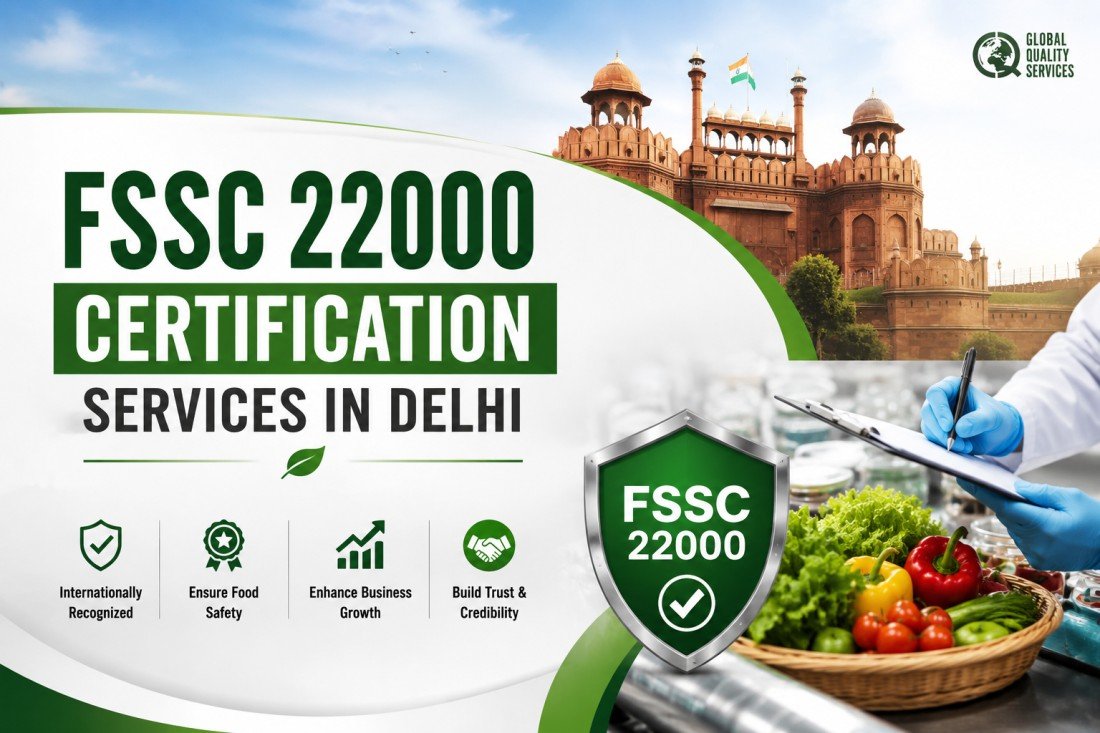
Food processing companies in Delhi NCR face growing demand for verified hygiene standards, structural safety, and global quality compliance. Obtaining FSSC 22000 Certification in Delhi enables food manufacturers, central kitchens, and packaging suppliers to satisfy strict retail criteria and expand into international markets.
During the 2025-26 fiscal year, national food safety regulators conducted 397,009 inspections across food facilities to enforce stricter quality standards. Financial penalties exceeding Rs 154.87 crore were issued to non-compliant businesses. You can review the full enforcement report on the Food & Drink Innovations Official Portal. Furthermore, a joint industry study by FICCI and Deloitte indicates that India’s food processing market is accelerating toward a 600 billion dollar valuation by 2030, driven by rapid urban growth and increased consumer demand for certified, safe food products. You can read the detailed market projections published on ChiniMandi News.
Operating a food facility in competitive industrial hubs requires robust management systems. Obtaining an accredited food safety certificate ensures your plant remains fully prepared for rigorous regulatory audits and buyer evaluations.
Why Delhi Has Become a Strategic Hub for Food Manufacturing and Distribution
This section examines how geographic location, infrastructure expansion, and shifting buyer requirements have turned Delhi into a major center for modern food production.
- Concentration of Major Industrial Zones: Delhi houses dense manufacturing hubs including Okhla, Bawana, Narela, and Lawrence Road, alongside nearby NCR industrial corridors in Rai, Kundli, and Noida.
- Proximity to Multi-Channel Retail Distribution: Major hypermarkets, quick-commerce platforms, and hotel chains operate their primary procurement headquarters in Delhi, requiring vendors to maintain GFSI-recognized certifications.
- High-Volume Export Infrastructure: Direct access to inland container depots and international freight corridors makes Delhi a prime base for food exporters shipping to Europe, North America, and the Middle East.
- Strict Regional Compliance Oversight: Regional authorities conduct frequent food safety inspections, prompting facility managers to upgrade from basic licenses to comprehensive management systems.
Food Businesses in Delhi That Should Consider FSSC 22000 Certification
This list outlines the primary sectors within the local food supply chain that benefit directly from implementing FSSC 22000 standards.
- Food and Beverage Processors: Facilities handling dairy, confectionery, spices, grain milling, ready-to-eat meals, and edible oils.
- Food Packaging Manufacturers: Suppliers producing flexible plastic, rigid containers, corrugated boxes, and foil packaging for direct food contact.
- Central Kitchens and Cloud Kitchen Chains: Multi-location catering units, commercial kitchens, and quick-service restaurant networks operating across Delhi NCR.
- Storage and Logistics Providers: Cold storage operators, dry warehouses, and temperature-controlled transportation hubs managing commercial food inventories.
- Food Additive and Ingredient Suppliers: Manufacturers producing flavorings, enzymes, food colors, and processing aids used in commercial recipes.
Our FSSC 22000 Certification Approach for Delhi Businesses
This section breaks down our structured five-step consultancy method that prepares your facility for successful audit outcomes without disrupting daily plant operations.
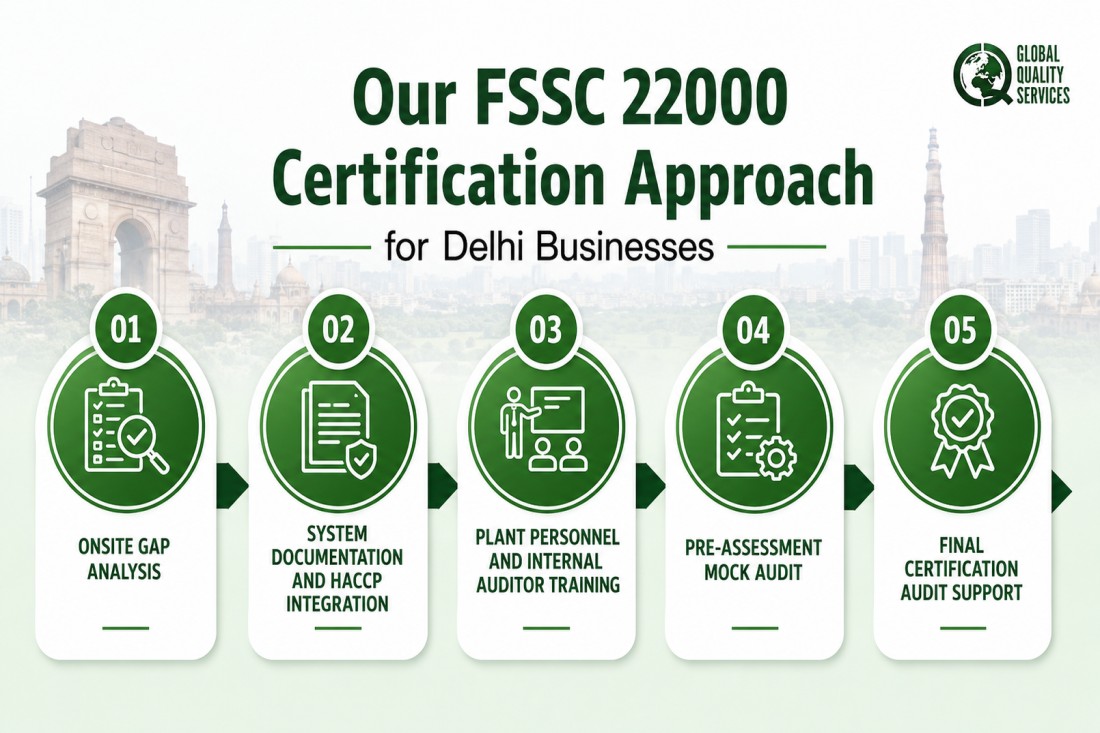
- Onsite Gap Analysis: Our team inspects your physical facility, plant layout, equipment condition, hygiene practices, and current documentation against FSSC 22000 Version 6 requirements to identify compliance gaps.
- System Documentation and HACCP Integration: We help you design customized Hazard Analysis Critical Control Point plans, standard operating procedures, prerequisite programs, food defense strategies, and food fraud mitigation plans.
- Plant Personnel and Internal Auditor Training: We conduct practical training sessions for your plant workers, hygiene officers, and quality control teams, establishing a clear understanding of floor-level safety protocols.
- Pre-Assessment Mock Audit: Before the official certification audit, we conduct a realistic trial audit to test your system, review logbooks, evaluate corrective actions, and resolve remaining non-conformities.
- Final Certification Audit Support: Our experts assist your team during Stage 1 and Stage 2 audits conducted by accredited third-party certification bodies, ensuring a smooth and confident process.
Common Food Safety Challenges Faced by Food Businesses in Delhi
Here are common food safety challenges that are faced by food businesses in Delhi:
- Space Constraints in Older Industrial Facilities: Many processing units in older Delhi industrial areas operate in compact buildings where maintaining clear segregation between raw and finished goods is difficult.
- Managing Version 6 Additions: Adapting to updated requirements, such as equipment management, allergen control policies, and food loss monitoring, requires structured technical guidance.
- High Staff Turnover on the Production Floor: Frequent changes in temporary floor labor make maintaining consistent personal hygiene practices and daily logs challenging.
- Inconsistent Supplier Documentation: Food processors often struggle to obtain verified certificates of analysis and technical specifications from raw material suppliers.
How Does Global Quality Services Support FSSC 22000 Certification Across Delhi
Global Quality Services brings extensive hands-on experience in guiding food manufacturing, packaging, and logistics companies through complex compliance frameworks. We eliminate guesswork by delivering practical, factory-tailored solutions that integrate naturally with your daily workflow.
- Customized Implementation: We design documentation that reflects your actual manufacturing procedures rather than using generic templates.
- Local Delhi NCR Footprint: Our consultants conduct prompt onsite visits across all Delhi industrial clusters, reducing turnaround time and travel overhead costs.
- Focus on Version 6 Compliance: We ensure your facility meets all current Version 6 criteria, including food safety culture assessments and equipment design requirements.
- End-to-End Project Management: From initial floor inspection to post-audit corrective action planning, we manage the entire project lifecycle until your certificate is issued.
In addition to FSSC 22000 Certification, we also provide consultancy/guidance for PCQI (Preventive Controls Qualified Individual) in Training and Certification to help food manufacturers comply with the U.S. FDA FSMA requirements.
Migration or FSSC 22000 from Version 6 to Version 7
Upgrading your food safety management system can be an efficient, hassle-free process. The launch of FSSC 22000 Version 7 introduces targeted updates that ensure your operations remain compliant, resilient, and fully trusted across global supply chains. Mandatory upgrade audits take effect on May 1, 2027, making early preparation the best strategy for a seamless audit experience.
Primary Enhancements in Version 7
- Modernized Prerequisite Benchmarks: Integrates the revised ISO 22002:2025 series to standardize sanitation and operational controls across production environments.
- Expanded Threat and Defense Protocols: Requires stronger executive oversight alongside enhanced measures to counter supply chain fraud and operational risks.
- Practical Environmental Standards: Introduces concrete expectations for tracking resource consumption and reducing food loss across operations.
- Documented Staff Competency: Mandates verified, role-tailored training records for personnel directing food safety protocols, threat evaluations, and internal audits.
Partner with Global Quality Services to Build Audit-Ready Food Operations in Delhi
Achieving FSSC 22000 certification strengthens your market credibility, protects your brand reputation, and opens doors to top-tier retail and export contracts.
- Practical facility assessments tailored to your specific food product category.
- Clear step-by-step guidance that simplifies complex international standards.
- Dedicated consultation support that ensures full readiness for accredited third-party audits.
Contact our technical team today to schedule your initial gap analysis and secure a customized compliance roadmap for your Delhi facility.
Frequently Asked Questions
1. What is the primary difference between ISO 22000 and FSSC 22000?
ISO 22000 is a general food safety management standard, whereas FSSC 22000 includes ISO 22000 along with sector-specific Prerequisite Programs and additional FSSC requirements. FSSC 22000 is recognized by the Global Food Safety Initiative, making it mandatory for major international retailers and exporters.
2. How long does it take for a food plant in Delhi to achieve certification?
The implementation process typically takes between 45 and 60 days. The exact timeframe depends on your plant size, process complexity, existing documentation readiness, and staff training needs.
3. What is the validity period of an FSSC 22000 certificate?
An FSSC 22000 certificate is valid for three years from the date of issue. To maintain validity, certified facilities must complete annual surveillance audits during the three-year cycle.
4. Can micro and small food manufacturers apply for FSSC 22000?
Yes, small and medium food processing businesses can apply. The framework applies to food operations of any size, provided the facility implements the necessary prerequisite programs and hazard controls.