
A delayed shipment, inconsistent product quality, or an unexpected production shortfall can affect multiple purchase orders. For businesses sourcing from Mumbai and its surrounding industrial belt, understanding how a supplier actually operates can be an important part of managing procurement and supply-chain risks.
Inspection or Second-Party Audits of Factories in Mumbai help buyers, procurement teams, manufacturers, and importers assess supplier capabilities, verify product and process requirements, and review quality controls at the manufacturing site. Whether you are qualifying a new supplier, checking an existing production partner, or investigating a specific concern, an on-site assessment can provide evidence that may not be apparent from documents alone.
Global Quality Services (GQS) supports organizations with factory inspections and second-party audits tailored to their products, supplier requirements, and business objectives.
Importance of Second-party Audits of Factories in Mumbai
Mumbai’s manufacturing and supply-chain activity connects businesses to industrial locations across the wider Mumbai Metropolitan Region and neighboring districts. Supplier assessments may involve factories producing engineering goods, chemicals, pharmaceuticals, packaging, electrical products, consumer goods, and industrial components.
The purpose of an assessment can vary. A buyer may need to verify a particular shipment, while another organization may want a broader review of a supplier’s production processes and quality management practices. Defining this purpose early helps establish the right inspection or audit scope.
GQS can support factory assessment requirements across Mumbai and relevant industrial locations in the surrounding region, subject to the agreed scope and availability of audit resources.
- Andheri and MIDC areas: Engineering, electronics, industrial products, and supporting manufacturing operations.
- Powai and Vikhroli: Technology-related facilities, equipment suppliers, and manufacturing support operations.
- Thane and Wagle Estate: Engineering, chemicals, electrical products, and industrial manufacturing.
- Navi Mumbai and TTC Industrial Area: Manufacturing, processing, logistics-related facilities, and supplier operations.
- Taloja: Chemical, pharmaceutical, engineering, and other industrial facilities.
- Bhiwandi: Warehousing, packaging, distribution, and related supplier operations.
- Vasai-Virar: Engineering, plastics, electrical products, and other manufacturing units.
- Palghar and Boisar: Industrial manufacturing, chemicals, engineering, and supplier facilities.
Confirm the actual factory location and assessment requirements before planning the visit.
What Do Factory Inspections and Second-Party Audits Examine?
The assessment depends on the customer’s requirements and the supplier or product involved. Depending on the assignment, it may cover the following areas.
Production Capability and Process Controls
Review the manufacturing process, production stages, equipment, workforce arrangements, process parameters, and controls used to maintain consistent output.
Materials and Component Verification
Examine incoming materials, identification, specifications, material certificates, storage arrangements, and traceability where these are part of the agreed scope.
Product Quality and Conformity
Inspect products against defined requirements, including dimensions, artistry, quantity, specifications, labeling, and other agreed acceptance criteria.
Testing and Inspection Arrangements
Review quality-control activities, testing methods, inspection records, measuring instruments, calibration evidence, and relevant test reports.
Documentation and Traceability
Examine procedures, production records, inspection documents, non-conformity records, and other evidence needed to establish whether the supplier follows the agreed requirements.
Storage, Packaging, and Dispatch
Where relevant, assess material handling, finished-goods storage, packaging, labeling, product identification, and dispatch controls.
When Should Mumbai Businesses Arrange a Second-Party Audit?
A second-party audit can be useful at different points in a supplier relationship. It is not limited to initial supplier approval.
- Before onboarding a supplier: Assess whether a potential manufacturing partner can meet the customer’s technical and operational requirements.
- Before placing a critical order: Review relevant production capabilities and controls before committing to a significant purchase.
- When quality issues recur: Investigate possible gaps in manufacturing, inspection, testing, or documentation.
- During supplier performance reviews: Check whether an established supplier continues to meet agreed requirements.
- After a process or facility change: Evaluate relevant changes in equipment, production methods, materials, or manufacturing arrangements.
- When corrective action is required: Review evidence that previously identified issues have been addressed.
The audit frequency and scope should reflect the customer’s supply chain management process and the risks associated with the product or service.
Industries That Can Benefit from Factory Audits in Mumbai
Mumbai’s widerMumbai’sial network serves different sectors with distinct supplier requirements. Factory assessments can be adapted to the processes and products involved.
- Chemicals and pharmaceuticals: Review relevant production controls, material handling, traceability, documentation, and customer-specific requirements.
- Engineering and industrial equipment: Examine fabrication, machining, assembly, inspection, testing, and manufacturing capability.
- Electrical and electronics: Assess component handling, assembly processes, testing arrangements, and product-quality controls.
- Packaging and printing: Review material specifications, production consistency, inspection, labeling, and order requirements.
- Consumer goods and textiles: Examine raw materials, artistry, production controls, product conformity, and packaging.
- Food-related manufacturing: Review applicable hygiene, production, storage, traceability, and quality requirements within the agreed scope.
For specialized or regulated sectors, the assessment criteria align with applicable requirements and the customer’s expectations.
How Does the Customer’s Audit Process Work?
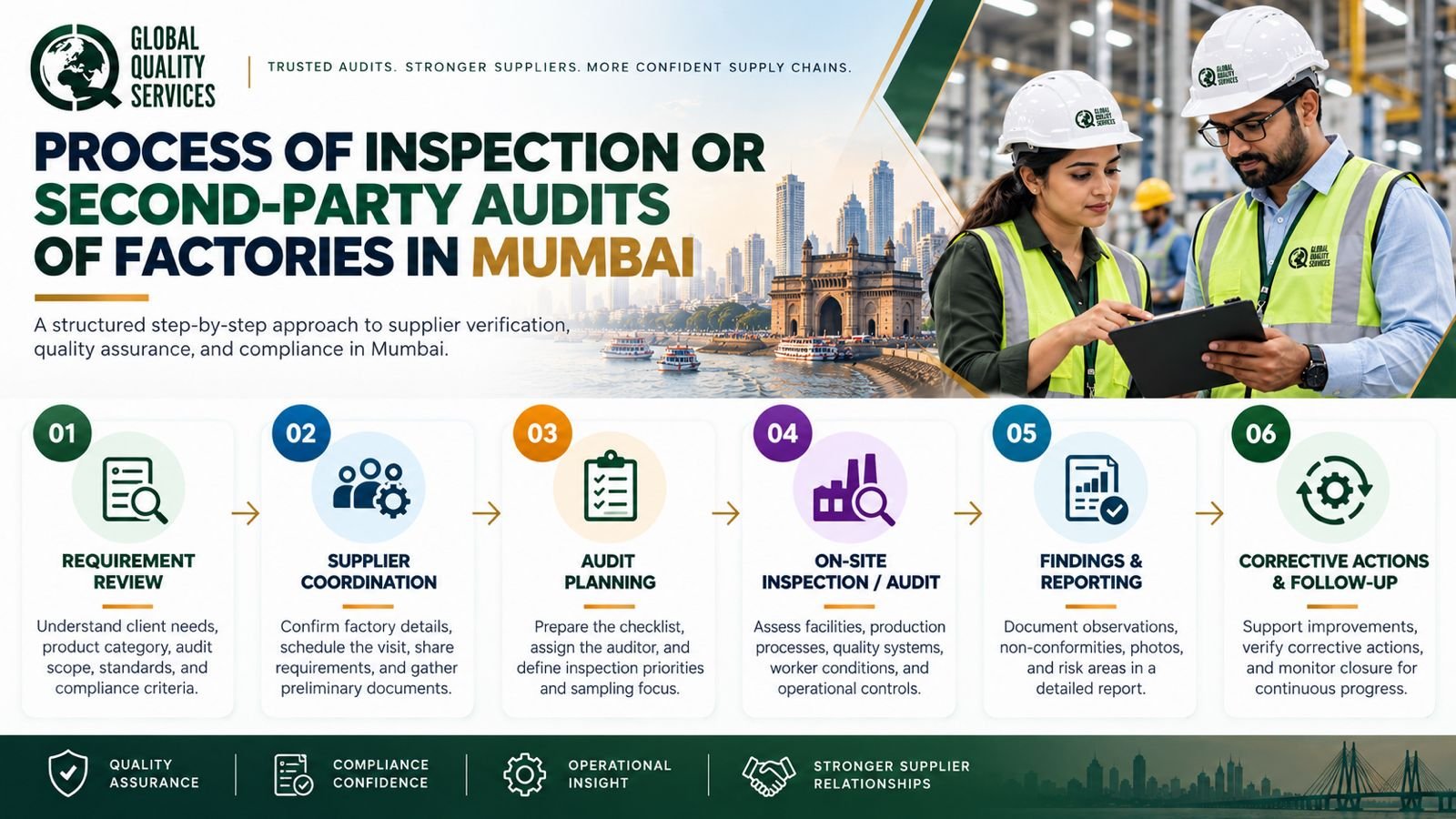
A structured assessment ensures the factory visit focuses on the information the customer needs.
1. Define the Purpose and Scope
Identify the supplier, factory location, product or process, applicable requirements, and areas to assess. Clarify whether the assignment is a product inspection or a broader second-party audit.
2. Prepare the Assessment Criteria
Develop or review the checklist, specifications, customer requirements, and relevant documents that will guide the assessment.
3. Conduct the On-Site Visit
The auditor examines the agreed areas through observation, discussions, document review, and verification of relevant records.
4. Compare Evidence with Requirements
The auditor evaluates actual practices and available evidence against the agreed criteria. Support any identified gaps with objective evidence.
5. Document Findings
Record non-conformities, observations, and other relevant findings clearly, identifying the requirements involved and the evidence reviewed.
6. Issue the Report
Prepare a structured report that communicates the assessment results to the organization commissioning the audit.
7. Follow Up Where Required
If corrective action is part of the assignment, review the supplier’s response and available evidence of action
How Can GQS Help with Factory Inspections and Second-Party Audits in Mumbai?
Global Quality Services supports businesses that need factory inspections and second-party audits in Mumbai and the surrounding industrial region. Our assessment approach is shaped by the customer’s purpose, supplier profile, product requirements, and agreed scope. Our support can include planning the assessment scope, reviewing applicable requirements, conducting the agreed on-site evaluation, and preparing a structured report of findings. Assignments may focus on supplier qualification, product and process verification, manufacturing capability, quality controls, or follow-up of previously identified issues.
For businesses managing suppliers across multiple locations, factory assessments can also support a consistent supplier-evaluation and monitoring program.
Frequently Asked Questions
1. What is a second-party audit of a factory?
A second-party audit is an assessment conducted by or on behalf of a customer to evaluate a supplier against defined requirements. It may examine manufacturing processes, quality controls, documentation, production capability, and other agreed criteria.
2. Are factory inspections and second-party audits the same?
No. A factory inspection often focuses on a specific product, process, material, or shipment. A second-party audit generally evaluates a supplier more broadly against customer or contractual requirements. The exact scope depends on the assignment.
3. Can a factory be audited before a purchase order is issued?
Yes. Buyers may arrange an assessment during supplier qualification or before placing a significant order to review relevant manufacturing capabilities and controls.
4. Can the assessment follow our own checklist?
Yes. The audit or inspection can be based on customer-specific checklists, product specifications, internal supplier requirements, applicable standards, or other agreed criteria.
5. Does GQS support factory audits outside Mumbai?
GQS can support factory assessment requirements in Mumbai and other locations in India, subject to the agreed scope and availability of suitable audit resources.