With the growth of offices, commercial premises, and facilities in India, the role of facility management is more significant today than ever before. There was an absorption of 61.4 million square feet of office space in the top eight cities in India in 2025, a 25% growth year-on-year, emphasizing the importance of efficient facility management systems.
The ISO 41001 Facility Management Certification in India enables organizations to have an effective system in place for managing their facility performance and optimizing the use of available resources.
What is ISO 41001 Facility Management Certification?
ISO 41001 is the first global standard designed specifically for facility management systems (FMS). It helps organizations establish processes that improve efficiency, reduce operational risks, and ensure consistent service delivery.
Instead of handling facilities reactively, this certification promotes a proactive and strategic approach covering infrastructure, people, processes, and technology.
Why ISO 41001 Facility Management Certification in India is Gaining Importance
In India’s rapidly growing infrastructure landscape, especially in sectors like airports, IT parks, healthcare, and commercial real estate, facility management plays a critical role.
Here’s why organizations are prioritizing ISO 41001:
- Improved operational efficiency with standardized processes
- Enhanced safety and compliance across facilities
- Better asset lifecycle management
- Increased customer and stakeholder satisfaction
- Stronger sustainability practices
As Indian businesses expand globally, aligning with international standards like ISO 41001 also strengthens credibility.
Benefits of ISO 41001 Certification
ISO 41001 certification helps organizations improve facility management, reduce operational costs, and create safer, more efficient workplaces. Here are the key benefits businesses can gain from implementing the ISO 41001 standard:
- Improves Facility Management Efficiency
- Reduces Operational and Maintenance Costs
- Enhances Workplace Safety and Productivity
- Improves Quality and Consistency of Facility Services
- Supports Better Risk Management and Compliance
- Optimizes the Use of Space, Energy, and Resources
- Increases Employee and Stakeholder Satisfaction
- Strengthens Business Reputation and Competitive Advantage
Industries That We Serve for ISO 41001 Certification
Here is the main list of the industries that we serve for ISO 41001 certification:
- Manufacturing
- Construction and Engineering
- Energy and Utilities
- Transportation and Logistics
- Oil and Gas
- Healthcare and Pharmaceuticals
- Hospitality and Tourism
- Information Technology (IT) and Telecommunications
- Financial Services and Insurance
- Retail and Consumer Goods
- Agriculture and Agribusiness
- Food and Beverage
- Mining and Mineral Processing
- Automotive
- Aerospace and Defense
- Biotechnology and Life Sciences
- Education and Training
- Public Sector and Government
- Real Estate and Property Management
- Waste Management and Recycling
- Entertainment and Media
- E-commerce
- Chemical and Petrochemical
- Water and Wastewater Management
- Renewable Energy
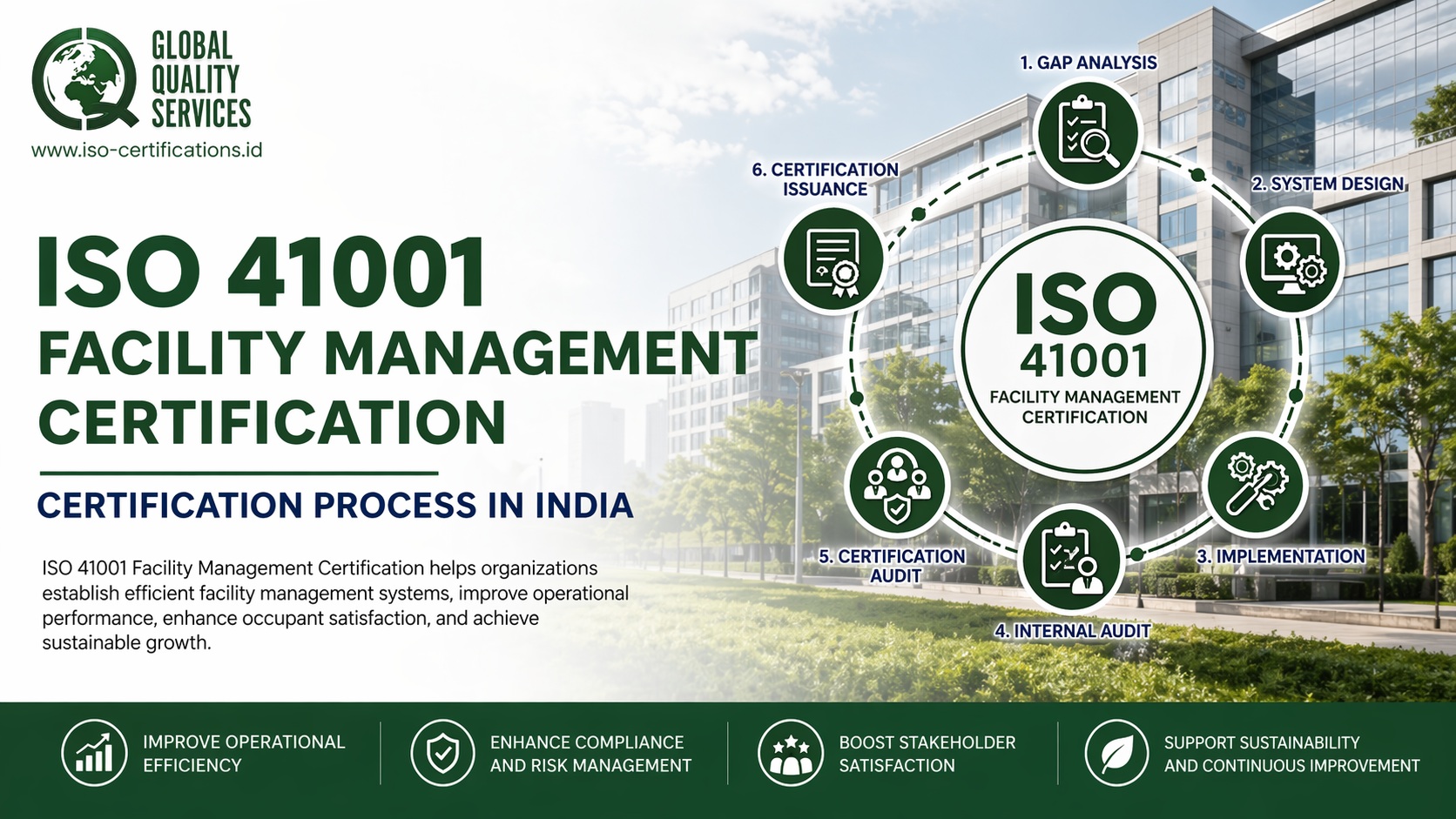
Certification Process in India
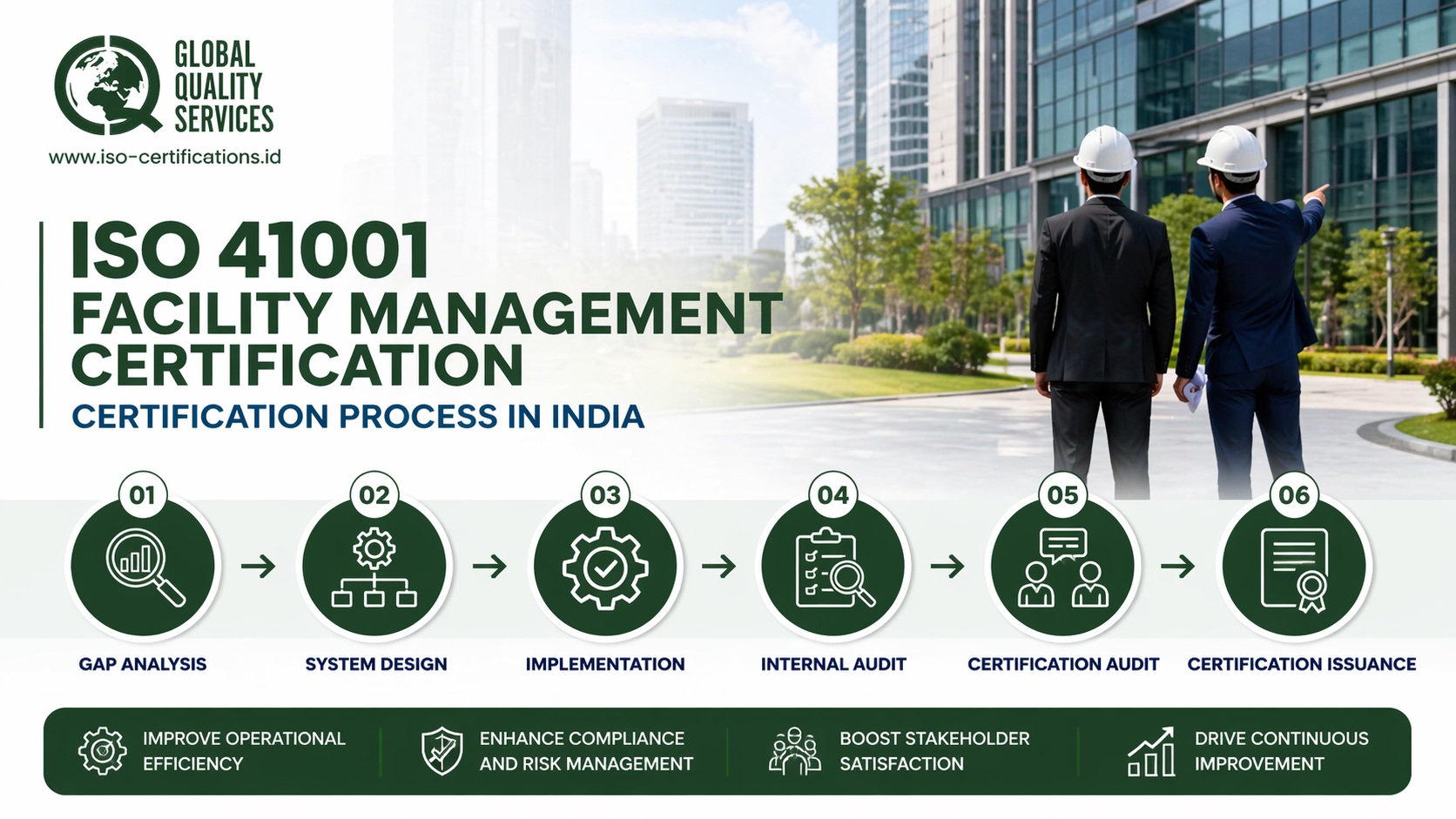
The process of obtaining ISO 41001 Facility Management Certification in India generally follows these steps:
- Gap Analysis – Evaluate current practices against ISO standards
- System Design – Develop facility management policies and procedures
- Implementation – Execute the defined processes across operations
- Internal Audit – Identify and correct non-conformities
- Certification Audit – Conducted by an accredited certification body
- Certification Issuance – Upon successful compliance
A structured approach ensures a smooth and successful certification journey.
ISO 41001 Airport Certification: A Growing Need
Airports are among the most complex facilities to manage. With high passenger volumes, strict safety norms, and continuous operations, efficiency is non-negotiable. ISO 41001 Airport Certification helps airport authorities:
- Maintain seamless passenger experience
- Ensure regulatory compliance and safety standards
- Optimize infrastructure utilization
- Improve emergency preparedness
- Strengthen operational resilience
From terminal management to ground operations, ISO 41001 brings structure and accountability.
ISO 41001 Airport Consulting in India
Airports rank among the most operationally demanding and asset-heavy environments. In India, aviation infrastructure—from large international terminals to cargo hubs and ground handling networks—requires a far more disciplined and integrated facility management approach than conventional commercial spaces.
Our ISO 41001 Airport Consulting service is specifically designed for this complexity. It supports airport operators, terminal management teams, and aviation service providers in building and implementing a fully compliant Facility Management System (FMS) that addresses every operational layer.
Terminal and Airside Maintenance Management
We establish structured maintenance programs covering terminal assets, airside equipment, and mission-critical building systems within a centralized, traceable framework that supports consistency and auditability.
Utilities and Energy Management
Our approach enables continuous monitoring and optimization of electricity, HVAC, and water systems across high-traffic airport environments, ensuring efficiency, reliability, and cost control.
Integrated Safety Management Systems
We incorporate fire protection protocols, emergency preparedness measures, and occupational health requirements into the FMS, aligned with Indian regulatory expectations and safety standards.
Vendor and Contractor Governance
We implement clearly defined processes to manage multiple stakeholders—including concessionaires, ground handling agencies, housekeeping teams, and technical vendors ensuring accountability and service quality.
Regulatory Compliance and Audit Preparedness
The framework aligns with aviation authority requirements, such as those set by the Airports Authority of India, and supports readiness for certification audits conducted by accredited bodies, ensuring smooth compliance and successful certification outcomes.
Required Documentation for ISO 41001 Certification
To establish and maintain an effective Facility Management (FM) System, organizations need to prepare and maintain relevant documented information and records. The key documentation typically includes:
- Facility Management Policy and Objectives
- Scope of the Facility Management System
- Risk and Opportunity Assessment Records
- Operational Procedures and Processes
- Emergency Preparedness and Response Plans
- Training and Competency Records
- Defined Roles, Responsibilities, and Authorities
- Internal Audit Reports and Records
- Management Review Records
- Performance Monitoring and Measurement Records
Cost of ISO 41001 Certification in India
The cost of ISO 41001 certification in India can vary from one organization to another. There is no fixed price, as the overall cost depends on your organization’s size, the complexity of its facility management operations, and how prepared your existing systems are for certification. Some of the main factors that influence the cost include:
- Size and scale of your organization
- Number of sites or facilities covered under certification
- Complexity of your facility management services and operations
- Current readiness of your processes, documentation, and systems
- Whether you require additional training or consultancy support
ISO 41001 Certification Timeline
The time required to achieve ISO 41001 certification can vary depending on the size of your organization, the complexity of your facilities, and how prepared your existing systems are. However, for most organizations, the process typically follows this timeline:
- Gap Analysis and Planning: Around 1 week
- Documentation Preparation: Approximately 2 to 3 weeks
- System Implementation: Around 3 to 6 weeks
- Internal Audit: Approximately 1 week
- External Audit and Certification: Around 1 week
Overall, the certification timeline may vary based on your organization’s readiness and the resources available for implementing the Facility Management System.
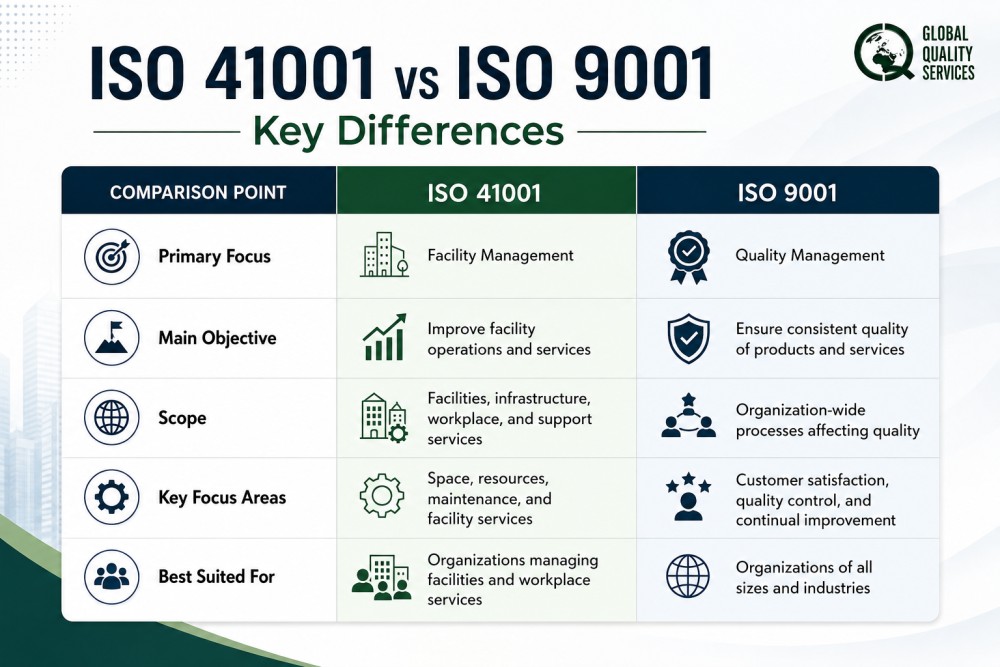
ISO 41001 vs ISO 9001: Key Differences
Although both standards help organizations improve their management practices, they focus on different areas. ISO 41001 is designed specifically for facility management, while ISO 9001 focuses on improving the overall quality of products, services, and business processes.
Why Choose Global Quality Services for ISO 41001 Certification in India
Global Quality Services delivers a practical, efficient approach to ISO 41001 implementation. We assess your operations, close compliance gaps, and guide you through documentation, audits, and certification. Our expertise ensures faster execution, reduced risks, and a system built for real performance. Achieve reliable, audit-ready facility management with expert support. Contact us today.
Frequently Asked Questions
1. What is ISO 41001 Facility Management Certification in India?
ISO 41001 certification validates that an organization follows globally recognized facility management practices, ensuring efficiency, safety, and consistency in managing infrastructure, assets, and workplace services.
2. How long does it take to get ISO 41001 certification?
The certification timeline typically ranges from 3 to 6 months, depending on organizational size, existing processes, and readiness to implement ISO 41001 requirements effectively.
3. Is ISO 41001 certification mandatory in India?
No, ISO 41001 is not mandatory. However, organizations adopt it voluntarily to improve operational efficiency, enhance credibility, and meet global facility management standards.
4. What is the role of ISO 41001 Airport Consulting?
ISO 41001 Airport Consulting helps airports implement structured facility management systems, ensuring compliance, operational efficiency, safety, and readiness for certification audits through expert guidance.
5. Which industries benefit most from ISO 41001 certification?
Industries like aviation, healthcare, IT parks, manufacturing, and commercial real estate benefit significantly, as they rely heavily on efficient facility management for smooth operations and customer satisfaction.