The manufacturing landscape in Chennai is growing rapidly as global supply chains move operations to southern India. Meeting international standards for corporate social responsibility is no longer a choice. It is a strict requirement for doing business. The Responsible Business Alliance (RBA) framework provides a clear path that ensures electronics, automotive, and technology hardware companies operate ethically. This standard holds businesses accountable for their environmental impact, worker health, and ethical governance.
According to recent industrial data from The Hindu, Tamil Nadu commands an impressive 41 percent share of the total electronics exports from India. The export volume is growing significantly. Reports from the New Indian Express confirm that electronics exports from the state are on track to touch 18 billion dollars for the 2025 through 2026 fiscal cycle. This massive volume represents rapid factory scaling across southern hubs. As international buyers buy more products from local factories, suppliers must prove their commitment to sustainable operations.
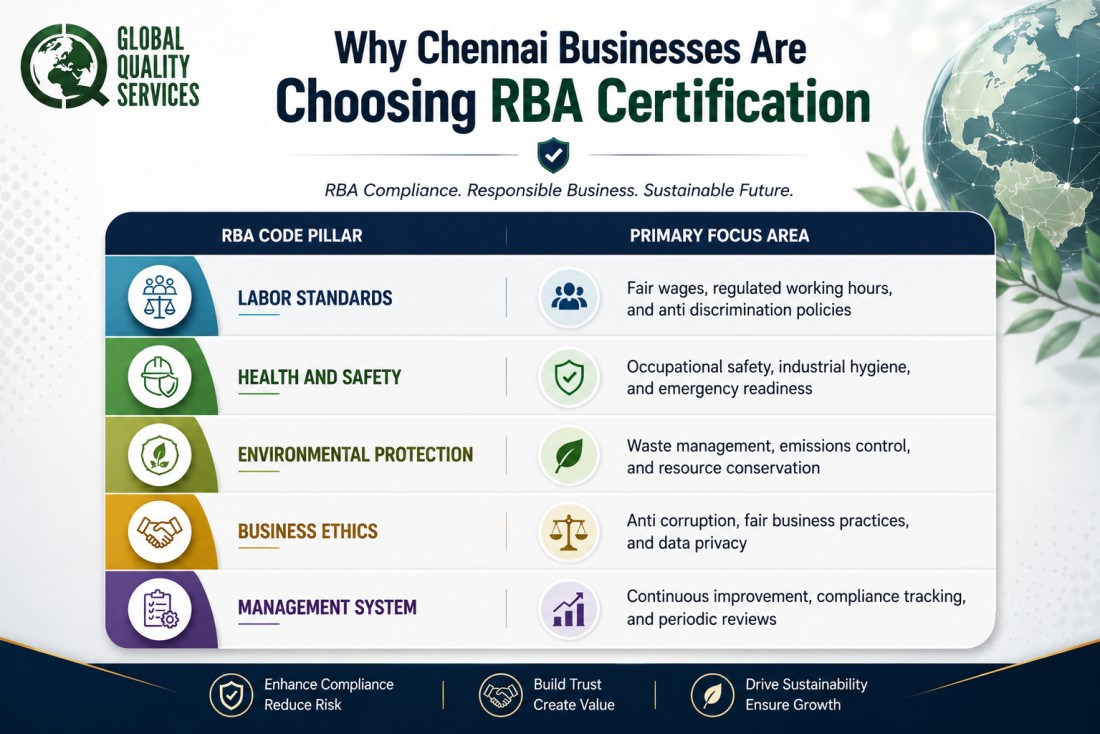
Why Chennai Businesses Are Choosing RBA Certification
Global buyers from Europe and North America want their vendors to maintain strict ethical compliance. Aligning with the Responsible Business Alliance standard helps local manufacturers protect their current revenue and win new international contracts. The standard establishes a practical operational setup that reduces workplace accidents and lowers compliance risks.
Implementing these global protocols improves daily efficiency across five key operational areas:
Which Industries in Chennai Need RBA Certification?
Here is the list of industries in Chennai that need RBA certification:
Electronics Manufacturing Services
Chennai serves as a primary tech hardware assembly hub in India. The region houses massive electronic assembly units, component vendors, and printed circuit board factories. Because these facilities supply parts directly to global consumer technology brands, buyers routinely expect them to match RBA guidelines. Passing these checks helps local companies secure long-term high-volume production agreements.
Automotive Component Manufacturers
The industrial zones around Oragadam and Maraimalai Nagar produce vehicles and parts for global export. Modern cars rely heavily on integrated electronic systems and sensors. Because of this technology integration, automotive component suppliers are now classified as part of the broader technology supply chain. This shift makes RBA alignment a critical requirement for international auto brands.
Semiconductor and Precision Hardware Units
With strong support from national electronics manufacturing initiatives, Chennai is attracting specialized material suppliers and testing laboratories. These capital-intensive operations use sophisticated chemical processes and significant energy. Adhering to the RBA framework ensures these specialized units manage hazardous waste transparently and protect their workforce from industrial hazards.
RBA Certification Process Flow
Achieving full compliance involves a structured journey that requires dedication from both management and floor workers. Let’s see how the process looks:
Step 1: Initial Gap Analysis
Consulting professionals evaluate your active floor operations, time log databases, chemical storage units, and worker contract templates. This phase highlights every difference between your current factory practices and the latest version of the RBA Code of Conduct.
Step 2: Policy Documentation and Upgrades
Once the operational gaps are mapped, consultants facilitate the creation of required policies. This includes formalizing anti-forced labor statements, establishing clear internal grievance channels, standardizing evacuation plans, and drafting environmental records.
Step 3: Workforce Training and Development
A code of conduct only works when the entire workforce understands it. Specialized training modules are deployed for both floor workers and human resource managers. Workers learn their fundamental labor rights, safe handling procedures for chemicals, and how to report issues safely.
Step 4: Mock Audits and Portal Support
Before requesting an official third-party review, consultants guide your team through the formal Self Assessment Questionnaire on the online platform. A mockup internal audit is performed to test your system resilience and fix minor oversights ahead of time.
Step 5: Official Audit Facilitation
An independent RBA-authorized third-party auditing firm visits your Chennai facility to run the Validated Assessment Program. Consultants help your team organize data for the inspectors, interpret findings, and structure clear corrective action plans to achieve full compliance.
Common Challenges Businesses Face During RBA Implementation
Every organization has unique operations, but several challenges are commonly seen during RBA implementation.
- Managing Labor Compliance: Businesses often need better systems for tracking working hours, wages, overtime, and employee records.
- Strengthening Workplace Safety: Some facilities require improvements in emergency preparedness, machine safety, chemical handling, and worker training.
- Environmental Management: Managing waste, emissions, and hazardous substances can require additional controls and monitoring.
- Documentation Gaps: Policies may exist but are not always documented consistently or updated regularly.
- Supply Chain Visibility: Organizations may find it challenging to monitor supplier compliance and responsible sourcing practices.
- Employee Awareness: RBA requirements are most effective when employees understand workplace expectations and reporting procedures.
- Maintaining Continuous Compliance: Businesses must regularly review processes to keep pace with changing customer and industry requirements.
Why Choose Global Quality Services for RBA Certification Consultancy in Chennai?
Navigating the details of international supply chain compliance requires a practical partner who understands local industrial realities. Global Quality Services operates as a dedicated management consultancy that facilitates the entire framework readiness process. The expert advisory team helps your business identify operational vulnerabilities, draft compliant corporate policies, and prepare internal teams for third-party audits.
By breaking down the complex RBA code into clear, actionable milestones, the consultancy ensures that your factory builds a sustainable management system without slowing down daily production targets.
Build a Responsible Supply Chain That Global Customers Trust
Meeting the ethical demands of international procurement requires a structured operational framework. Preparing your factory floor for global compliance demands deep industry expertise, accurate documentation tracking, and comprehensive workforce preparation.
- End-to-End System Preparation: Walk through every phase of code alignment with expert advisory support, from the initial diagnostic review to final corrective action documentation.
- Tailored Policy Infrastructure: Build operational guidelines customized specifically to your facility size, plant layout, and industry sector.
- Pre Audit Vulnerability Mapping: Eliminate surprise non-conformances with rigorous mock audits that replicate actual assessment parameters.
Our professional consulting team provides the strategic guidance and hands-on preparation required to elevate your factory standards. Contact Global Quality Services today to schedule an initial diagnostic gap analysis for your Chennai manufacturing unit and accelerate your journey toward international supplier qualification.
Frequently Asked Questions
1. How often should an RBA assessment be conducted?
The frequency depends on customer requirements and business needs. Many organizations schedule periodic assessments and continuous internal reviews to maintain compliance.
2. Can RBA certification support export growth for Chennai manufacturers?
Yes. Many international buyers prefer suppliers that can demonstrate responsible business practices, making RBA compliance a valuable advantage in export markets.
3. How should a business prepare before starting an RBA implementation project?
A gap assessment is usually the first step. It helps identify existing strengths and areas that need improvement before formal implementation begins.
4. What type of internal teams are involved in RBA implementation?
Human resources, health and safety, environmental management, production, procurement, quality, and senior management typically work together during implementation.
5. How can an experienced RBA consultancy simplify the implementation process?
A structured consultancy approach helps businesses identify compliance gaps, prioritize improvements, prepare documentation, and improve assessment readiness while reducing delays.