Ahmedabad has rapidly transformed from a traditional manufacturing town into a massive hub for global exports. Under the Viksit Gujarat Industrial Policy 2026, the local focus has shifted sharply toward world-class quality and sustainable manufacturing. Official trade data from the Directorate General of Foreign Trade (DGFT) highlights this economic power. Gujarat successfully retained its position as India’s leading exporter by generating an impressive $110.63 billion in exports, which represents 25.6% of the entire country’s outbound trade.
As detailed in the recent Times of India report on Gujarat’s export performance, Ahmedabad stands out as one of the key districts driving this massive trade volume.
With massive industrial investments flowing into nearby manufacturing clusters like Sanand, local businesses are scaling up fast. However, stepping onto the global stage means meeting strict global compliance rules. For companies looking to secure contracts with major international brands in electronics, automotive components, and retail, getting the Responsible Business Alliance (RBA) Certification in Ahmedabad is no longer just a checkbox item. It is a critical business strategy to win and keep global clients.
Why Ahmedabad Businesses Are Choosing RBA Certification
International buyers face immense pressure from their home governments and consumers to ensure their supply chains are ethical, safe, and fair. To manage this risk, global brands require their manufacturing partners to meet the RBA Code of Conduct. Adopting this framework helps local factories bridge the gap between regional production styles and international business expectations.
Implementing the RBA framework brings clear operational advantages that directly impact your bottom line:
- Win Premium Export Contracts: Major international buyers require an active RBA audit before signing long-term purchasing agreements.
- Avoid Costly Audit Failures: A structured preparation process helps you find and fix factory compliance gaps early, saving you from failing official third-party Validated Assessment Program (VAP) audits.
- Stand Out Among Competitors: Holding a verified RBA audit report gives your facility an immediate edge over non-compliant regional competitors when bidding for international deals.
- Protect Your Operations: The framework helps you build safer workplaces, reducing the risk of sudden facility shutdowns, workplace accidents, or local environmental penalties.
Which Industries in Ahmedabad Need RBA Certification?
The rapid growth of advanced manufacturing across Gujarat makes RBA compliance essential for multiple sectors. If your factory operates in these key industrial zones around Ahmedabad, global buyers will likely request verified RBA records.
Electronics and Semiconductor Units
With major semiconductor assemblies and high-tech electronic packaging units setting up operations in Sanand, Ahmedabad is becoming a major tech hub. Companies making printed circuit boards (PCBs), electronic manufacturing services (EMS), and custom hardware components must follow RBA rules to protect their supplier status with global technology brands.
Automotive Components and EV Supply Chains
The industrial belts around Changodar, Naroda, and Sanand house a dense network of suppliers manufacturing precision engine parts, automotive systems, and electric vehicle (EV) components. Because global automakers judge their networks on strict sustainability and ethical grounds, local component manufacturers need RBA verification to keep their export contracts.
Industrial Engineering and Machinery Fabrication
Ahmedabad is a major production base for heavy engineering and precision tools. Engineering units exporting machinery or custom metal assemblies to European and North American markets use the RBA framework to prove their operations follow international social responsibility and ethical standards.
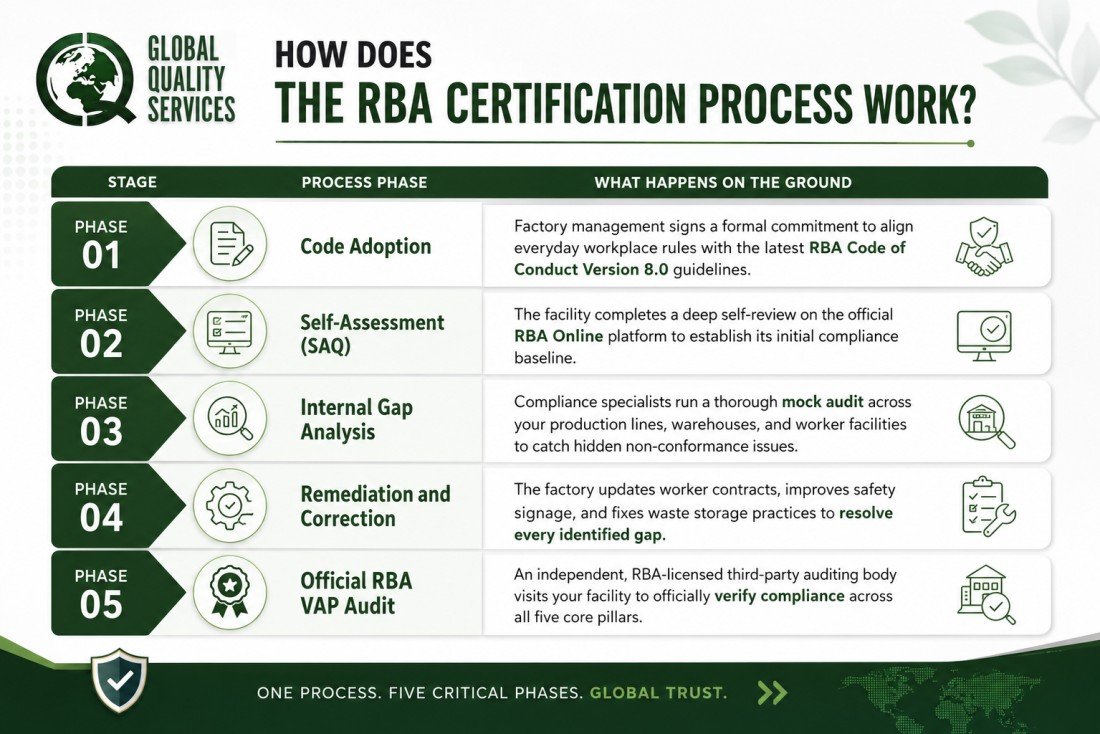
How Does the RBA Certification Process Work?
Achieving a high compliance score requires a clear, systematic approach rather than guesswork. The process moves steadily from internal policy changes to formal external validation.
Common Challenges Businesses Face During RBA Implementation
Upgrading factory workflows to meet the RBA standard requires changing real operational habits. Knowing where most factories face difficulties helps your team prepare effectively.
Managing Strict Working Hours and Overtime Tracks
The most frequent compliance issue during factory audits is excessive working hours. The RBA Code sets a strict limit of 60 hours per week maximum, including overtime, and mandates at least one full day of rest every seven days. Factories running continuous shifts often find it difficult to adjust production schedules and time-attendance logs to meet this rule consistently.
Labor Paperwork and Workforce Protection
Auditors check recruitment paths, personnel files, and employment contracts with extreme care. Businesses must prove that workers paid zero recruitment fees, no original identity documents are held by management, and all employment terms are clearly written in languages the workers actually understand.
Chemical Storage and Environmental Controls
The environmental section requires precise tracking of hazardous chemicals, air emissions, and waste handling. Manufacturing units must set up dedicated chemical storage areas with proper secondary containment walls, keep updated Safety Data Sheets (SDS) handy, and run regular protective gear training for floor operators.
How Global Quality Services Supports RBA Certification Across Ahmedabad
Turning complex global supplier rules into practical, everyday factory habits requires hands-on experience. Global Quality Services provides clear, localized consulting to guide Ahmedabad manufacturers through every single phase of the RBA framework.
We do not just hand you a standard template. Our team works directly on your production floor to turn complicated compliance language into simple, step-by-step factory workflows.
Full Pre-Audit Preparation
- Deep On-Site Mock Audits: We replicate real third-party audit conditions to spot labor, safety, and environmental gaps before the official inspectors ever set foot in your facility.
- Tailored Documentation Systems: We help your team write clear workplace policies, standard operating procedures, and safety records that satisfy RBA standards.
- Practical Staff Training: We run straightforward training sessions for your supervisors and floor workers so everyone knows their specific role in maintaining compliance.
Post-Audit Corrective Action Plans
If an official VAP audit turns up areas that need improvement, we stay right by your side. We help you build a solid Corrective Action Plan (CAP), guide your staff through fixing the root operational causes, and help compile the correct evidence to upload to the RBA Online portal so you can close out findings and secure your final compliance rating.
Our strategic compliance blueprints help manufacturing facilities convert strict international export guidelines into reliable everyday factory practices. Work with Global Quality Services to streamline your upcoming supply chain audit, secure your international supplier contracts, and scale your industrial operations safely.
- Complete End-to-End Audit Readiness: Get expert guidance from initial self-assessment questionnaires and mock field reviews through final third-party verification.
- Practical Local Implementation: Receive clear, actionable operational advice designed to address regional manufacturing environments without creating production bottlenecks.
- Proactive Risk Management: Build sustainable workplace safety, labor, and environmental systems that permanently protect your commercial export contracts.
To schedule an initial on-site RBA gap analysis for your Ahmedabad facility, contact our consulting team today.
Frequently Asked Questions
1. Is Responsible Business Alliance Certification suitable for small and medium businesses?
Yes. Businesses of different sizes can implement RBA requirements based on their operations and supply chain responsibilities.
2. Does RBA Certification replace other management system standards?
No. RBA focuses on responsible business practices and can complement standards related to quality, environment, and occupational health and safety.
3. Can businesses with existing ISO certifications implement RBA more easily?
Organizations with established management systems often have structured processes that can support RBA implementation, although additional requirements may still need to be addressed.
4. How often should businesses review their RBA compliance activities?
Regular internal reviews help ensure ongoing compliance and support continuous improvement as business operations evolve.
5. What type of preparation helps businesses before an RBA assessment?
Gap assessments, policy reviews, employee training, and internal audits can improve readiness and help identify areas that need attention.