India’s food sector is experiencing rapid expansion, but growth means higher accountability regarding food safety, quality, and consumer satisfaction. For example, during 2025-26, according to FSSAI reports, over 2.23 lakh food samples were tested, out of which 40,000 were non-conforming. These numbers show why there is a need for better food safety control within the supply chain in the country.
ISO 22000 Certification in Bengaluru allows food businesses to develop a Food Safety Management System (FSMS) that addresses potential risks, manages safety hazards, and ensures regulatory compliance throughout operations. The scope of application includes manufacturers, processors, distributors, packagers, caterers, and others within the food chain. More than just complying with regulations, obtaining certification may help earn consumer trust, streamline internal procedures, and facilitate market entry. However, what exactly is the ISO 22000 certification process, and how should a business in Bengaluru get ready for it? Let us find out.
What is ISO 22000 Certification?
ISO 22000 is an international food safety management standard that outlines requirements for controlling hazards and ensuring safe food production. It integrates critical elements like communication, system management, prerequisite programs, and HACCP principles.
The certification applies to all food-related businesses, including manufacturers, transporters, retailers, caterers, and packaging units.
Why ISO 22000 Matters for Food Businesses?
Food safety is not just a legal requirement; it’s a responsibility that directly impacts public health and brand reputation. Here is how ISO 22000 adds value:
- Enhanced Hazard Control: Strengthens monitoring and prevention of biological, chemical, and physical risks.
- Global Market Access: Many importers and retailers require certified suppliers.
- Improved Operational Efficiency: Standardised procedures reduce errors and wastage.
- Stronger Customer Confidence: Assures buyers that your food products meet global safety expectations.
- Better Regulatory Compliance: Supports adherence to national and international food laws.
Key Requirements of ISO 22000
Understanding the key requirements of ISO 22000 helps you build a safer food system, improve hygiene practices, and keep every stage of production under control.
1. Internal and External Communication
Effective communication ensures all stakeholders understand food safety requirements and risks across the supply chain.
2. System Management
Organisations must establish, implement, maintain, and update a documented Food Safety Management System (FSMS).
3. Prerequisite Programs (PRPs)
Basic operational conditions such as hygiene, sanitation, and equipment maintenance—must be well-established to support safe food production.
4. HACCP Principles
A structured approach is required to identify hazards, determine control measures, and implement monitoring systems.
5. Continual Improvement
Organisations must continually evaluate performance and improve the FSMS for long-term safety and consistency.
Benefits of ISO 22000 Certification
ISO 22000 brings practical advantages that help food businesses improve safety, strengthen processes, and deliver consistently reliable products to customers across the supply chain.
- Stronger Hazard Control: Helps you identify and manage food safety risks effectively.
- Improved Process Efficiency: Streamlines operations and reduces unnecessary wastage.
- Better Customer Confidence: Shows buyers that your food products meet global safety standards.
- Enhanced Regulatory Compliance: Aligns your systems with national and international food laws.
- Greater Market Access: Increases acceptance from exporters, retailers, and certification bodies worldwide.
How to Get ISO 22000 Certification
Getting ISO 22000 Certified becomes easier when you follow a structured process. Here is how the journey usually looks:
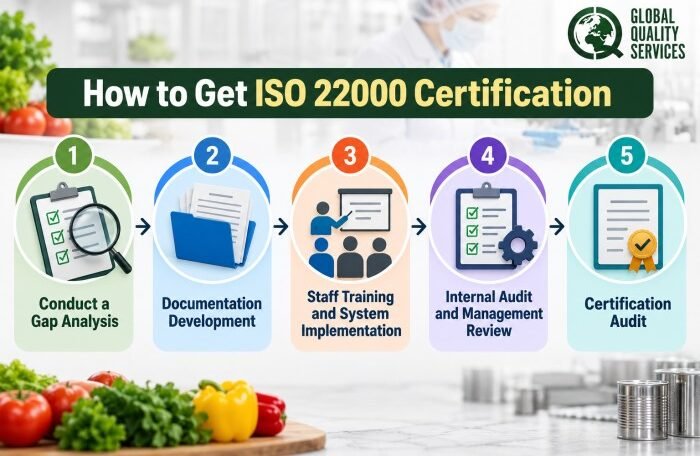
Step 1: Conduct a Gap Analysis
Start by comparing your existing food safety practices with ISO 22000 requirements. This helps you identify gaps, weaknesses, and areas that need improvement before implementation.
Step 2: Documentation Development
Develop the required FSMS documents, including PRPs, HACCP plans, procedures, work instructions, records, and training documents. Keep everything practical, clear, updated, and relevant.
Step 3: Staff Training and System Implementation
Train employees on their food safety responsibilities and implement the documented procedures. Make sure your team understands the controls and follows them consistently during daily operations.
Step 4: Internal Audit and Management Review
Conduct an internal audit to check whether your FSMS works effectively and meets ISO 22000 requirements. Then, management reviews findings and approves necessary improvements.
Step 5: Certification Audit
An accredited certification body reviews your food safety management system through an independent audit. If you meet the requirements, the certification body issues your ISO 22000 certificate.
Industries That Should Consider ISO 22000 Certification
ISO 22000 is relevant to organisations involved in the food chain. It helps businesses control food safety risks, improve processes, and maintain consistent safety practices from production to delivery.
1. Food Manufacturing Industry
Food manufacturers can use ISO 22000 to control contamination risks, manage production processes, maintain hygiene, and improve food safety throughout manufacturing operations.
2. Beverage Industry
Beverage manufacturers can use ISO 22000 to manage risks related to ingredients, water quality, processing, packaging, storage, and distribution.
3. Dairy Industry
Dairy businesses handle products that can quickly become unsafe without proper controls. ISO 22000 helps manage hygiene, temperature control, processing, storage, and distribution risks.
4. Meat and Poultry Industry
Meat and poultry processors face biological, chemical, and physical food safety risks. ISO 22000 helps businesses establish controls across processing, handling, storage, and transportation.
5. Seafood Industry
Seafood processors, distributors, and exporters can use ISO 22000 to manage contamination risks, temperature control, handling practices, processing, storage, and transportation.
6. Food Packaging Industry
Packaging companies that supply materials used for food products can consider ISO 22000 to control food safety risks associated with packaging production, handling, storage, and hygiene.
7. Food Storage and Warehousing
Cold storage facilities, warehouses, and food distribution centres can use ISO 22000 to control temperature, hygiene, pest control, handling, and storage conditions.
8. Food Transportation and Logistics
Food logistics companies can apply ISO 22000 to manage risks during transportation. It supports controls for temperature, hygiene, handling, contamination, and product traceability.
9. Restaurants and Catering Businesses
Restaurants, catering companies, and commercial kitchens can use ISO 22000 to strengthen food safety practices covering ingredient handling, preparation, storage, hygiene, and serving.
10. Food Retailers and Supermarkets
Retailers handling fresh, packaged, chilled, or frozen food can consider ISO 22000 to manage storage, handling, temperature, hygiene, and food safety risks across their operations.
Who Should Consider ISO 22000 Certification?
Any food-related business that wants to improve safety, build customer trust, and meet global standards should consider ISO 22000 Certification for stronger operations.
- Food Manufacturers: To ensure safe production and meet global safety standards.
- Food Packaging Companies: To maintain hygiene and prevent contamination.
- Transporters & Distributors: To minimise risks during handling and movement.
- Restaurants & Caterers: To ensure safe food preparation and service.
- Retailers & Supermarkets: To guarantee safe products for customers.
- Ingredient Suppliers: To comply with quality and safety expectations.
Partner with Global Quality Services for ISO 22000 Certification
Partner with Global Quality Services to make your ISO 22000 Certification journey smooth and stress-free. Our team guides you through documentation, implementation, and audit preparation with complete clarity and support. We help you build a strong food safety system that meets global standards and improves customer trust. Start your certification process confidently. Contact us today.
Frequently Asked Questions
1. Is ISO 22000 mandatory for food businesses?
No, it’s not mandatory. However, many global buyers and regulatory bodies prefer ISO 22000-certified suppliers as it ensures strong hazard control, improved safety practices, and better customer confidence.
2. How long does ISO 22000 certification take?
Most businesses complete the process within 2–4 months, depending on system readiness, documentation quality, and audit preparation. Proper planning and employee involvement reduce delays and ensure smooth certification.
3. Does ISO 22000 apply to small food businesses?
Yes, ISO 22000 suits all sizes, from home-based units to large factories. It strengthens hygiene practices, improves safety procedures, and boosts customer trust regardless of business size.
4. How long is ISO 22000 valid?
The certification remains valid for three years, with mandatory annual surveillance audits to verify compliance. After the three-year period, businesses undergo a recertification audit.
5. What documents are required for ISO 22000?
Key documents include PRPs, HACCP plans, food safety procedures, training records, internal audit reports, traceability records, and management review documents supporting the FSMS structure.