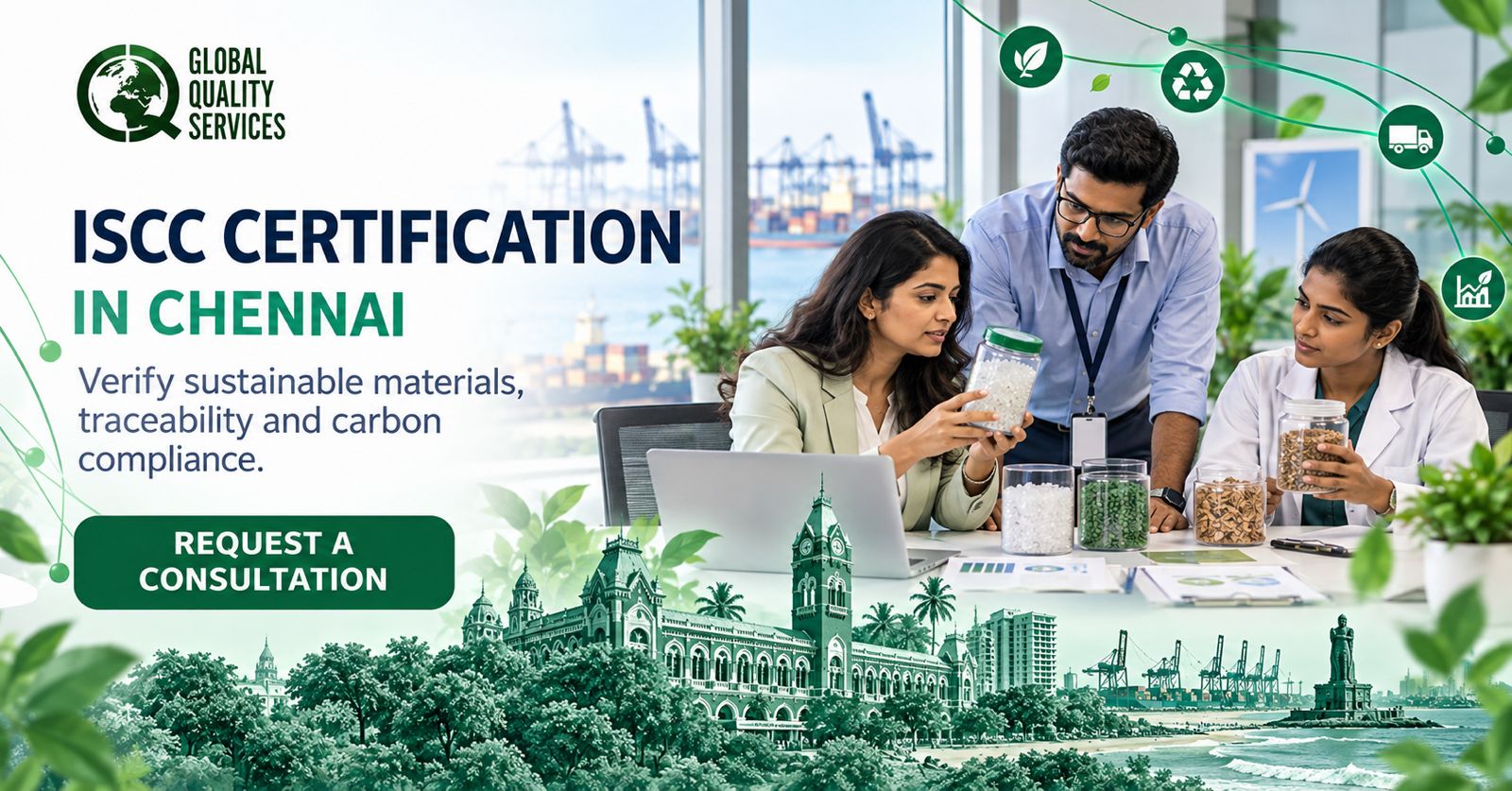
Are you involved in biofuels, renewable materials, circular products, chemicals, plastics, waste and residue processing, or other sustainable supply chains in Chennai?
As global customers increasingly ask suppliers to demonstrate responsible sourcing, traceability, and sustainability throughout the supply chain, organizations need more than environmental claims. They need a system that can demonstrate where materials come from, how they are handled, and how sustainability characteristics are maintained from one stage of the supply chain to another.
ISCC Certification in Chennai helps organizations demonstrate compliance with applicable sustainability, traceability, and chain of custody requirements under the relevant ISCC scheme.
Global Quality Services supports organizations in Chennai with ISCC readiness, gap assessments, documentation, traceability controls, mass balance preparation, and audit preparation.
What Is ISCC Certification?
ISCC stands for International Sustainability and Carbon Certification. It is a certification system used across global supply chains to demonstrate sustainability, traceability, and, where applicable, greenhouse gas-related requirements.
ISCC is not limited to one industry or one type of material. The appropriate certification scheme depends on the organization’s products, raw materials, supply chain, and target market.
For example:
ISCC EU applies to renewable transport fuels and recycled carbon fuels covered by the applicable European regulatory framework.
ISCC PLUS is used for a broader range of sustainable products and supply chains, including circular and bio-based products, renewable materials, industrial applications, food and feed, and renewable fuels outside the EU.
Other ISCC schemes include ISCC CORSIA, ISCC CORSIA PLUS, ISCC Japan FIT, ISCC Canada CFR, ISCC Carbon Footprint Certification, and ISCC Non-GMO, each addressing specific market or sustainability requirements.
This makes it important to identify the correct ISCC scheme before beginning certification preparation.
Why Is ISCC Certification Relevant to Chennai Businesses?
Chennai has a substantial industrial and manufacturing base, including chemical and petrochemical operations, automotive manufacturing, engineering, logistics, recycling, energy-related businesses, and technology-driven industries.
The wider Chennai region also includes industrial areas such as Manali, Ambattur, Guindy, Sriperumbudur, Oragadam, and Ennore, where businesses may handle chemicals, industrial materials, fuels, waste streams, packaging materials, or other products that can be relevant to sustainability and traceability programs.
For organizations serving international customers, sustainability information can become part of supplier qualification and procurement requirements.
ISCC can provide a structured system for demonstrating that applicable sustainability characteristics are supported by documented controls and traceable material flows.
Which Organizations in Chennai Can Consider ISCC Certification?
ISCC can apply to many different types of organizations. The key question is not simply what industry a company operates in, but what materials it handles, what claims it needs to make, and which market requirements apply.
Biofuel and Renewable Fuel Companies
Organizations producing or trading renewable fuels may need to demonstrate sustainability characteristics and traceability throughout their supply chain.
Depending on the market, ISCC EU or another applicable ISCC scheme may be relevant.
Chemical and Petrochemical Companies
Chemical manufacturers may work with bio-based, recycled, or other alternative feedstocks.
For companies supplying international customers, demonstrating the origin and sustainability characteristics of these materials can become an important part of the supply chain.
Plastics and Polymer Manufacturers
Manufacturers using recycled or bio-based feedstocks may consider ISCC PLUS where certification is relevant to their products and customer requirements.
This can be particularly important for organizations supplying packaging, consumer goods, automotive, industrial, and other manufacturers.
Waste and Residue Collection Businesses
Waste and residue streams can form part of sustainable feedstock supply chains.
Organizations involved in collecting, aggregating, storing, or supplying eligible waste and residue materials may need appropriate traceability and sustainability controls.
Recycling Companies
Recycling businesses may work with materials that eventually enter circular supply chains.
ISCC PLUS can be relevant to organizations participating in certified circular material supply chains, depending on the material and intended market.
Manufacturers Using Sustainable Feedstocks
Manufacturers that purchase certified sustainable materials and use them in their own production may need to establish appropriate controls to maintain the relevant sustainability characteristics.
What Are the Main Benefits of ISCC Certification in Chennai?
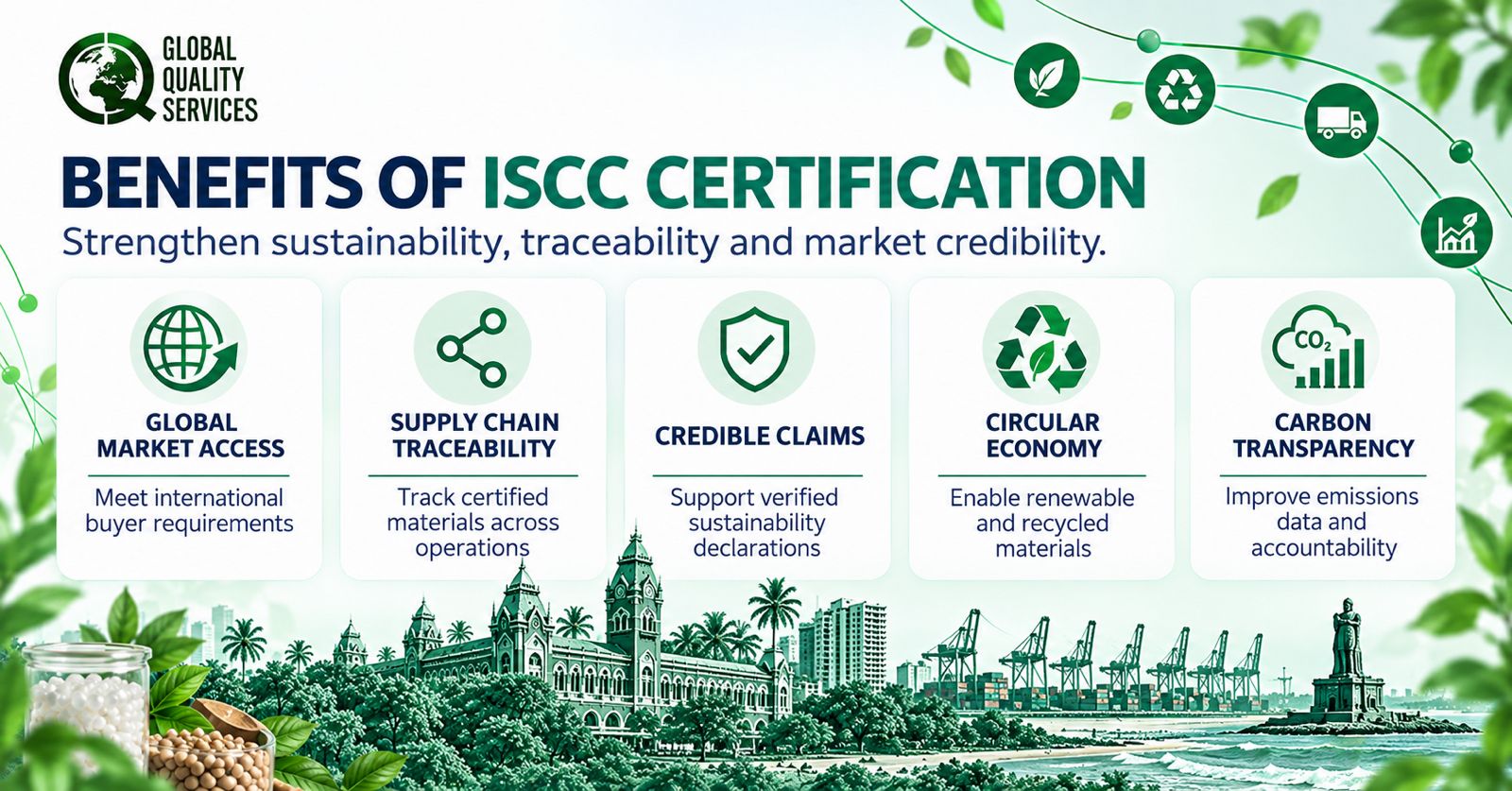
ISCC certification can provide organizations with a structured way to demonstrate sustainability and traceability across their supply chains.
Demonstrate Sustainability
Certification provides an independent assessment of applicable sustainability requirements rather than relying only on internal claims.
Improve Supply Chain Traceability
Organizations can establish documented controls for tracking relevant materials as they move through purchasing, storage, processing, trading, and distribution.
Support International Customer Requirements
Companies supplying global customers may encounter sustainability and traceability requirements during procurement or supplier qualification.
An applicable ISCC certification can help demonstrate that the organization’s processes have been assessed against the relevant ISCC requirements.
Strengthen Material Accounting
For organizations using mass balance systems, accurate bookkeeping of relevant inputs and outputs is essential.
ISCC provides requirements around traceability and chain of custody, including mass balance and physical segregation approaches. ISCC PLUS also allows controlled blending under applicable requirements.
Support Circular and Bio-Based Supply Chains
Companies involved in recycled and bio-based materials can use applicable ISCC certification to support claims about sustainable material flows.
Improve Internal Process Control
Preparing for certification can highlight weaknesses in supplier management, material records, inventory accounting, sustainability declarations, documentation, and internal responsibilities.
How Does ISCC Certification Work?
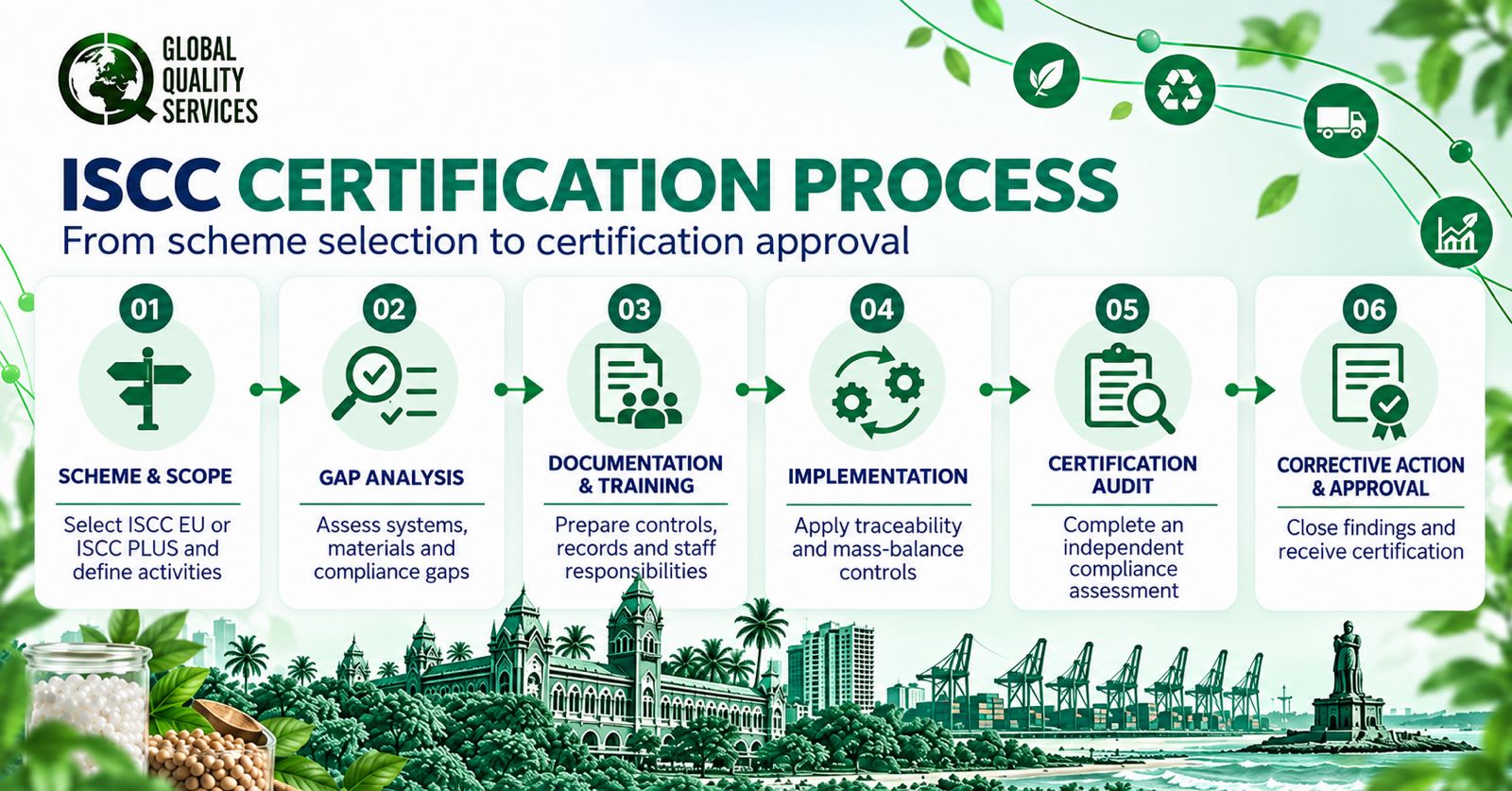
ISCC certification follows a defined assessment process, but the exact requirements depend on the applicable scheme and the organization’s role in the supply chain.
1. Identify the Correct ISCC Scheme
The first step is determining whether the organization needs ISCC EU, ISCC PLUS, ISCC CORSIA, Carbon Footprint Certification, or another applicable ISCC scheme.
This should be based on the target market, material, product, and sustainability claim.
2. Define the Certification Scope
The organization identifies the sites, activities, products, materials, suppliers, storage facilities, processing operations, and trading activities that fall within the certification scope.
A clear scope is particularly important when a company operates multiple facilities or handles several types of feedstock.
3. Map the Supply Chain
The organization identifies where certified or sustainable materials enter the supply chain and how they move through subsequent stages.
This can include points of origin, collection points, warehouses, processing units, traders, logistics operations, and final product operations.
The applicable ISCC requirements cover different elements of the supply chain depending on the material and scheme.
4. Review Sustainability and Traceability Controls
Existing procedures are reviewed against the applicable ISCC requirements.
This can include supplier controls, sustainability declarations, material identification, purchasing records, inventory records, production information, bookkeeping, sales documentation, and chain of custody controls.
5. Establish Mass Balance or Other Applicable Chain of Custody Controls
The organization needs to use the chain of custody approach applicable to its certification.
Under ISCC EU, mass balance and physical segregation are available. ISCC PLUS also provides controlled blending under its applicable requirements.
6. Establish GHG and Sustainability Data Controls
Where the selected ISCC scheme requires greenhouse gas or other sustainability information, the organization needs processes for collecting, maintaining, and verifying the relevant data.
This is especially important for organizations supplying regulated renewable fuel markets.
7. Prepare Documentation and Evidence
The organization prepares the records needed to demonstrate that its procedures are implemented.
Depending on the scope, this can include:
- Supplier information
- Sustainability declarations
- Purchase and sales records
- Material quantities
- Inventory records
- Mass balance calculations
- Production records
- Waste and residue information
- GHG-related data
- Training records
- Internal control records
- Corrective action records
8. Complete the Certification Audit
An ISCC cooperating certification body independently verifies compliance with the applicable sustainability, traceability, and other relevant ISCC requirements.
ISCC states that cooperating certification bodies verify compliance within the scope for which they are recognized, and applicable certification bodies must meet ISCC requirements, including relevant accreditation requirements.
9. Maintain Compliance
Certification is not the end of the process.
Organizations must continue maintaining their traceability systems, records, sustainability controls, and applicable chain of custody processes.
ISCC also publishes system updates that certified organizations, auditors, and certification bodies are expected to review and implement where applicable.
What Is Mass Balance in ISCC Certification?
Mass balance is one of the important chain of custody approaches used under ISCC.
In a mass balance system, sustainable and other materials can be handled within a defined supply chain while the quantities and sustainability characteristics are carefully accounted for.
The organization must maintain appropriate records showing the quantities entering and leaving the system and ensure that sustainability characteristics are allocated according to the applicable ISCC requirements.
This makes accurate material accounting essential.
ISCC’s current documentation specifically addresses mass balance requirements for both ISCC EU and ISCC PLUS. For ISCC PLUS, new chain of custody requirements are being introduced through ISCC PLUS 203-2, which becomes mandatory from January 1, 2027.
What Is Physical Segregation?
Physical segregation means applicable sustainable materials are kept physically separate from materials that do not have the same sustainability characteristics.
This approach can be relevant where an organization needs to maintain a distinct physical flow of certified material.
ISCC EU allows both physical segregation and mass balance as chain of custody options.
The appropriate approach depends on the organization’s operations, supply chain, material flows, and applicable scheme requirements.
Which Chennai Areas Have Businesses That May Need ISCC Certification?
ISCC certification can be relevant across Chennai and its major industrial corridors.
- Manali: A major industrial area with petrochemical, chemical, petroleum-related, and manufacturing operations. Organizations handling relevant feedstocks or sustainable materials may need structured traceability and sustainability controls.
- Ennore: An important industrial and port-connected area where energy, logistics, manufacturing, and industrial supply chains intersect.
- Ambattur: A major industrial zone with manufacturing and engineering businesses, including companies that may use recycled, chemical, or alternative material inputs.
- Guindy: A well-established industrial and business area with manufacturing, engineering, technology, and service organizations.
- Sriperumbudur: A major manufacturing corridor with large industrial supply chains and export-oriented businesses.
- Oragadam: An important industrial and automotive manufacturing region where supply chain sustainability requirements can extend across suppliers and manufacturers.
- Maraimalai Nagar: A growing industrial area with manufacturing and engineering operations connected to the Chennai region.
ISCC for Chennai’s Chemical and Petrochemical Sector
Chemical and petrochemical companies may increasingly encounter customer requirements around feedstock origin, recycled content, bio-based inputs, and sustainability characteristics.
For these organizations, certification preparation needs to go beyond environmental documentation.
The company should understand exactly which materials enter its system, how they are stored and processed, which sustainability characteristics accompany those materials, and how the applicable characteristics are reflected in outgoing products.
This makes supply chain mapping, material accounting, supplier documentation, and chain of custody controls particularly important.
ISCC for Chennai’s Recycling and Circular Economy Businesses
Recycling companies can play an important role in circular material supply chains.
However, simply processing recycled material does not automatically make a product eligible for an ISCC claim.
The organization needs to meet the applicable requirements for its role in the certified supply chain and maintain the required documentation and traceability.
For Chennai businesses handling waste, residues, recycled plastics, recycled chemicals, or other circular feedstocks, ISCC PLUS may be relevant where the products and target markets fall within its scope.
ISCC for Biofuel and Renewable Energy Businesses
Renewable fuel businesses may face specific sustainability and traceability requirements depending on the market they serve.
ISCC EU is specifically associated with renewable transport fuels and recycled carbon fuels for the EU biofuels market. ISCC CORSIA and ISCC CORSIA PLUS address sustainability requirements connected with aviation fuels under the relevant scheme.
For Chennai-based organizations exporting renewable fuels or supplying international fuel markets, identifying the correct certification scheme early can prevent unnecessary preparation work.
What Documentation Is Needed for ISCC Certification?
The documentation required depends on the applicable ISCC scheme and the organization’s role in the supply chain.
However, organizations should generally be prepared to demonstrate how they control:
- Sustainable material purchases
- Supplier qualification
- Sustainability declarations
- Material quantities
- Incoming and outgoing materials
- Storage and processing
- Chain of custody
- Mass balance calculations, where applicable
- GHG data, where applicable
- Product claims
- Employee responsibilities
- Training
- Internal controls
- Corrective actions
The purpose is to create a reliable evidence trail showing how sustainability characteristics and material quantities are controlled.
How Can Global Quality Services Help With ISCC Certification in Chennai?
Global Quality Services can support organizations in preparing their systems for an ISCC certification audit. The formal certification decision is made through the applicable ISCC certification process and cooperating certification body.
A company selling bio-based, recycled, renewable, or other sustainable products to international customers may need to demonstrate more than the characteristics of the finished product.
Customers may also want to understand the origin of the material, how it moved through the supply chain, and whether the relevant sustainability information was maintained correctly.
ISCC provides a structured certification system for these requirements across applicable supply chains.
For Chennai businesses involved in exports, chemicals, renewable fuels, recycling, plastics, or other sustainable material markets, this can make certification relevant to international business relationships.
If your organization operates in Manali, Ennore, Ambattur, Guindy, Sriperumbudur, Oragadam, Maraimalai Nagar, or another part of the Chennai industrial region, ISCC certification can help you establish a more structured approach to sustainability, traceability, and chain of custody requirements.
Frequently Asked Questions About ISCC Certification in Chennai
1. What Is ISCC Certification?
ISCC, or International Sustainability and Carbon Certification, is a certification system covering sustainability, traceability, and, where applicable, greenhouse gas requirements across different supply chains.
2. Which ISCC Certification Is Suitable for a Chennai Company?
It depends on the company’s products, materials, supply chain, and target market. ISCC EU, ISCC PLUS, ISCC CORSIA, Carbon Footprint Certification, and other ISCC schemes address different applications.
3. What Is the Difference Between ISCC EU and ISCC PLUS?
ISCC EU is designed for renewable transport fuels and recycled carbon fuels covered by the applicable EU regulatory framework. ISCC PLUS covers a wider range of circular and bio-based products, renewable materials, industrial applications, food and feed, and renewable fuels outside the EU.
4. Is Mass Balance Required for ISCC Certification?
Not necessarily. The applicable chain of custody approach depends on the ISCC scheme and the organization’s supply chain. ISCC EU allows mass balance and physical segregation, while ISCC PLUS also provides controlled blending under applicable requirements.
5. Does GQS Issue the ISCC Certificate?
GQS can support organizations with ISCC readiness, gap assessment, documentation, traceability, mass balance preparation, and audit preparation. The formal certification assessment and decision are carried out through the applicable ISCC certification process and cooperating certification body.