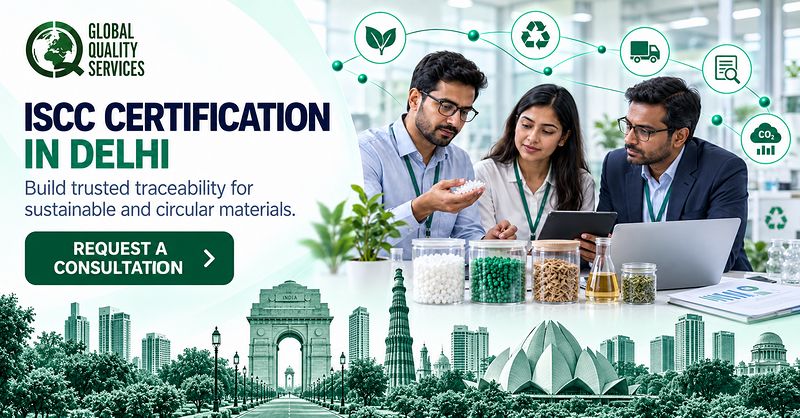
Businesses across Delhi and the wider NCR region are increasingly dealing with customer requirements related to sustainable sourcing, recycled materials, bio-based products, responsible supply chains, and traceability. For companies working with alternative feedstocks, renewable materials, waste and residues, or recycled products, demonstrating these characteristics requires more than a sustainability statement.
ISCC Certification in Delhi provides a structured way for eligible organizations to demonstrate sustainability and traceability within their certified supply chains.
Global Quality Services (GQS) provides ISCC consultancy and certification preparation support in Delhi. We help organizations understand the applicable ISCC scheme, define their certification scope, assess existing processes, strengthen material traceability, organize supplier and sustainability records, and prepare for the independent certification audit.
ISCC operates different certification schemes for different markets and applications. These include ISCC EU, ISCC PLUS, ISCC CORSIA/CORSIA PLUS, ISCC Japan FIT, ISCC Carbon Footprint Certification, ISCC Non-GMO, and ISCC Canada CFR. The appropriate scheme depends on the organization’s products, feedstocks, supply chain, and target market.
What Is ISCC Certification?
ISCC stands for International Sustainability and Carbon Certification. It is a certification system covering sustainability and traceability across different global supply chains.
Depending on the selected scheme, certification can address sustainable sourcing, greenhouse gas emissions, chain of custody, traceability, and other applicable sustainability requirements.
For a Delhi-based company, this can mean establishing a documented system for tracking eligible materials from suppliers through receiving, storage, processing, inventory management, and final sale.
The exact requirements depend on the applicable ISCC scheme and the organization’s activities.
Which ISCC Scheme Is Suitable for Your Delhi Business?
Selecting the correct scheme is the starting point for ISCC certification. Different schemes address different markets and sustainability applications.
ISCC EU
ISCC EU is intended for organizations participating in supply chains covered by European Union sustainability and greenhouse gas savings requirements for renewable fuels and biomass-based energy.
Delhi-NCR companies supplying eligible renewable fuels, biomass, waste and residues, RFNBOs, or recycled carbon fuels into applicable European markets may need to evaluate ISCC EU.
ISCC PLUS
ISCC PLUS is a voluntary certification scheme for global markets involving alternative feedstocks and sustainability characteristics. It is relevant to circular and bio-based products across industries such as chemicals, plastics, packaging, textiles, food, and feed.
For Delhi-NCR businesses working with recycled plastics, bio-based materials, chemicals, packaging, or other alternative feedstocks, ISCC PLUS may be particularly relevant.
ISCC CORSIA
Organizations involved in eligible sustainable aviation fuel supply chains can evaluate ISCC CORSIA or ISCC CORSIA PLUS, depending on their activities and applicable requirements.
ISCC CORSIA is recognized by ICAO for demonstrating applicable sustainability and traceability requirements for CORSIA-eligible fuels.
Other ISCC Schemes
ISCC also operates schemes addressing specific markets and requirements, including ISCC Japan FIT, ISCC Carbon Footprint Certification, ISCC Non-GMO, and ISCC Canada CFR.
The appropriate scheme should be determined after reviewing the organization’s materials, products, processes, and target markets.
Why Is ISCC Certification Relevant in Delhi?
Delhi is closely connected with one of India’s largest industrial and commercial regions. The wider Delhi-NCR ecosystem includes manufacturing, chemicals, pharmaceuticals, plastics, automotive, electronics, packaging, recycling, logistics, and other industries.
The NCR industrial belt includes locations such as Noida, Greater Noida, Ghaziabad, Faridabad, Gurugram, Manesar, Bawal, and Dharuhera, creating supply chains that frequently cross state and organizational boundaries.
For a company operating in this environment, sustainability information may need to follow the material rather than remain within one facility.
A Delhi company purchasing recycled feedstock from one location, processing it in another NCR facility, and supplying a multinational customer may need documented evidence covering suppliers, quantities, material characteristics, inventory, processing, and sales.
ISCC preparation helps establish the controls needed to manage this information consistently.
What Does ISCC Certification Require?
ISCC certification requires organizations to control both physical material flows and the information associated with those materials.
Sustainable Feedstock Management
Organizations need reliable information about suppliers, feedstock origin, material characteristics, sustainability declarations, and eligibility under the selected scheme.
Traceability Controls
The organization should be able to demonstrate how certified material enters the business, how it is handled, and how relevant quantities and sustainability characteristics are reflected in subsequent transactions.
Chain of Custody
The applicable chain-of-custody approach depends on the ISCC scheme and certified activity. Depending on the requirements, this may involve physical segregation, controlled blending, or mass balance.
Mass Balance Management
Where mass balance is used, the organization needs accurate records of incoming certified quantities, processing, output, transfers, and applicable sustainability characteristics.
Supplier and Purchase Records
Supplier declarations, purchase documents, delivery records, sustainability information, quantities, and other relevant evidence need to be controlled and retained.
Inventory and Sales Records
The organization must maintain appropriate evidence connecting certified input materials with relevant inventory, production, output, and sales transactions.
What Are the Benefits of ISCC Certification?
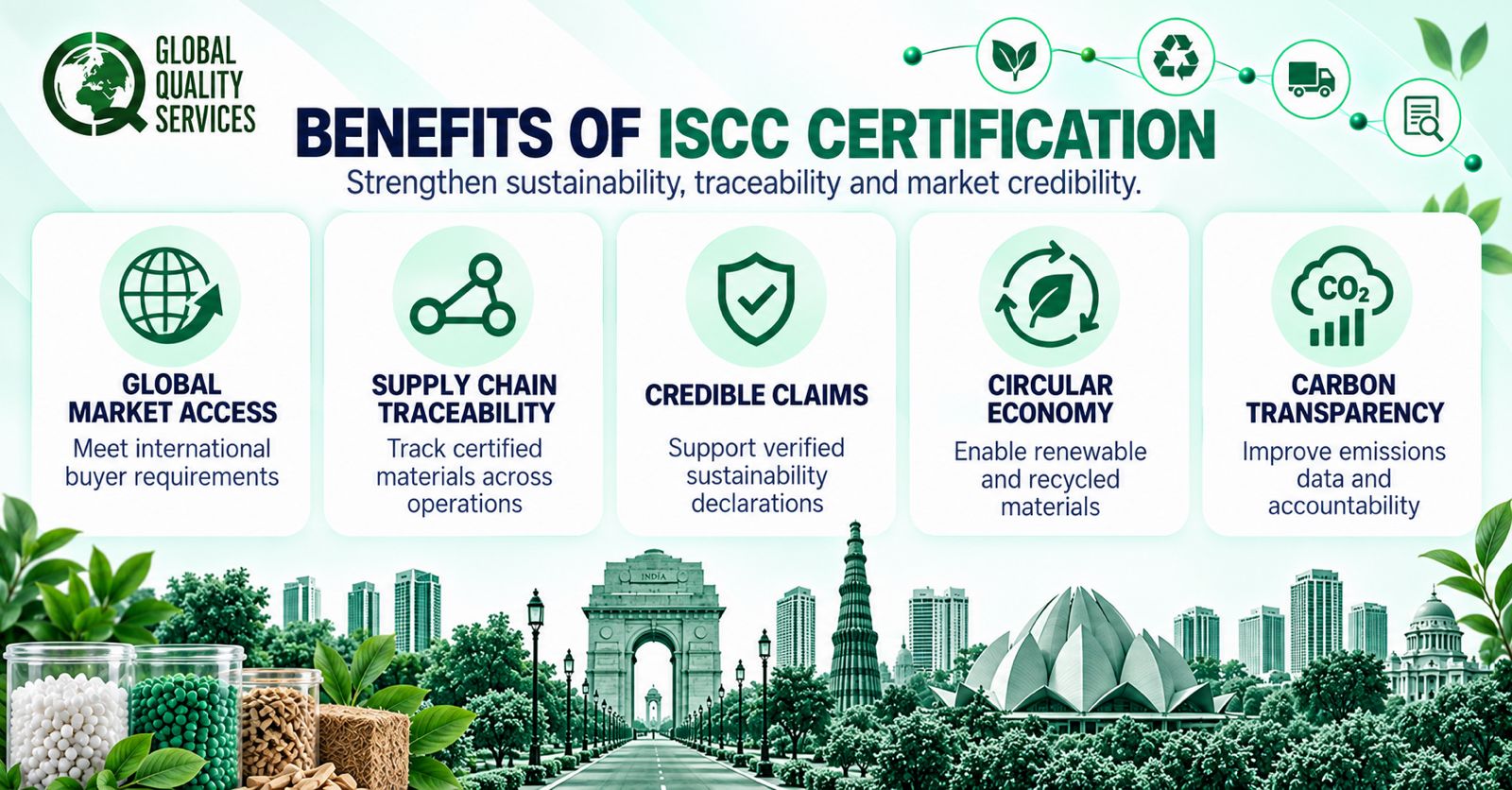
Demonstrate Sustainable Supply Chains
Certification provides independently verified evidence that applicable ISCC sustainability and traceability requirements have been addressed within the certified scope.
Strengthen Material Traceability
A structured system helps organizations track eligible materials from sourcing through production and sale.
Support Customer Requirements
Companies supplying multinational organizations may face requirements concerning recycled content, bio-based materials, sustainable feedstocks, or verified chain-of-custody information.
Support Circular Economy Products
ISCC PLUS can be relevant to businesses using eligible recycled and circular feedstocks and seeking to substantiate their sustainability characteristics.
Improve Internal Controls
ISCC preparation can bring greater structure to supplier management, inventory accounting, production records, material claims, and sustainability documentation.
Support International Supply Chains
An appropriate ISCC certification can provide independently verified sustainability and traceability information for organizations participating in international supply chains.
How Does ISCC Certification Work in Delhi?
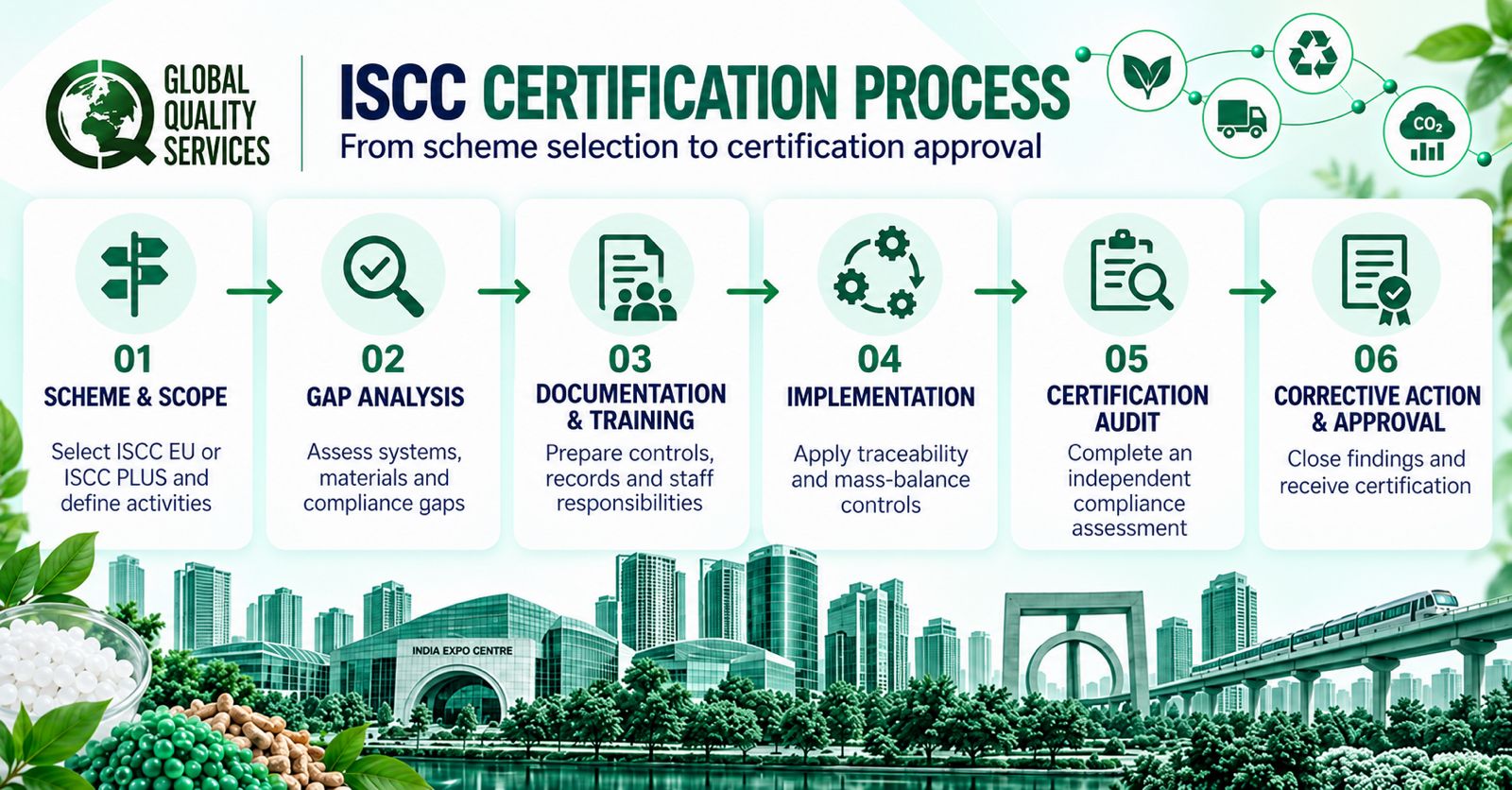
1. Identify the Applicable Scheme
The organization first determines whether ISCC EU, ISCC PLUS, ISCC CORSIA, or another scheme matches its products, feedstocks, activities, and target market.
2. Define the Certification Scope
The scope should identify relevant sites, products, materials, suppliers, processes, warehouses, and other activities that will form part of the certification.
3. Conduct a Gap Assessment
GQS reviews the existing system against the applicable ISCC requirements and identifies gaps in sustainability documentation, traceability, chain of custody, supplier controls, inventory, mass balance, and records.
4. Establish the Required Controls
The organization develops or improves procedures for purchasing, material receipt, storage, processing, inventory management, sustainability information, sales, and certified claims.
5. Implement the System
The procedures are put into actual operation and appropriate evidence is generated.
6. Review Certification Readiness
Internal reviews help identify gaps before the independent certification audit.
7. Complete the Independent Audit
The organization registers for ISCC certification through the ISCC HUB and selects an appropriate cooperating Certification Body. ISCC states that registration through the ISCC HUB must be completed before an audit can take place.
ISCC cooperating Certification Bodies are responsible for independently verifying sustainability, traceability, and applicable greenhouse gas requirements within their recognized scope.
ISCC Certification Across Delhi-NCR
GQS supports organizations across Okhla Industrial Area, Bawana Industrial Area, Naraina Industrial Area, Narela, Wazirpur, Patparganj, Mayapuri, Lawrence Road, and other Delhi industrial areas, as well as businesses operating across the wider NCR.
The consultancy can also support organizations connected with Noida, Greater Noida, Ghaziabad, Faridabad, Gurugram, Manesar, and other NCR manufacturing and supply-chain locations.
This is particularly relevant for companies whose certified material flows cross city or state boundaries and therefore require consistent supplier, inventory, production, and transaction records.
How Can GQS Help With ISCC Certification in Delhi?
GQS provides ISCC consultancy and certification preparation support. Our role is to help your organization understand the applicable requirements and prepare its systems for independent third-party certification. The exact consultancy requirements depend on the selected ISCC scheme, products, feedstocks, processes, and target market.
ISCC requirements can involve several departments at the same time. Purchasing may control supplier information, production may control material conversion, warehouses may manage inventory, sustainability teams may maintain sustainability data, and sales teams may issue relevant product information to customers.
GQS takes these interconnected processes into account while preparing an organization for certification.
The objective is to establish a practical system in which material movement, quantities, sustainability characteristics, records, and customer claims remain traceable and consistent.
Start Your ISCC Certification Preparation in Delhi
If your organization works with recycled materials, biomass, waste and residues, bio-based feedstocks, renewable fuels, chemicals, plastics, packaging, textiles, pharmaceuticals, or other eligible materials, ISCC certification may be relevant to your supply chain or customer requirements.
GQS can review your activities, help identify the appropriate ISCC scheme, assess your existing controls, and support your preparation for independent certification.
Frequently Asked Questions
1. What is ISCC Certification?
ISCC, or International Sustainability and Carbon Certification, is a certification system covering sustainability and traceability requirements across different global supply chains and markets. The applicable scheme depends on the organization’s activities and target market.
2. Which ISCC certification is suitable for a Delhi company?
There is no single ISCC scheme for every organization. ISCC EU, ISCC PLUS, ISCC CORSIA, and other schemes address different markets and applications. The correct option depends on the company’s feedstocks, products, supply chain, and destination market.
3. Can a recycling company in Delhi apply for ISCC PLUS?
A recycling company handling eligible recycled or circular feedstocks may be able to pursue ISCC PLUS, subject to the applicable requirements, materials, processes, and certification scope.
4. Does GQS issue ISCC certificates?
GQS provides consultancy and certification preparation support. The independent certification audit is conducted by an ISCC cooperating Certification Body. ISCC maintains a list of Certification Bodies authorized to conduct certification activities within their recognized scope.
5. Can ISCC certification support companies supplying international customers?
Yes. ISCC certification is designed for global supply chains and can provide independently verified sustainability and traceability information within the organization’s certified scope. The specific requirements and market recognition depend on the applicable ISCC scheme.