India’s food exports continue to find a strong market in the U.S., making food safety compliance increasingly important for exporters. Reuters reported that Indian farm exports to the U.S. were estimated at $5.7 billion in 2024.
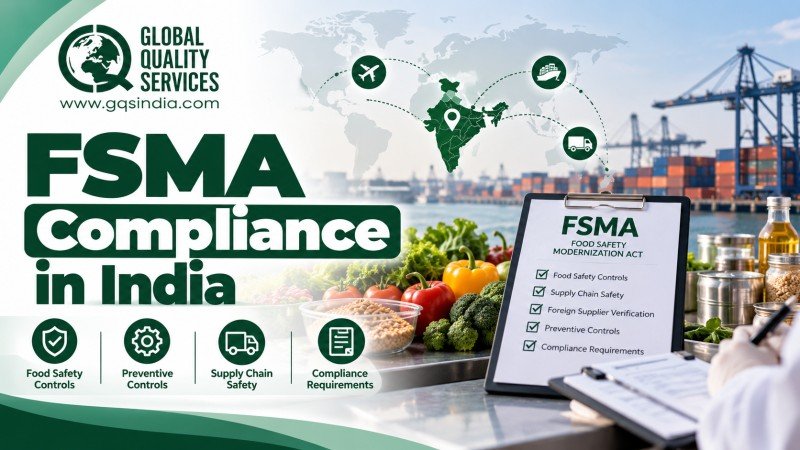
FSMA focuses on preventing food safety risks through hazard analysis, preventive controls, supplier verification, and proper recordkeeping. For Indian manufacturers and exporters, meeting applicable FSMA requirements can strengthen U.S. market access and buyer confidence. A qualified FSMA consultant can help identify compliance gaps, develop practical controls, and prepare your business for regulatory and customer requirements.
What is FSMA Compliance?
FSMA compliance means meeting the applicable food safety requirements established under the U.S. Food Safety Modernization Act. The law gives greater importance to preventive controls, risk-based food safety practices, supplier management, traceability, and corrective actions.
Unlike a system that mainly checks finished products, FSMA focuses heavily on identifying potential hazards before they affect consumers. Businesses must assess food safety risks and establish appropriate controls throughout their operations.
For Indian exporters, compliance can involve both food safety practices at the facility and documentation required by U.S. authorities or importers.
Why is FSMA Compliance Important for Indian Food Exporters?
The U.S. market offers significant opportunities for Indian food businesses. However, exporters must meet the food safety requirements that apply to products entering the country.
FSMA compliance can help Indian businesses:
- Meet applicable U.S. food safety requirements
- Reduce the risk of contamination and recalls
- Strengthen preventive food safety controls
- Improve supplier and raw material management
- Maintain better food safety records
- Build confidence among U.S. importers and buyers
- Prepare for regulatory inspections and customer audits
- Reduce disruptions during international shipments
For exporters, food safety compliance is not just about completing paperwork. Your actual production, storage, handling, and monitoring practices must support the controls you document.
Who Needs FSMA Compliance in India?
FSMA requirements can affect Indian businesses that manufacture, process, pack, hold, or export food for the U.S. market. The exact obligations depend on the product, facility, activities, and applicable FDA requirements.
Businesses that may need to consider FSMA requirements include:
Food Manufacturers
Manufacturers producing packaged foods, processed foods, snacks, sauces, ready-to-eat products, and other food products for the U.S. market may need preventive controls and documented food safety procedures.
Food Ingredient Suppliers
Businesses supplying ingredients to U.S. food companies may need to demonstrate appropriate controls over hazards, suppliers, processing, storage, and product handling.
Beverage Manufacturers
Indian beverage manufacturers exporting products to the U.S. should review applicable FSMA requirements and maintain controls that address relevant biological, chemical, and physical hazards.
Spice and Agricultural Product Exporters
India exports large quantities of spices, grains, fruits, vegetables, and other agricultural products. Exporters must understand the FSMA requirements applicable to their specific products and supply chains.
Food Packaging and Storage Facilities
Facilities that pack or hold food for the U.S. market may also fall under applicable FSMA requirements, depending on their activities and regulatory status.
Key FSMA Requirements for Indian Businesses
FSMA contains several rules, and not every requirement applies to every business. Indian exporters should identify the specific rules relevant to their operations before developing their compliance program.
1. Hazard Analysis
Businesses need to identify biological, chemical, and physical hazards associated with their food and processes.
A proper hazard analysis considers where contamination could occur and whether preventive controls can reduce the identified risks.
2. Preventive Controls
FSMA places strong emphasis on preventive controls. Businesses may need controls for processes such as cooking, refrigeration, sanitation, allergen management, and supply-chain activities.
These controls should have defined monitoring procedures and appropriate corrective actions.
3. Food Safety Plan
Covered facilities generally need a written food safety plan developed and overseen by a qualified individual. The plan typically addresses hazard analysis, preventive controls, monitoring, corrective actions, verification, and related procedures.
4. Supplier Verification
Businesses may need to evaluate and verify suppliers when they rely on suppliers to control hazards in ingredients or other materials.
Supplier approval, documentation, verification activities, and performance monitoring can become important parts of the compliance program.
5. Allergen Controls
Food businesses must carefully manage major food allergens where applicable. Controls can cover purchasing, storage, processing, cleaning, labelling, and prevention of cross-contact.
Strong allergen controls become especially important for exporters supplying packaged foods to the U.S.
6. Sanitation Controls
Sanitation procedures help prevent contamination from equipment, employees, facilities, water, and other sources.
Businesses should document cleaning schedules, sanitation procedures, monitoring activities, and corrective actions where applicable.
7. Traceability and Records
Businesses need reliable records that demonstrate how they control food safety risks. Depending on the applicable requirements, records can include production information, monitoring results, supplier documentation, corrective actions, verification activities, and other food safety records.
8. Verification and Corrective Actions
Companies should regularly verify that their preventive controls work as intended. When a control fails, they need defined corrective actions to address the issue and prevent recurrence.
How Can an Indian Company Prepare for FSMA Compliance?
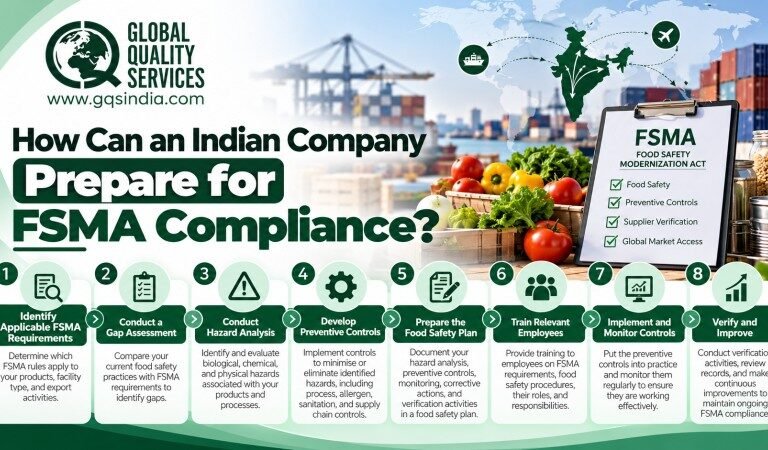
Preparing for FSMA compliance becomes easier when you approach it step by step.
Step 1: Identify Applicable FSMA Requirements
Start by determining which FSMA rules and FDA requirements apply to your products, facility, and export activities.
Step 2: Conduct a Gap Assessment
Review your existing food safety system against the applicable requirements. Identify gaps in hazard analysis, preventive controls, sanitation, supplier management, records, and verification.
Step 3: Conduct Hazard Analysis
Identify reasonably foreseeable hazards associated with your ingredients, processes, equipment, storage, transportation, and finished products.
Step 4: Develop Preventive Controls
Establish suitable controls for identified hazards. Define monitoring methods, responsibilities, frequencies, acceptance criteria, and corrective actions.
Step 5: Prepare the Food Safety Plan
Develop and maintain the required food safety documentation based on the applicable FSMA rule and your facility’s operations.
Step 6: Train Relevant Employees
Employees involved in food safety activities should understand their responsibilities. Training should cover applicable procedures, hygiene, sanitation, monitoring, corrective actions, and recordkeeping.
Step 7: Implement and Monitor Controls
A documented procedure alone does not demonstrate effective compliance. Your team needs to follow the controls consistently and maintain appropriate records.
Step 8: Verify and Improve
Review monitoring records, corrective actions, supplier performance, and verification activities regularly. Use these findings to strengthen your food safety system.
Benefits of FSMA Compliance for Indian Exporters
FSMA compliance can create practical advantages for businesses targeting the U.S. market.
- Better food safety management: Preventive controls help businesses identify risks before they result in contamination.
- Stronger export readiness: A well-maintained food safety system can help businesses respond more effectively to U.S. customer and regulatory requirements.
- Improved customer confidence: U.S. importers often want evidence that their suppliers maintain reliable food safety controls.
- Lower recall risk: Better hazard identification and preventive controls can reduce the likelihood of food safety incidents.
- Better documentation: Structured records help businesses demonstrate what they do, how they monitor controls, and how they respond when something goes wrong.
Why Choose Global Quality Services for FSMA in India
Preparing for FSMA compliance can feel complex, especially when you manage multiple products, suppliers, and production processes. Quality Services can help you understand the applicable requirements, identify compliance gaps, and build practical food safety controls for your operations.
From hazard analysis and preventive controls to documentation, employee training, supplier management, and readiness assessments, our experts support you throughout the process. Build a food safety system that works in your day-to-day operations and supports your U.S. export goals. Contact Quality Services today to discuss your FSMA compliance requirements.
FAQ’s
1. Is FSMA compliance mandatory for Indian food exporters?
FSMA requirements may apply to Indian facilities manufacturing, processing, packing, or holding food for the U.S. market. Applicability depends on the product, facility, activity, and specific FDA rules.
2. Does FSMA apply to all Indian food businesses?
No. FSMA does not apply identically to every food business. Requirements depend on the company’s activities, products, facility, exemptions, and specific rules covering the operation.
3. What does FSMA compliance involve for Indian manufacturers?
It can involve hazard analysis, preventive controls, food safety plans, supplier verification, sanitation, allergen controls, monitoring, corrective actions, verification, training, and maintaining appropriate food safety records.
4. Can an Indian consultant help with FSMA compliance?
Yes. A qualified consultant can assess applicable requirements, identify compliance gaps, develop preventive controls, support documentation, train employees, and prepare the facility for customer or regulatory scrutiny.
5. How long does FSMA compliance take in India?
The timeline varies according to facility size, product complexity, existing food safety systems, identified gaps, documentation requirements, employee training, and the specific FSMA rules applicable to the business.