Bangalore serves as the technology capital and an essential manufacturing hub of India, spearheading a rapidly growing state economy. According to the Economic Survey of Karnataka 2025-26, the state’s industrial sector expanded by 6.7% at constant prices, while the core manufacturing segment grew by 7.2% during the same period. This intense industrial expansion drives massive growth in high-value production sectors, including consumer electronics, aerospace components, and automotive systems.
As international tech brands and global conglomerates consolidate their delivery networks, manufacturing facilities based across Karnataka face immense pressure to prove their compliance with ethical business operations. Meeting these expectations requires a clear operational blueprint that aligns with recognized international benchmarks.
The Responsible Business Alliance (RBA) Code of Conduct establishes the premier global guidelines for social, environmental, and ethical compliance within supply chains. For businesses operating in electronic manufacturing hubs across Electronic City, Whitefield, Peenya, and the surrounding industrial corridors of Bangalore, implementing the RBA framework verifies that your company protects worker rights, implements zero-tolerance workplace safety protocols, and minimizes environmental footprint.
Why is RBA Certification Important for Businesses in Bangalore?
Getting an expert to help you set up these standards takes the guesswork out of the process. It helps you protect your team, keep your factory running smoothly, and stand out as a trusted, top-tier partner when bidding for big international contracts:
- Global Contract Eligibility: Aligning your site protocols with RBA requirements serves as a mandatory baseline to clear the vendor registration filters of primary global technology buyers.
- Protection Against Disruptions: Deploying transparent worker policies and structured environmental management controls minimizes unexpected factory downtime and protects your brand from regulatory actions.
- Strengthened Enterprise Reputations: Documenting your long-term adherence to international ethical baselines elevates your brand standing during high-value commercial bidding processes.
- Operational Optimization: The framework introduces clear workplace protocols that reduce raw material waste, optimize safety metrics, and stabilize workforce retention rates on the assembly floor.
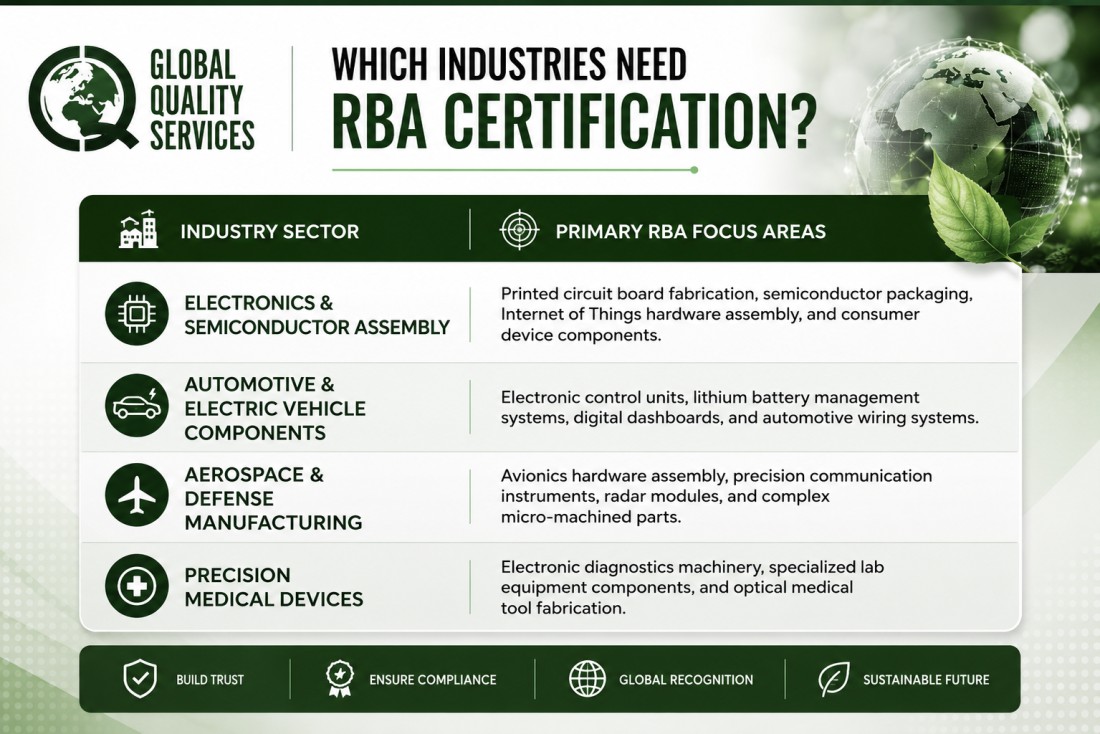
Which Industries Need RBA Certification?
While the Responsible Business Alliance standard originally served the consumer electronics field, its rigorous approach to supply chain risk management makes it essential for multiple tech-driven and precision engineering sectors across Bangalore.
Common Challenges During RBA Implementation
Transitioning an active industrial manufacturing plant to full alignment with the RBA standard brings visible operational shifts, especially when aligning standard domestic factory processes with strict international criteria.
Regulating Overtime Hours and Shift Formats
Local industrial facilities often use variable overtime strategies to manage unexpected spikes in client production orders. The RBA Code maintains a rigid cap on the maximum weekly work hours allowed per person, including overtime, alongside a non-negotiable requirement for rest days.
Extending Tracking Across Supplier Networks
Establishing compliant frameworks inside your own facility walls is only the initial milestone. The RBA standard places a heavy responsibility on businesses to perform complete due diligence on their own vendor networks. For manufacturers in Bangalore that procure basic inputs or surface plating services from smaller local machine shops, building an auditable trail of documentation presents a large administrative task.
Advanced Chemical and Waste Protocols
Sophisticated tech manufacturing calls for precise handling of chemical solvents and hazardous manufacturing byproducts. Factories often struggle to maintain the exhaustive chemical logs, isolated safety storage units, and clear environmental processing tracking records demanded by the environmental safety column of the standard.
Transitioning to Documented Management Systems
Many established companies address factory floor safety and environmental controls using informal habits or decentralized tracking tools. The RBA guidelines demand a highly formalized management system built around written risk assessments, regular internal site reviews, documented corrective paths, and clear avenues for employee feedback.
How Global Quality Services Facilitates Responsible Business Alliance Compliance Across Bangalore
As a specialized business consultancy and advisory firm, Global Quality Services delivers practical, hands-on guidance and employee training frameworks to help Bangalore manufacturers establish compliant systems that perform well during independent supplier audits.
- Detailed Factory Gap Analysis: Our advisory team walks through your complete assembly facility, checking your active labor setups, health programs, waste management routines, and internal records against the active RBA Code parameters to map out all required improvements.
- Bespoke Document Creation: We guide the development of organized operational materials, including clear policy registers, safe work procedures, and updated staff manuals that embed RBA expectations naturally into your daily production routines.
- Targeted Workplace Training: We conduct practical learning workshops for your workforce to ensure management handles compliance logs effectively while production floor operators understand workplace safety systems and worker rights.
- Pre-Audit Readiness Evaluations: Long before you invite an independent certification body to your site, our consultants conduct comprehensive internal mock audits to gauge your real-world performance and refine any loose administrative areas.
- Corrective Action Plan Facilitation: When independent audits highlight specific areas for correction, we collaborate with your operational team to design and deploy root-cause corrective actions that update your processes and secure your final approved compliance status.
Get Expert Assistance for Responsible Business Alliance Certification in Bangalore
Achieving Responsible Business Alliance compliance requires careful planning, effective implementation, and continuous improvement. Whether your organization is preparing for customer requirements or strengthening its responsible business practices, GQS provides comprehensive consulting services to support your compliance journey.
Our experienced consultants can help your business understand RBA requirements, develop practical implementation strategies, prepare for assessments, and maintain long-term compliance with global responsible business standards.
Contact Global Quality Services today to start your Responsible Business Alliance (RBA) compliance journey in Bangalore and build a stronger, more responsible, and globally competitive business.
Frequently Asked Questions
1. Is the Responsible Business Alliance (RBA) Certification mandatory?
No, RBA certification is voluntary. However, many global brands require suppliers to meet RBA standards as part of their supply chain requirements.
2. Can small businesses implement RBA requirements?
Yes. Small and medium-sized businesses can adopt RBA practices to improve operations and meet customer expectations.
3. How can a company prepare for an RBA assessment?
Businesses should review their processes, update policies, train employees, maintain records, and address compliance gaps before the assessment.
4. Can ISO-certified companies implement RBA more easily?
Yes. Existing certifications like ISO 9001, ISO 14001, and ISO 45001 provide a strong foundation for RBA compliance.
5. Does RBA apply only to manufacturing companies?
No. RBA principles can benefit various businesses involved in global supply chains, including service providers and logistics companies.