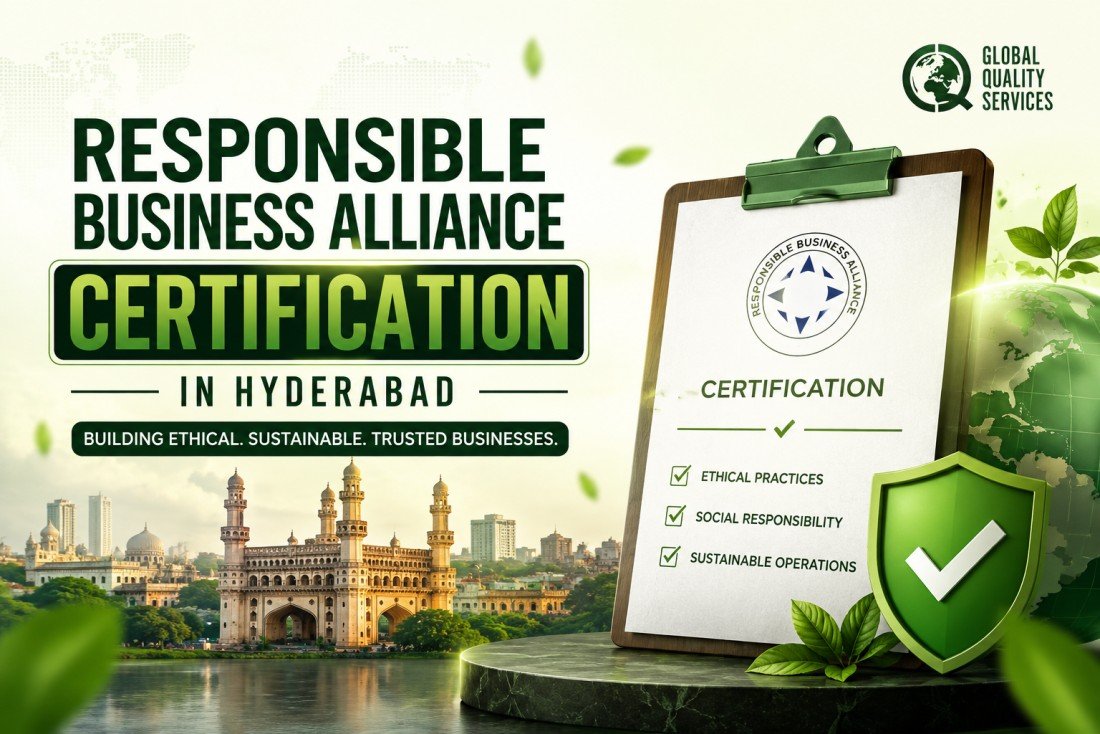
Securing a spot in global supply chains requires more than manufacturing capability. International buyers demand verifiable ethical practices, safe working conditions, and robust environmental management systems. The Responsible Business Alliance certification serves as the premier global standard for corporate social responsibility across electronics, retail, automotive, and toy supply chains. For manufacturing units operating within Telangana, aligning with these standards has become a critical business imperative.
The manufacturing landscape in Hyderabad is experiencing massive growth. According to official data reported by The Hindu, engineering goods exports from the region surged to $7,536 million, accounting for 38.44 percent of the state’s total merchandise exports. This massive volume of international trade highlights why regional facilities must secure global compliance certifications to maintain their competitive edge and avoid export disruptions. Implementing these standards proves to international clients that your facility operates with absolute integrity.
Why Hyderabad Businesses Are Choosing RBA Certification
Global original equipment manufacturers are actively de-risking their supply chains by auditing their suppliers. Achieving this benchmark provides clear operational advantages for local facilities.
- Securing International Vendor Status: Major global brands require all tier-one and tier-two suppliers to complete the Validated Assessment Program. Without this compliance documentation, local factories cannot bid on multi-year procurement contracts.
- Mitigating Regulatory and Legal Risks: The framework directly aligns with major global compliance updates. Adhering to the code helps businesses stay compliant with domestic regulations, including local factory acts and environmental emission limits.
- Optimizing Long-Term Operational Costs: The framework systematically targets resource waste, high employee turnover, and workplace accidents. Fixing these internal systemic gaps reduces overhead expenses and improves overall plant productivity.
- Enhancing Global Brand Reputation: Demonstrating a clean, verified supply chain protects your business from reputational risks. This makes your facility a preferred partner for conscientious global buyers.
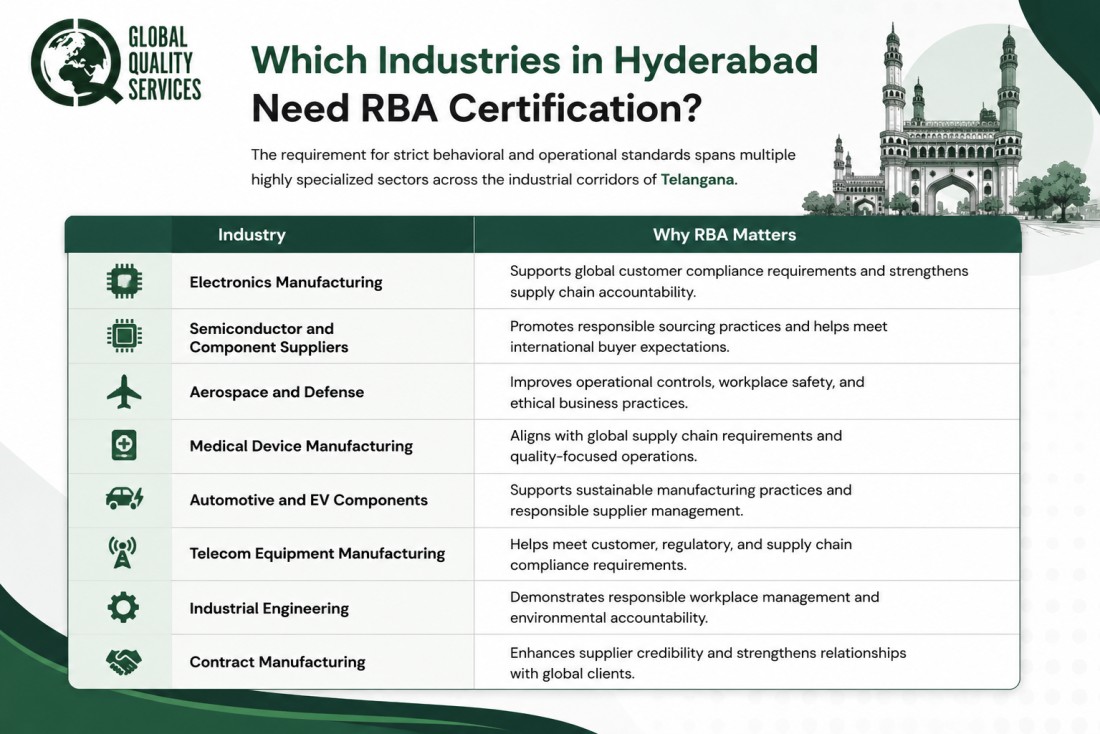
Which Industries in Hyderabad Need RBA Certification?
The requirement for strict behavioral and operational standards spans multiple highly specialized sectors across the industrial corridors of Telangana.
RBA Certification Process in Hyderabad
Achieving formal recognition involves a structured, evidence-based sequence of evaluations. The process evaluates physical facility conditions alongside corporate management documentation.
Step 1: Code of Conduct Adoption
The corporate entity formally reviews and adopts the current version of the code of conduct. Management explicitly commits to integrating labor, health, safety, environmental, and ethical standards into daily plant operations.
Step 2: Self-Assessment Questionnaire
The facility completes an extensive self-assessment questionnaire online. This internal review evaluates existing operational policies against the global framework to identify initial gaps before the formal audit.
Step 3: On-Site VAP Audit Execution
An approved, independent third-party auditing firm visits the physical facility. The auditors conduct comprehensive worker interviews, examine payroll records, inspect chemical storage areas, and evaluate safety infrastructure.
Step 4: Corrective Action Plan Management
If the independent auditors identify non-conformances, the facility receives a structured window to implement corrective actions. This involves resolving systemic issues, upgrading safety gear, or modifying documentation workflows.
Step 5: Final Recognition and Rating
Based on the final verified audit score, the facility receives its official status. The scoring system recognizes top-performing facilities across distinct tiers.
Common Challenges Businesses Face During RBA Compliance
Many industrial facilities encounter specific operational challenges when attempting to clear the rigorous evaluation process independently.
- Complex Working Hour Documentation: Tracking overtime hours, ensuring mandatory weekly rest days, and managing shift rotations according to both local labor laws and international code limits often requires restructuring workforce scheduling workflows.
- Inadequate Chemical and Environmental Controls: Manufacturing units frequently struggle with proper storage segmentation for hazardous materials, missing secondary containment systems, or incomplete waste disposal logs.
- Sub-Tier Supplier Compliance Management: The code requires primary facilities to actively monitor the compliance behaviors of their own vendors, which creates an administrative burden for procurement teams.
- Weak Worker Grievance Mechanisms: Facilities often lack confidential, anonymous feedback channels that protect employees from retaliation, which is a critical point of evaluation during auditor interviews.
How Does Global Quality Services Support RBA Certification in Hyderabad?
Navigating international supply chain codes requires deep regulatory expertise and a practical understanding of local manufacturing operations. Global Quality Services simplifies the entire compliance path by acting as an end-to-end strategic partner for your facility.
The consulting team conducts rigorous on-site mock audits that mirror the exact evaluation criteria used by international third-party bodies. Instead of merely pointing out failures, the consultants actively design compliant documentation systems, train shop floor supervisors on safety protocols, and build sustainable working hour tracking frameworks. By addressing root causes, your facility minimizes audit friction and avoids costly re-audits.
Achieve Global Supply Chain Compliance
Meeting the strict ethical and environmental expectations of global buyers requires a systematic approach to facility compliance. Partnering with dedicated technical specialists ensures your manufacturing workflows pass international scrutiny seamlessly while reducing operational risks.
- Comprehensive Gap Analysis: Detailed baseline reviews of your entire manufacturing plant to identify regulatory risks early.
- Management System Implementation: Custom drafting of workplace safety, labor policy, and environmental management documentation.
- On-Site Workforce Training: Specialized training programs for internal compliance teams and floor managers regarding code requirements.
- Audit Support and Remediation: Active assistance during formal third-party evaluations and quick resolution of identified non-conformances.
To streamline your corporate compliance journey and secure high-value international contracts for your facility, contact Global Quality Services today to discuss a customized readiness strategy with our regional consultants.
Frequently Asked Questions
1. Is RBA Certification only for large manufacturing companies?
No, small and medium-sized businesses that supply global customers can also benefit from implementing RBA requirements.
2. Can RBA requirements be integrated with existing management systems?
Yes, many organizations integrate RBA practices with quality, environmental, and occupational health and safety management systems.
3. Does RBA implementation improve supplier relationships?
Yes, strong compliance practices help businesses build trust with customers and strengthen supply chain partnerships.
4. How often should businesses review their RBA compliance program?
Regular internal reviews and periodic assessments help maintain compliance and support continuous improvement.
5. How can experienced consultants simplify RBA implementation?
An experienced implementation team can help identify gaps, organize documentation, train employees, and support businesses throughout the compliance process.