The industrial landscape across Noida, Greater Noida, and the Yamuna Expressway is moving faster than ever into advanced automation. Local manufacturing plants, automotive component suppliers, and technology vendors are connecting physical machinery to digital networks, cloud servers, and remote diagnostic tools to optimize daily production output.
According to the state industrial data compiled on the Invest UP Official Portal, the Noida-Greater Noida belt has become a primary center for high-tech manufacturing, responsible for over 40 percent of India’s mobile phone production and 55 percent of all electronic component manufacturing.
This heavy density of connected technology has made local production floors clear targets for operational disruption, with factory control networks routinely experiencing automated vulnerability scanning, unauthorized access attempts, and malware threats.
For enterprises operating in Noida’s industrial sectors, standard IT corporate firewalls are not equipped to defend live production systems. Protecting programmable logic controllers, supervisory control and data acquisition architectures, and distributed systems requires a dedicated approach. Achieving ISA/IEC 62443 compliance gives your organization a structured, universally respected defense framework.
Why Businesses in Noida Need ISA/IEC 62443 Certification
Here are the main reasons why businesses in Noida need ISA/IEC 62443 certification:
- Eliminating Expensive Production Interruptions: A network breach on a non-segmented plant floor can paralyze heavy machinery in minutes. This framework splits your plant network into isolated pockets so an issue in an administrative area can never halt core production tools.
- Securing High-Value Export Contracts: Global automotive, medical, and consumer electronics brands enforce rigid supply chain cybersecurity requirements. Holding an independent compliance certificate gives your business a distinct competitive advantage during international b2b contract tenders.
- Shielding Custom Engineering Logic: Industrial manufacturing relies heavily on proprietary firmware settings, specialized automated code patterns, and custom controller setups. Using strict operational technology protocols ensures this critical intellectual property stays safe from industrial espionage.
- Simplifying National Regulatory Reviews: Mapping your physical security setup to this recognized global standard ensures your facility lines up with critical infrastructure defense guidelines issued by domestic cyber oversight councils.
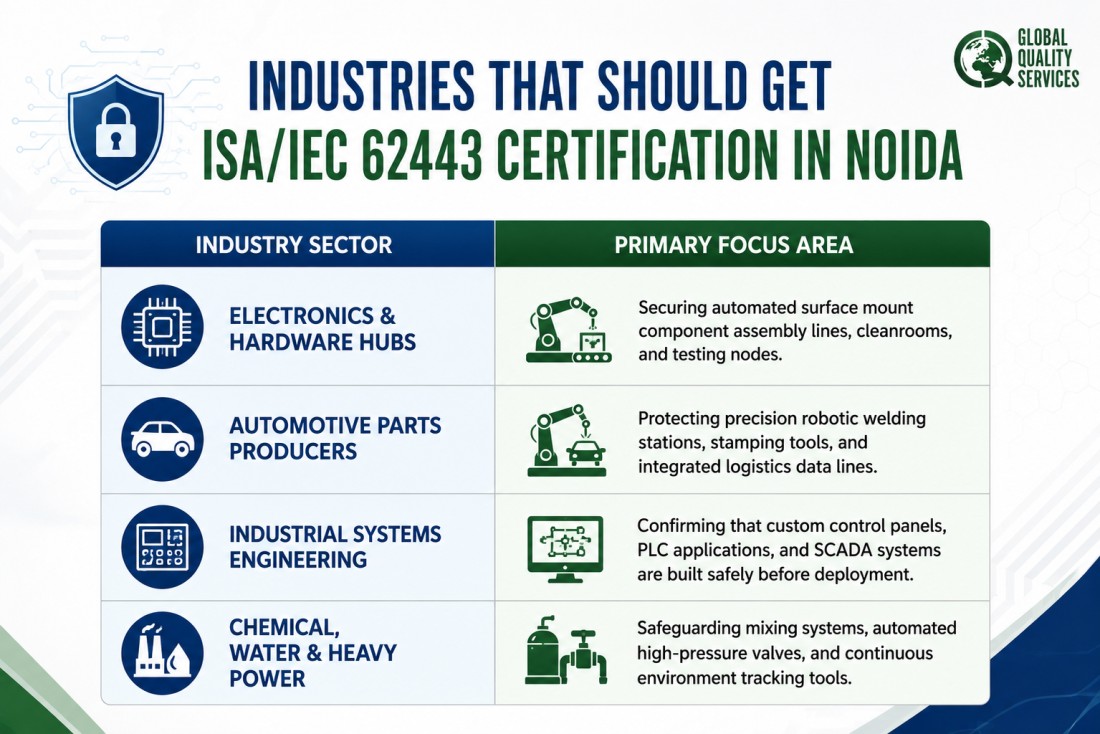
Industries That Should Get ISA/IEC 62443 Certification in Noida
ISA/IEC 62443 Certification Process
Securing an active industrial ecosystem demands a clear, sequential technical plan built around real factory floor workflows.
Step 1: On-Site Operational Assessment
Engineering teams review your physical plant networks, controller setups, remote worker endpoints, and active user rules on-site. This initial evaluation highlights the exact differences between your current defenses and standard safety targets.
Step 2: Defining Zones and Conduits
The factory network is split into distinct, logical zones based on operational risk levels. Communication links between these zones, known as conduits, are restricted, meaning a network vulnerability in an employee office cannot cross into your main assembly line controls.
Step 3: Threat Modeling and Risk Profiling
Technical experts simulate realistic threat vectors targeting human-machine interfaces, local engineering workstations, and network switches. This step analyzes the physical consequences of potential network tampering, letting plant managers fix high-risk gaps first.
Step 4: Control Setup and Policy Integration
Clear operational policies are introduced to manage vendor remote support, system updates, and internal access roles. Engineers then configure hardware firewalls, update passwords, and turn on security logging directly across the factory floor.
Step 5: Pre-Audit Validation and Management
Internal trial runs confirm all technical security controls perform reliably under normal working conditions. All necessary compliance evidence is gathered and organized into a clean folder, streamlining the final validation handled by authorized third-party certification bodies.
Estimated Timeline for ISA/IEC 62443 Certification
- System Discovery and Framework Scoping (Weeks 1 to 4): Collecting system architecture documents, evaluating active controller models, and running preliminary structural checks on-site.
- Network Partitioning and Engineering Fixes (Weeks 5 to 14): Installing hardware firewalls, separating corporate networks from machinery lines, and updating vulnerable endpoints.
- Operational Guidelines and Staff Training (Weeks 15 to 18): Deploying simplified access standards, testing plant emergency response plans, and instructing field teams on safe connection habits.
- Independent External Certification Auditing (Weeks 19 to 24): Collaborating with appointed external assessors to review documentation packages and issue your final certificate.
How Does Global Quality Services Support ISA/IEC 62443 Certification Across Noida
Our approach is practical, structured, and aligned with internationally accepted industrial cybersecurity requirements. Our support includes:
- Initial cybersecurity and operational technology assessment.
- Complete gap analysis against ISA/IEC 62443 requirements.
- Industrial asset inventory and system mapping.
- Risk assessment and security planning.
- Documentation development and policy preparation.
- Guidance for implementing practical cybersecurity controls.
- Internal audit support.
- Certification readiness assessment.
- Ongoing improvement recommendations after certification.
Get Started with ISA/IEC 62443 Certification Services in Noida
Deploying a structured cybersecurity plan protects your daily manufacturing output and establishes your firm as a reliable, secure brand for international markets. Global Quality Services provides the specialized network insights, practical engineering advice, and hands-on consulting support needed to finish your complete certification program cleanly.
- Get a transparent evaluation of your plant network architecture without confusing technical fluff.
- Build a distinct security roadmap focused directly on protecting your physical controllers and automation systems.
- Minimize documentation delays with direct assistance from experienced industrial compliance professionals.
Protect your industrial facility from modern network risks. Reach out to our consulting group today to set up your initial on-site gap assessment.
Frequently Asked Questions
1. How long does a standard ISA/IEC 62443 compliance certificate stay valid?
The primary compliance certificate remains valid for three years. To ensure your security status stays active, your plant will go through simple annual checks to confirm that network firewalls, hardware patches, and user access rules are working properly on the floor.
2. Do we need to purchase entirely new factory machinery to qualify?
No, changing out your physical production machinery is not required. Older automation equipment that lacks modern built-in security features can be shielded using compensatory controls, meaning consultants isolate legacy hardware within highly secure network zones to block outside risks without requiring expensive equipment upgrades.
3. What makes this industrial framework different from standard corporate IT security?
Corporate IT strategies deal primarily with database safety, customer information privacy, and web portal login records. This industrial framework focuses directly on physical safety, machinery uptime, and manufacturing continuity, keeping active controller hardware secure from outside tampering or system halts.
4. Who issues the official certification documents for our local plant?
The final certificate is issued by independent, globally authorized testing and auditing organizations. The consulting team prepares all preliminary network blueprints, drafts the required security policies, and compiles the compliance files, ensuring your plant passes the external evaluation smoothly.
5. Can smaller industrial operations afford to implement this security framework?
Yes, the framework is designed to scale down naturally to match your facility size and risk profile. Smaller production sites can focus on lower security levels, implementing foundational steps like clean network separation and basic password rules without needing a huge technology budget.