Many organizations deliver good work yet struggle to prove consistency when clients demand predictable outcomes at scale. This growing expectation has pushed process maturity to the center of business strategy, especially for companies competing in global markets.
According to performance insights from ISACA’s CMMI Institute, organizations that adopt mature process frameworks have reported up to a 30 percent reduction in defects and more than 40 percent improvement in schedule predictability.
This shift highlights why process maturity has become a strategic growth driver for companies in Chennai across technology, engineering, and service sectors. Understanding what CMMI V2.0 involves, how it shapes operational discipline, and how to prepare for successful adoption is essential for businesses that aim to scale with confidence.
What is CMMI V2.0 Certification and Why Are Chennai Companies Need it?
CMMI V2.0 certification is a performance-focused process improvement framework governed by ISACA. This framework helps organizations establish structured methods of working that lead to greater consistency, improved quality control, and tighter delivery practices. Rather than only verifying whether processes are documented, the model examines how effectively they support real delivery performance.
Companies in Chennai are increasingly pursuing CMMI V2.0 as expectations for predictable execution continue to grow. With the rapid expansion of global capability centers and export-driven service operations, a recognized maturity level strengthens market trust, lowers perceived delivery risk, and supports participation in high-value international engagements.
CMMI V2.0 vs V1.3: What Has Actually Changed
- Performance focus: Organizations must show measurable improvement through real delivery data, not just documented processes.
- Agile alignment: The updated model supports sprint-based workflows while maintaining process discipline.
- Continuous improvement: Regular sustainment reviews promote ongoing refinement instead of a one-time certification effort.
- Simpler structure: Clear grouping of practice areas makes implementation easier across teams.
How CMMI V2.0 Certification Benefits Businesses in Chennai
Adopting CMMI V2.0 supports both strategic growth and operational clarity for organizations in competitive markets. This certification improves internal discipline while strengthening client confidence in delivery capability. Here are the key benefits organizations can expect:
Retain Critical Internal Knowledge
Many businesses rely too heavily on a few employees to save the day. CMMI changes that by embedding expertise into the company’s DNA through structured workflows and shared templates. This ensures that even as teams grow or people move on, your high standards for delivery remain exactly where they belong.
Win High-Value Global Contracts
To compete on the world stage, trust is your primary currency. International clients and government bodies look for maturity levels as proof that a vendor is reliable. A CMMI certification acts as a professional shorthand. It gives you the credibility needed to win long-term or high-stakes contracts that require disciplined governance.
Drive Decisions with Real Data
CMMI encourages tracking clear metrics like project timelines and quality trends so you can see exactly where you stand. This visibility allows leadership to spot risks early and make informed choices about budgeting and growth rather than just reacting to the next crisis.
Ensure Uniform Service Quality
If project quality varies from one team to the next, it creates friction. CMMI introduces a gold standard for how work is planned and executed across the entire company. By reducing these inconsistencies, you ensure smoother transitions and more predictable outcomes no matter how many clients you are juggling at once.
Secure Long-Term Client Loyalty
Clients stay where they feel secure. Demonstrating a commitment to a structured maturity level proves to your partners that you value accountability and continuous improvement. This builds the kind of deep-rooted trust that leads to contract renewals and a stronger reputation in a crowded global market.
Which Chennai Industries Benefit the Most from CMMI V2.0
CMMI V2.0 supports organizations that manage complex delivery environments, large client expectations, or regulated quality standards. In Chennai, several sectors gain strong operational and strategic value from structured process maturity due to the city’s export-driven and engineering-focused business landscape.
- Information Technology and SaaS
- Automotive engineering and embedded systems
- Business process outsourcing and knowledge services
- Engineering design and manufacturing support
- Global capability center service providers
What are the CMMI Maturity Levels and How Should Companies Choose the Right Level
CMMI outlines five maturity levels that show how well an organization manages and improves its processes. Each level reflects a step toward better structure, consistency, and performance control. As companies grow, their process discipline also needs to grow. Choosing the right level depends on business goals, client expectations, and how prepared the organization is to adopt structured practices.
Level 1 Initial
Processes remain informal and mostly reactive. Teams rely on individual effort to complete work, which often leads to inconsistent results. Many early-stage companies operate at this level without formal governance or clear performance tracking.
Level 2 Managed
Projects follow planned workflows with defined roles and basic monitoring practices. Teams start using simple project management methods to control timelines and commitments. This level improves delivery stability and builds accountability across projects.
Level 3 Defined
Processes become standardized and documented across the organization. Teams follow common guidelines and governance structures. This level often acts as the starting point for companies aiming to win structured enterprise projects and scale operations with consistency.
Level 4 Quantitatively Managed
Organizations begin to use data and performance metrics to manage outcomes. Leaders make decisions based on measurable insights rather than assumptions. This approach increases predictability and helps teams address risks before they affect delivery.
Level 5 Optimizing
The focus shifts toward continuous improvement and innovation. Organizations refine processes using feedback, performance analysis, and improvement initiatives. This level supports long-term efficiency, quality growth, and sustained competitive advantage.
What is the Complete CMMI V2.0 Certification Process from Start to Appraisal
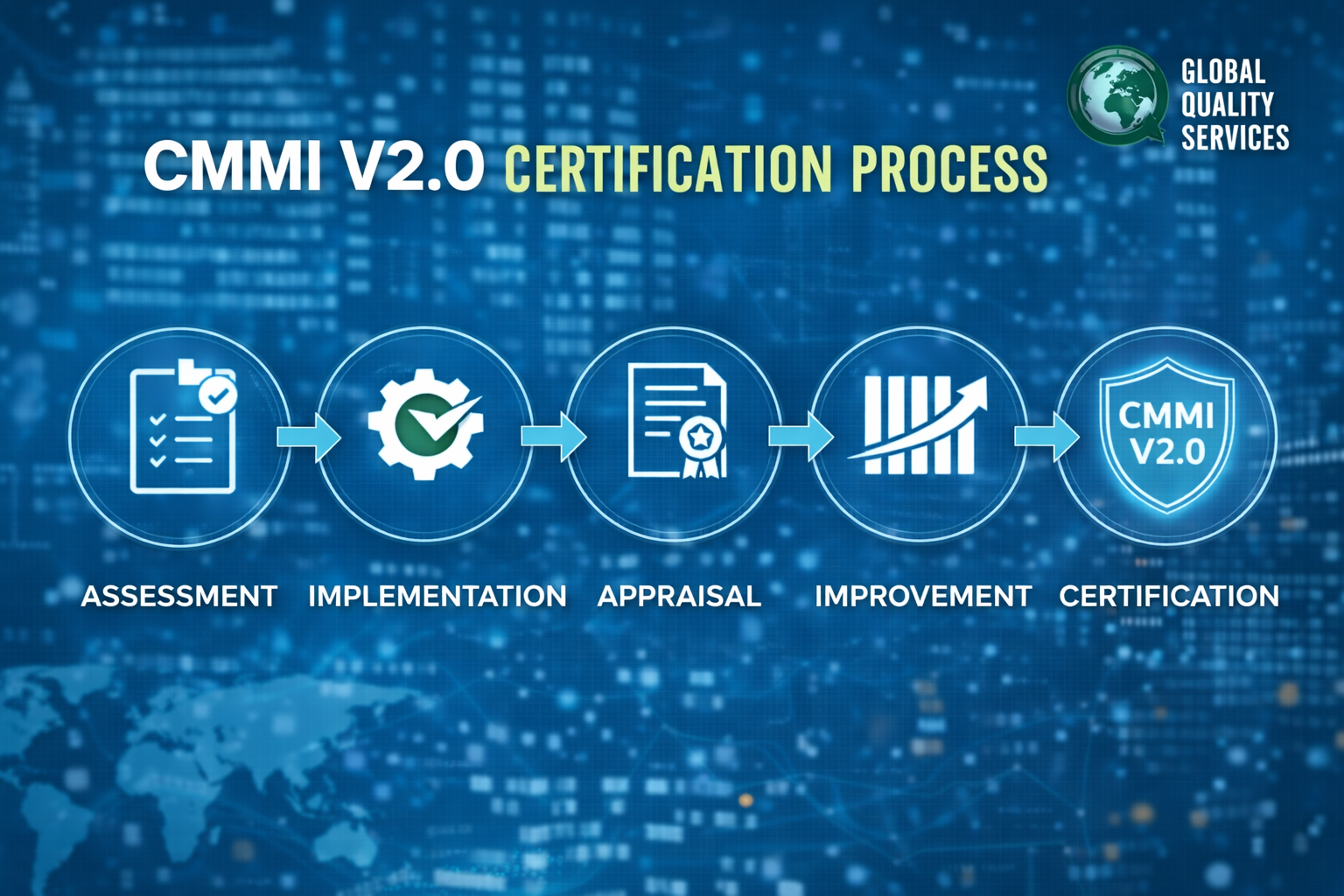
Reaching CMMI V2.0 maturity needs a clear and step-by-step approach. Organizations must align leadership goals, daily work practices, and measurable results before the final appraisal. Here is a complete process for opting for CMMI V2.0 certification:
Step 1 Gap Assessment
The process starts with a clear review of how the organization works today. Teams study current workflows, decision methods, and delivery controls. This step helps find improvement areas and creates a practical roadmap that fits business goals.
Step 2 Process Design and Customization
After the assessment, organizations design simple and structured processes. These include clear workflows, usable templates, and defined governance steps. The aim is to create processes that teams can follow easily in real work situations.
Step 3 Implementation
Teams start using the new processes in actual projects. This stage builds real discipline and consistency. It also creates performance proof that shows how processes improve quality, timelines, and overall delivery control.
Step 4 Internal Capability Development
Key team members receive focused training to support implementation and prepare for appraisal. This step builds internal confidence and helps teams manage quality practices without depending too much on external support.
Step 5 Final Appraisal
A certified lead appraiser reviews performance proof, governance consistency, and team awareness. When the appraisal is successful, the organization earns its maturity level and shows strong process capability aligned with global standards.
How Long Does CMMI Certification Take in Chennai
The timeline for achieving CMMI V2.0 certification depends on the organization’s current process maturity, size, and readiness for structured implementation. In practical business scenarios, most companies in Chennai follow one of the following timelines:
- Accelerated timeline – 5 to 6 months: Possible for organizations that already follow structured project management practices, maintain proper delivery records, and have strong leadership involvement from the start.
- Standard timeline – 7 to 9 months: Common for mid-sized firms that need time to define processes, train teams, and generate sufficient performance evidence through real project execution.
- Extended timeline – 10 to 12 months or more: Typically seen in large enterprises or organizations with multiple business units where consistent adoption across functions requires a longer transition period.
What is the Actual Cost of CMMI Certification in Chennai?
The cost of CMMI V2.0 certification varies based on factors such as organization size, chosen maturity level, existing process readiness, and the extent of implementation support required. Since each company begins from a different maturity stage, the overall investment is typically customized.
In most cases, the total cost includes:
- Official ISACA Fees: These are non-negotiable fees paid directly to the governing body for appraisal registration, model licensing, and official exam fees for your ATMs.
- Consultancy and Enablement Fees: This covers the professional services provided by GQS, including the gap analysis, training workshops, and document reviews.
- Appraisal Team Costs: This includes the professional fee for the Lead Appraiser and any travel or administrative costs associated with the formal review.
How to Prepare for a Successful CMMI Appraisal Without Risk of Failure?
Preparing for a CMMI appraisal is not only about finishing documents or doing last-minute checks. Organizations must show that teams follow processes regularly and can present clear performance proof.
Key preparation focus areas include:
- Consistent process execution across all selected projects
- Well-organized and easily accessible performance evidence
- Clear team awareness of defined practices and roles
- Regular internal reviews and mock appraisal readiness checks
- Active leadership involvement and governance oversight
How to Choose the Right CMMI Consultant in Chennai
Selecting the right CMMI consultant plays a critical role in the success of your certification journey. The right partner not only guides implementation but also helps build internal capability that supports long-term process maturity. Organizations should look for these specific qualities:
Verify Proven Implementation Experience
Choose a consultant with a strong track record of successfully guiding organizations through full lifecycle CMMI implementations. Practical experience across real business environments ensures that recommendations remain realistic and aligned with operational needs.
Assess Industry-Specific Understanding
Consultants should understand the delivery challenges and regulatory expectations of your sector. Experience in similar domains helps tailor process frameworks that fit business workflows rather than forcing generic models.
Evaluate The Training And Capability Building Approach
A reliable partner focuses on strengthening internal ownership of quality practices. Structured workshops, mentoring sessions, and practical guidance help teams adopt processes confidently and sustain maturity beyond certification.
Review Appraisal Readiness Methodology
The consultant should follow a clear readiness strategy that includes internal reviews, gap validation, and mock appraisals. This structured preparation reduces risk and improves confidence before the formal evaluation stage.
Check Long-Term Support Commitment
Process maturity requires ongoing refinement. Choose a consultant who offers sustainment guidance, periodic reviews, and strategic advisory support to help the organization maintain and improve its maturity level over time.
Why Chennai is Emerging as a Major Hub for Process Maturity Adoption?
Chennai has steadily evolved from a traditional service delivery center into a strong engineering and technology-driven business ecosystem. Several factors contribute to the rising adoption of process maturity frameworks in the region:
- Rapid growth of global capability centers
- Strong presence of technology and engineering firms
- Increasing demand for export-driven service delivery
- Availability of skilled, quality, and process professionals
- Rising competition in international project markets
- Higher client expectations for structured governance
- Expansion of SaaS and product development ecosystem
Scale Your Business with CMMI V2.0 Certification
Take the next step toward structured growth and stronger global credibility with CMMI V2.0. Global Quality Services supports your organization with practical implementation, focused training, and end-to-end appraisal readiness. We help you build lean, powerful processes that make your company faster, better, and more profitable. Achieve your global standing and outpace your competition with expert guidance.
Frequently Asked Questions
1. Does CMMI certification require a dedicated quality team?
Not always. Many organizations begin with cross-functional teams handling quality responsibilities. As maturity grows, companies may formalize dedicated roles to manage governance, performance tracking, and continuous improvement activities.
2. Can an organization move directly to a higher maturity level?
Yes, if current practices already meet the required expectations. However, most companies progress step by step to build stable capability and reduce implementation risks during appraisal.
3. Is CMMI certification applicable only to delivery teams?
No. The framework impacts multiple functions, including project management, engineering, quality assurance, and leadership governance. It strengthens overall operational discipline across the organization.
4. Will CMMI change existing tools and workflows?
Not necessarily. The framework focuses on improving how teams work rather than replacing tools. Existing systems can be aligned with structured practices to support better performance outcomes.
5. What happens after achieving a maturity level?
Organizations continue to maintain and improve their processes through regular internal reviews and sustainability appraisals. Continuous refinement ensures long-term value from the certification.