Running a food production plant means dealing with strict quality rules every single day. India’s food processing market is expanding rapidly, projected to approach a USD 600 billion valuation by the end of the decade. Down south, Tamil Nadu plays a huge role in this growth. State output accounts for roughly 6.30 percent of the national total, backed by over 2,400 registered small and medium food processing units. If you run a local plant in Chennai and want to supply global retail chains or ship products overseas, basic local licensing is no longer enough. You need internationally recognized food safety credentials.
Global Quality Services helps local manufacturers secure this critical standard. We work directly with your team on the ground to get your facility audit-ready without slowing down your daily production lines.
Why Chennai Is Getting Ahead in FSSC 22000 Certification
Many factors are driving the growing demand for FSSC 22000 Certification among food businesses in Chennai:
- Direct Port Access: Chennai port and nearby air cargo hubs make it easy to ship perishable foods, marine goods, and packaged items out to global buyers in the Middle East, Europe, and North America.
- Stricter Buyer Demands: Supermarket chains and organized retail buyers across India now refuse to stock items from plants that lack Global Food Safety Initiative recognition.
- Active Manufacturing Belts: Key industrial hubs like Ambattur, Sriperumbudur, and Guindy host thousands of processing units that need structured hygiene systems to compete globally.
- The Shift to Value Addition: Local business owners are moving away from raw commodity exports and focusing on packaged, ready-to-eat foods that demand strict third-party verification.
Food Businesses in Chennai That Benefit Most
FSSC 22000 Certification is suitable for businesses involved in different stages of the food supply chain:
- Food and Beverage Processors: Bakeries, beverage bottling lines, dairy units, and ready-to-eat meal kitchens.
- Packaging Manufacturers: Companies making primary plastic films, food-grade containers, and corrugated boxes for consumable goods.
- Animal Feed Plants: Facilities producing commercial feed that feeds into the broader human food chain.
- Cold Storage and Logistics: Temperature-controlled warehouses and transport operators handling sensitive food items.
Common Food Safety Challenges Faced by Chennai Manufacturers
Here are some of the common challenges businesses face:
- Weak Traceability: Many factory floors find it hard to track an ingredient back from the final packaged box to the original farm supplier.
- Outdated Cleaning Steps: Plants often rely on old, ad-hoc cleanup routines instead of formal operational prerequisite programs that auditors look for.
- Allergen Mix-Ups: Running different product lines on the same equipment without strict separation rules leads to immediate audit failure.
- Paperwork Gaps: Daily factory work often looks completely different from what is written down in the company quality manual during a surprise inspection.
Our FSSC 22000 Consulting Approach for Businesses in Chennai
Here is our FSSC 22000 consulting approach for businesses in Chennai:
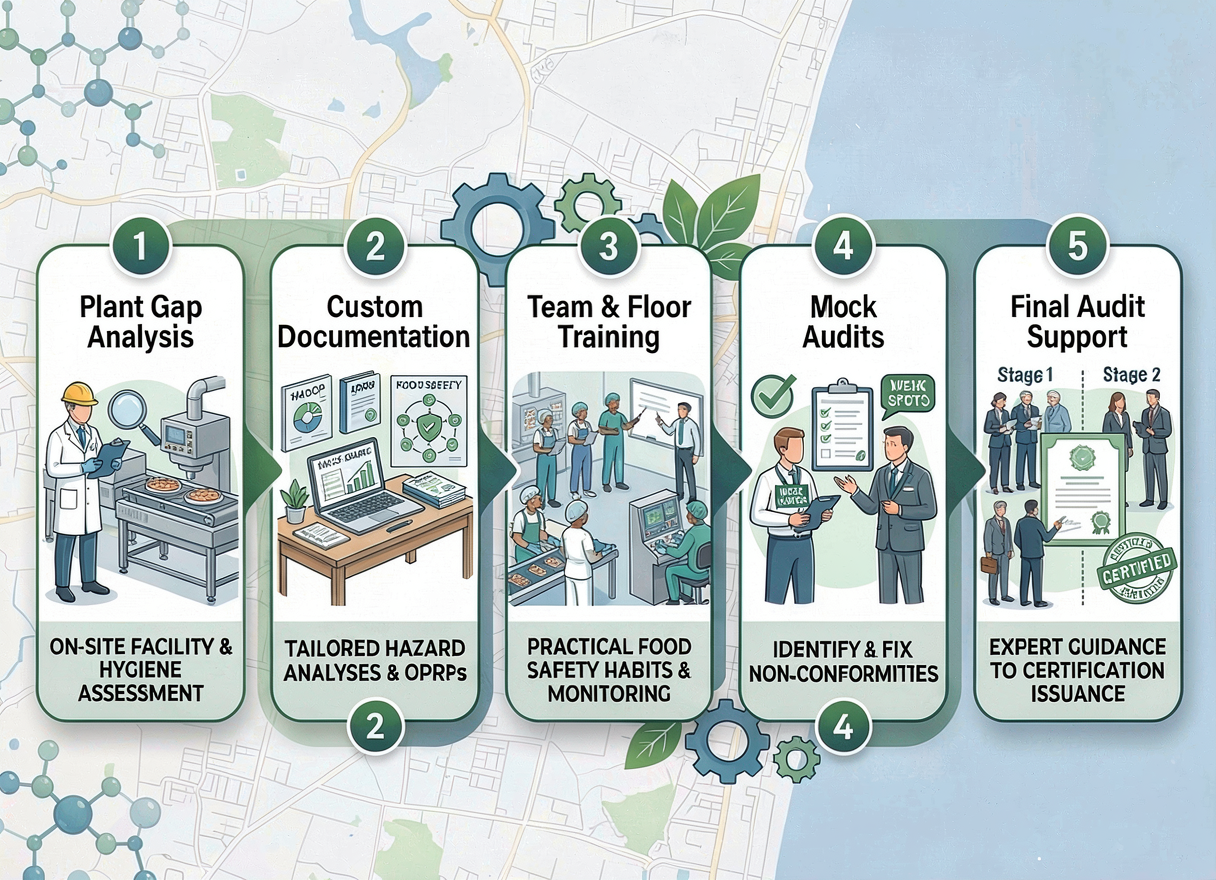
- Plant Gap Analysis: We visit your Chennai facility to check your current hygiene setup, infrastructure, and paperwork against international scheme rules.
- Custom Documentation: We help your team write simple hazard analyses and operational prerequisite programs that fit your exact machinery and product lines.
- Floor Training: We train your operators and supervisors on daily food safety habits, active monitoring, and clean record-keeping.
- Mock Audits: We run practice audits to find and fix weak spots before the official registrar steps foot in your plant.
- Final Audit Support: We stay by your side through both Stage 1 and Stage 2 certification audits until your certificate is issued.
How Global Quality Services Supports FSSC 22000 Certification Across Chennai
Global Quality Services offers hands-on technical guidance built specifically for food businesses in Tamil Nadu. We avoid heavy corporate jargon and focus entirely on practical factory improvements. Our consultants work side by side with your quality staff to build working systems that satisfy international certifiers.
- On-Site Factory Visits: Regular walk-throughs at plants across Ambattur, Guindy, and Sriperumbudur to check hygiene practices firsthand.
- Simple Documentation: Clear standard operating procedures written in active voice so your team can actually use them.
- Registrar Coordination: Direct liaison with accredited certification bodies like SGS, TUV, and Bureau Veritas to keep your audit timeline on track.
In addition to FSSC 22000 Certification, we also provide consultancy/guidance for PCQI (Preventive Controls Qualified Individual) in Training and Certification to help food manufacturers comply with the U.S. FDA FSMA requirements.
Migration or FSSC 22000 from Version 6 to Version 7
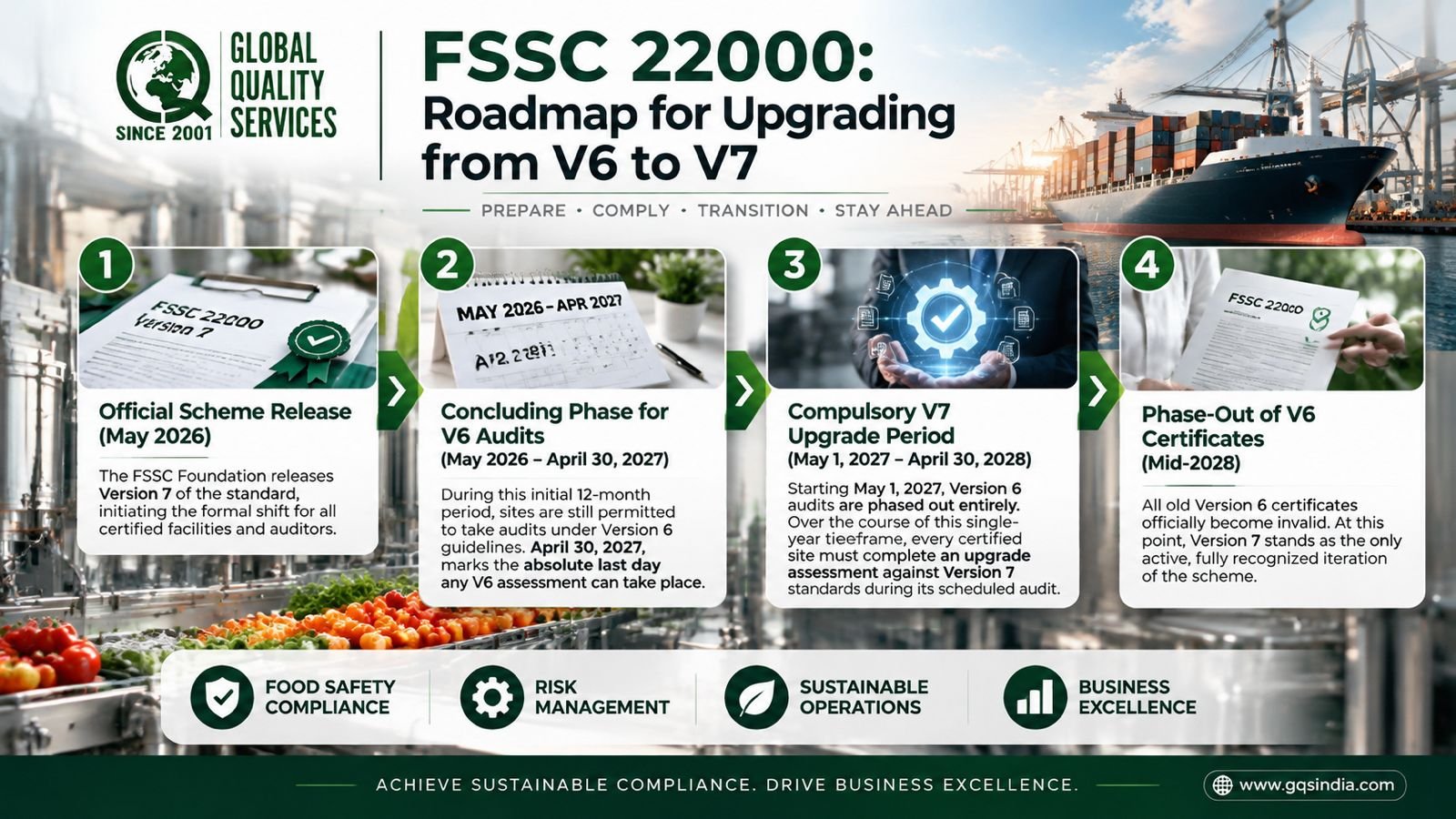
FSSC 22000 Version 7 was officially released on May 1 2026. Food manufacturers, processors, packaging producers and other certified organizations must prepare their food safety management systems for the updated scheme within the prescribed transition period.
Global Quality Services provides transition, migration, and upgrade support for organizations moving from FSSC 22000 Version 6 to Version 7. Our services focus on identifying gaps in existing systems, updating relevant documentation, reviewing prerequisite programs (PRPs), and preparing teams for the Version 7 upgrade audit.
What Has Changed in FSSC 22000 Version 7?
The latest version updates the scheme’s technical framework and aligns it with international food safety requirements.
- Updated prerequisite programs: Version 7 incorporates the ISO 22002-x:2025 series, including ISO 22002-100:2025 for common PRP requirements and the applicable sector-specific standards.
- Alignment with GFSI requirements: The scheme has been updated to align with the Global Food Safety Initiative (GFSI) Benchmarking Requirements Version 2024.
- Food loss and waste reduction: Version 7 includes Save Food Packaging design principles for organizations involved in packaging design, strengthening the scheme’s contribution to sustainability goals.
- Clearer food chain categories: The revised structure provides a more defined division of food chain categories and subcategories.
- Updated auditor competency requirements: Auditor qualification and competency requirements have been revised to reflect the updated scheme and applicable sector-specific standards.
Organizations should review the official Version 7 scheme documents to determine which changes apply to their certification scope and operations.
FSSC 22000 Version 6 to Version 7 Transition Timeline
Version 7 adopts the updated ISO 22002-x:2025 series for prerequisite programs, with a common foundation and additional requirements for specific industry sectors. The structure below shows how the standards are organized.
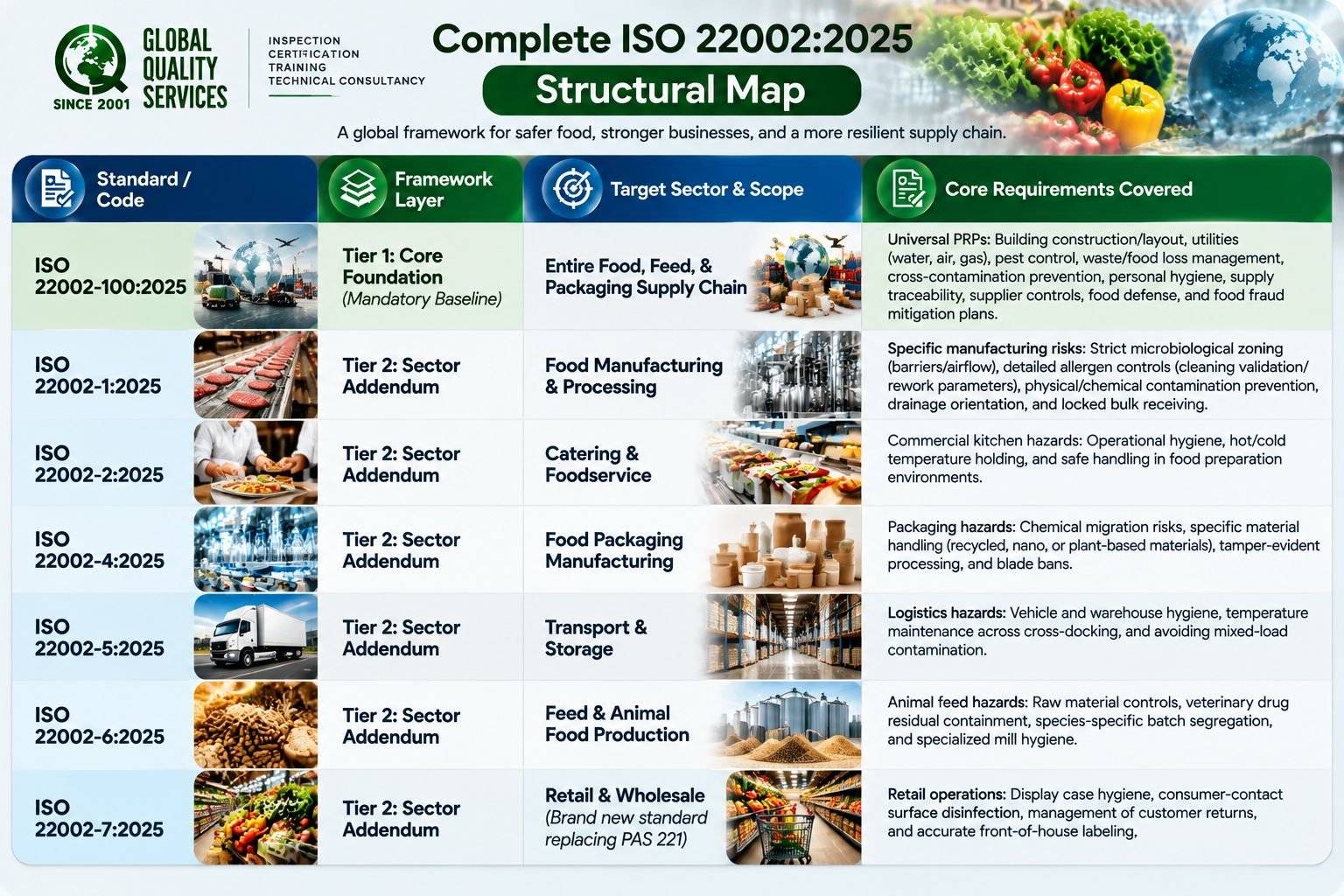
1. ISO 22002-100:2025 – Prerequisite Programs for Food Safety
Establishes the foundational hygiene and food safety requirements applicable across the food, feed, and packaging supply chains. It covers facility design, sanitation, pest control, personal hygiene, traceability, and contamination prevention.
2. ISO 22002-1:2025 – Food Manufacturing and Processing
Defines prerequisite programs for food manufacturing facilities to maintain hygienic production conditions. It addresses microbiological zoning, allergen management, contamination prevention, cleaning, and safe material handling.
3. ISO 22002-2:2025 – Catering and Foodservice
Specifies food safety and hygiene requirements for catering operations, commercial kitchens, and foodservice establishments. It covers safe food preparation, temperature control, operational hygiene, and cross-contamination prevention.
4. ISO 22002-4:2025 – Food Packaging Manufacturing
Establishes hygiene and safety requirements for facilities manufacturing food packaging materials. It addresses packaging contamination risks, material handling, chemical migration, and processes designed to protect food-contact packaging.
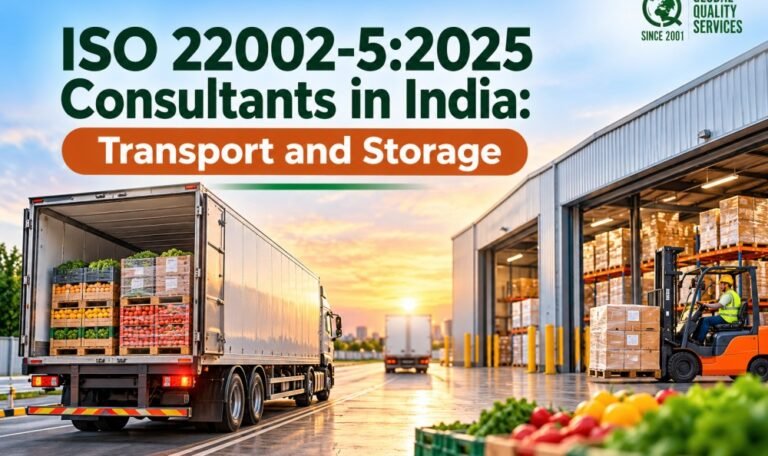
5. ISO 22002-5:2025 – Transport and Storage
Defines prerequisite programs to maintain food safety during transport and storage. It covers vehicle and warehouse hygiene, temperature control, cross-contamination prevention, and safe handling during loading and unloading.
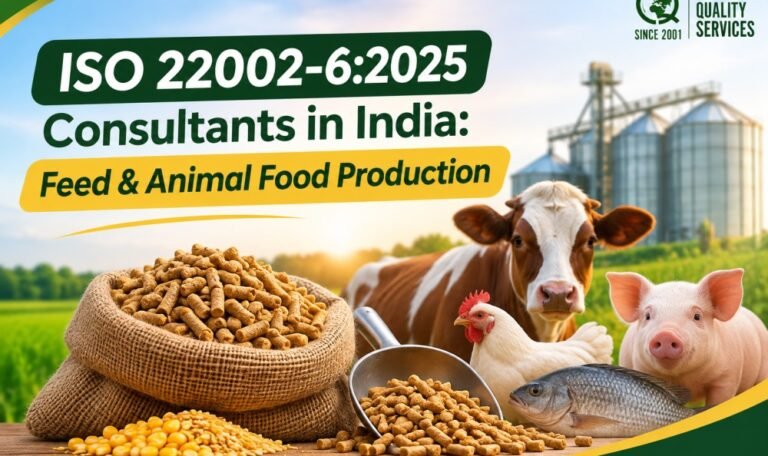
6. ISO 22002-6:2025 – Feed and Animal Food Production
Establishes hygiene and safety requirements for facilities producing animal feed. It addresses raw material control, contamination prevention, batch segregation, and hygienic manufacturing practices.
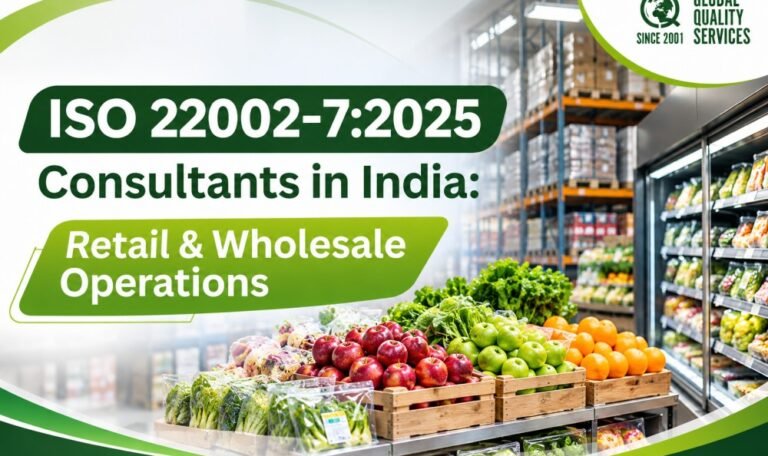
7. ISO 22002-7:2025 – Retail and Wholesale
Specifies food safety and hygiene requirements for retail and wholesale operations involving food products. It covers display-area hygiene, cleaning and disinfection, product handling, customer returns, and accurate food labeling.
The FSSC 22000 Version 6 to Version 7 transition timeline outlines the key dates for organisations to upgrade their food safety management systems to the latest scheme requirements. Version 7 was published on 1 May 2026, with Version 6 audits permitted until 30 April 2027. The mandatory upgrade audit period runs from 1 May 2027 to 30 April 2028, and all remaining Version 6 certificates are scheduled for withdrawal after 30 June 2028. Organisations should plan their transition early to meet the updated requirements and maintain certification.
With more than two decades of experience in management system consulting, Global Quality Services (GQS) supports organisations transitioning from FSSC 22000 Version 6 to Version 7 through gap assessments, documentation reviews and identification of updated scheme requirements. We help businesses develop a practical migration plan, address compliance gaps and prepare their food safety management systems for the Version 7 upgrade audit. Our experience enables us to provide structured, practical support tailored to each organisation’s existing system and certification requirements.
Secure Your FSSC 22000 Certification in Chennai Today
Partner with Global Quality Services to upgrade your food safety systems and open doors to global markets. Our experts provide clear, step-by-step guidance to ensure your facility clears audits smoothly.
- Proven Track Record: Years of practical experience helping Indian manufacturers meet international export criteria.
- Hands-On Support: Direct assistance on your factory floor so your production never skips a beat.
- Complete Compliance: Full alignment with the latest version standards and global retail demands.
Ready to take your food business to the next level? Contact Global Quality Services today to book your initial plant gap analysis.
Frequently Asked Questions
1. What is the difference between ISO 22000 and FSSC 22000?
ISO 22000 is a general food safety management framework. FSSC 22000 adds strict sector-specific prerequisite programs and extra scheme rules, which makes it fully recognized by the Global Food Safety Initiative for international retail trade.
2. How long does the entire consulting and certification process take?
Most projects take between four to nine months. The exact timeline depends on your factory size, current infrastructure condition, and product line complexity.
3. Do consultants visit our manufacturing plant in Chennai?
Yes. Our implementation process requires physical visits to your facility to check floor layouts, hygiene loops, and daily processing workflows in person.
4. Is FSSC 22000 mandatory for selling food products in India?
Local law mainly requires a basic FSSAI license. However, major multinational brands, organized retail chains, and export markets will not work with suppliers unless they hold FSSC 22000 certification.
5. Can small-scale food businesses in Chennai achieve this certification?
Yes. Smaller manufacturing units and local packaging suppliers can successfully earn certification by following a phased implementation schedule scaled to their operations.