Pune acts as the major industrial center for food processing, agricultural packaging, and cold storage in Maharashtra. Industrial zones such as Chakan, Bhosari, Ranjangaon, and Hadapsar have several processing units catering to domestic and international customers.
According to the Ministry of Food Processing Industries reports, processed items now account for over 23.4% of total agricultural exports. Adopting FSSC 22000 standards helps local units meet strict global buyer demands and secure long-term commercial supply contracts.
Why Food Businesses in Pune Need FSSC 22000 Certification
Food safety legislation and customer demands are rapidly evolving. FSSC 22000 certification offers local processing facilities true competitive benefits.
- Global Market Recognition: FSSC 22000 is fully accredited by the Global Food Safety Initiative (GFSI). It allows entry into global trade and global retail distribution channels.
- Compliance with FSSAI Standards: The FSSC 22000 certification meets the regulatory demands in the region. It ensures compliance with national standards and avoids fines at local safety inspections.
- Access to Major Supply Chains: International supermarket chains, export agencies, and restaurants operating in Pune require suppliers to have GFSI accreditation before issuing contracts.
- Operational Risk Management: The application of ISO 22000 food safety management standards together with sector-specific Prerequisite Program provides for comprehensive contamination control.
- Product Protection: Continuous auditing of hygiene practices fosters customer confidence and avoids costly product recalls.
Industries We Serve Across Pune Region
Our consulting team works directly with facilities across all major industrial belts in the Pune district.
- Food Processing Facilities: Dairy processing, commercial bakeries, spice grinders, fruit pulp units, and ready-to-eat meal factories operating in Chakan, Bhosari, and Markal.
- Agricultural and Grain Processing: Pulse processing mills, edible oil refiners, and cold storage hubs located across Shirur, Ranjangaon, and Talegaon.
- Packaging Material Suppliers: Box manufacturers, flexible film printers, and plastic container suppliers in Pimpri Chinchwad and Kuruli.
- Central Kitchens and Catering Services: Mass catering facilities and cloud kitchen hubs serving Hinjewadi, Baner, and Hadapsar.
- Logistics and Cold Chains: Warehouses, cold storage units, and transport operators running routes along the Pune-Satara and Pune-Nagar corridors.
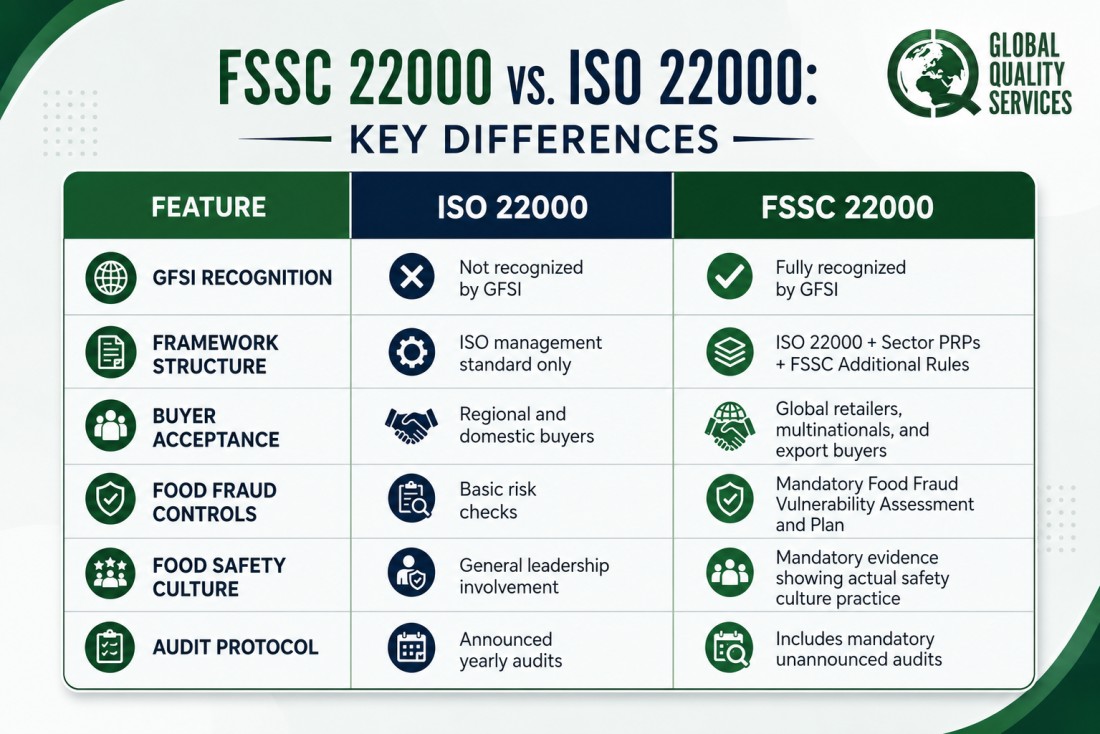
FSSC 22000 vs. ISO 22000: Key Differences
Choosing the correct standard depends on your target market and customer requirements. The table below summarizes the differences between the two models:
Step-by-Step FSSC 22000 Implementation Roadmap
Getting certified requires a clear process tailored to your factory layout and production volume. We use a simple five-step method to prepare your plant:
Step 1: On-Site Gap Analysis
Our consultants review your factory’s processes, layout, sanitation policies, and safety documentation according to the FSSC 22000 standard and provide you with a detailed report listing any gaps.
Step 2: Documentation
We guide you through the process of developing simple food safety manuals, procedures for work practices, hazard management systems, and log sheets to ensure that all operations from raw materials acceptance to final delivery comply with established criteria.
Step 3: Employee Training
Training is conducted for floor workers, line managers, and quality controllers. It covers basic sanitation principles, allergen control, and internal auditing.
Step 4: Internal Audit and Process Checks
A complete audit of our practices is conducted before the arrival of the external party. This will identify any lingering issues in the process, resolve them by finding the cause of the issue, and ensure all forms are up-to-date.
Step 5: External Certification Support
Our team remains at your side through both Stage 1 and Stage 2 certification audits conducted by the certification body of your choice. We help answer any auditor inquiries and respond to any listed findings.
Migration of FSSC 22000 from Version 6 to Version 7
Rules on food safety culture, equipment hygiene design, waste management, and allergen testing have been clearly stated in FSSC 22000 Version 6. Although the current version is Version 6 and this is the one being used now for the audit, the Foundation always analyzes supply chain information from around the world to develop Version 7 guidelines.
- Food Safety Culture: Management should demonstrate worker participation, hygiene goals, and team feedback on safety issues.
- Hygiene in Design of Equipment: Any new equipment to be installed should be easy to clean, with no areas in which bacteria can grow undetected.
- Environmental Testing: Testing programs should be conducted regularly to test processing surfaces and air quality for possible pathogens.
- Excess Food Handling: Procedures should exist for handling organic waste and surplus food, avoiding contamination of the production environment.
Transitioning to FSSC 22000 Version 7 keeps your food safety management system resilient and aligned with global buyers. Mandatory transition audits take effect on May 1, 2027. Starting your preparation now ensures full compliance long before auditors step through your doors.
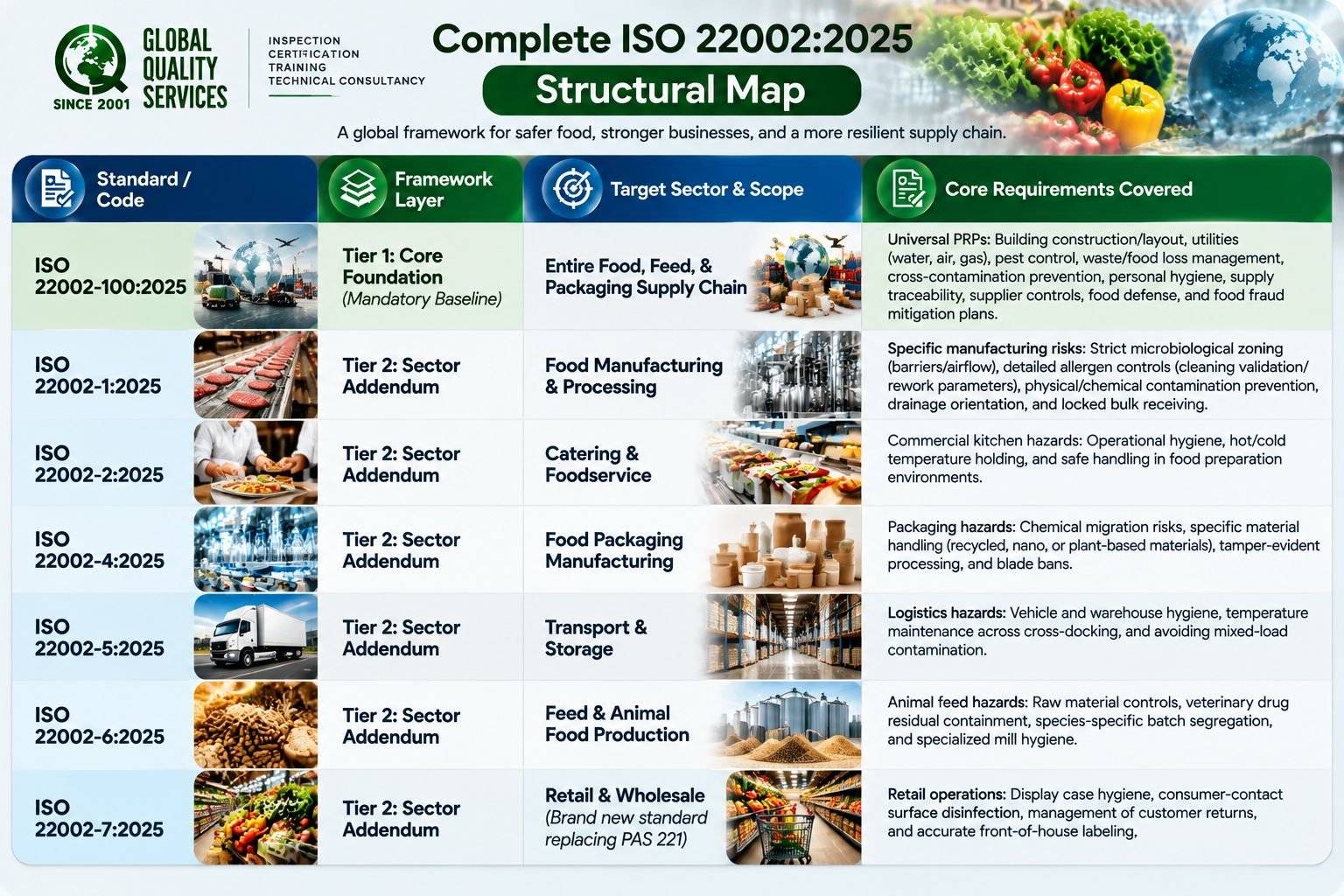
1. ISO 22002-100:2025 – General Prerequisite Programs for Food Safety
Provides a common foundation for managing everyday hygiene risks across food, feed, and food packaging operations. It addresses the basic conditions organisations need to establish before applying more specific controls, including sanitation, pest prevention, personnel practices, facility maintenance, and contamination control.
2. ISO 22002-1:2025 – Food Manufacturing and Processing
Focuses on maintaining safe production environments, from the receipt of raw materials to the handling of finished products. Manufacturers can use these requirements to manage production-area hygiene, cleaning schedules, allergens, equipment conditions, and the separation of activities that could introduce food safety hazards.
3. ISO 22002-2:2025 – Catering and Foodservice
Addresses the practical food safety risks associated with preparing and serving meals. Its scope is relevant to commercial kitchens, catering providers, and institutional foodservice operations where safe ingredient handling, cooking and holding temperatures, kitchen sanitation, and separation of raw and ready-to-eat foods are essential.
4. ISO 22002-4:2025 – Food Packaging Manufacturing
Concentrates on the production environment and operational controls needed to manufacture packaging suitable for food-related applications. Relevant considerations include the cleanliness of production areas, protection of packaging materials, control of contamination sources, and management of materials and processes that may affect the safety of the final packaging.
5. ISO 22002-5:2025 – Transport and Storage
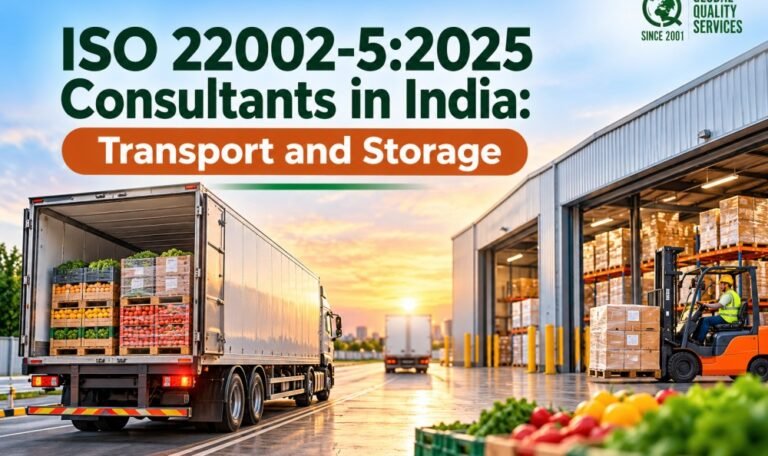
Addresses food safety risks that can arise while products are stored or moved between locations. Businesses can apply these requirements to maintain suitable storage conditions, monitor temperature-sensitive goods, keep transport equipment clean, protect products during handling, and prevent damage or contamination during distribution.
6. ISO 22002-6:2025 – Feed and Animal Food Production
Applies to production environments where feed and animal food must be manufactured under controlled hygienic conditions. Important considerations include evaluating incoming ingredients, preventing unwanted substances from entering production, maintaining suitable processing and storage conditions, and preserving product identity throughout manufacturing.
7. ISO 22002-7:2025 – Retail and Wholesale
Focuses on maintaining food safety at the distribution and sales stages. Retailers and wholesalers can use the relevant prerequisite requirements to manage product storage and display, maintain clean handling areas, control damaged or returned stock, and preserve food quality and safety while products are held for sale or distribution.
The move to FSSC 22000 Version 7 gives certified organizations a defined period to review their existing food safety management systems and address the revised scheme requirements. Version 7 was published on 1 May 2026. Version 6 audits remain permitted through 30 April 2027, followed by the mandatory Version 7 upgrade audit period from 1 May 2027 to 30 April 2028. Remaining Version 6 certificates are scheduled for withdrawal after 30 June 2028. Reviewing the changes in advance gives organizations more time to assign responsibilities, update relevant procedures, and prepare the required audit evidence.
Global Quality Services (GQS) works with organizations preparing to move from FSSC 22000 Version 6 to Version 7. Our support includes reviewing existing food safety arrangements, identifying areas that may need revision, and helping organizations understand the implications of updated scheme requirements. Through gap assessments and documentation reviews, we help businesses prioritise corrective actions and establish a transition plan suited to their current management system and upcoming upgrade audit.
How Does Global Quality Services Support FSSC 22000 Certification Across Pune
Global Quality Services offers direct technical assistance to food manufacturers in Pune. We do all this on your factory floor, right next to your production managers, developing effective processes within the flow of your manufacturing process.
- Experienced Lead Auditors: Our personnel are certified with practical factory floor experience in various processing, packaging, and cold chains.
- Documentation That Works: We develop simple documentation and instructions that are easy for plant personnel to use daily.
- Immediate Response: Working in major Pune industrial areas enables us to reach your location in time for immediate technical assistance.
- Support Until Audit Closure: We assist from the first site visit until paper preparation, staff training, and audit closure.
Along with the FSSC 22000 Certification, we also offer consultancy/mentoring in the field of PCQI (Preventive Controls Qualified Individual) training and certification to assist food manufacturers in meeting the FDA FSMA requirements.
Partner with Global Quality Services for FSSC 22000 Success in Pune
Gaining GFSI-certified accreditation will definitely help you open up new markets and get your products exported. Preparing your facility does not have to be overly difficult or stressful. We will ensure that you are provided with everything you require to make this happen.
- Transparent Cost: Receive transparent cost estimates tailored according to your plant size and workforce without any hidden costs.
- Fast Execution: Get your audit ready within 60 to 90 days utilizing our effective preparation process.
- Thorough Preparation: Be prepared for the audit and prevent any problems that might occur during an audit.
Contact our local Pune team today to set up your initial site review and plan your certification path.
Frequently Asked Questions
1. How long does FSSC 22000 certification take for a plant in Pune?
Most small to mid-sized processing units in Pune complete implementation within two to four months. The exact timeline depends on your facility setup, existing records, and how fast your team updates floor routines.
2. How long is an FSSC 22000 certificate valid?
An FSSC 22000 certificate stays valid for three years from the date of issue. To keep it active, your plant must complete annual surveillance audits, including one unannounced visit during the three-year term.
3. Can small food processors in Pune qualify for FSSC 22000 certification?
Yes, as long as small and medium enterprises comply with basic hygienic structure criteria and safety requirements. Documentation and control procedures will be adjusted to meet their needs.
4. What are the Sector Specific Prerequisite Programs?
The Prerequisite Programs are basic hygienic criteria that must be fulfilled by certain sectors. In particular, ISO/TS 22002-1 is applicable for food production, and ISO/TS 22002-4 is applicable for food packagers.
5. Is an unannounced audit necessary for the FSSC 22000 certified entities?
Yes, because the FSSC 22000 program requires at least one unannounced surveillance audit during three years of validity of the certificate.